Island Peak Climbing (6189 m) with Everest Base Camp Trek - 18 Days
18 Days
Kathmandu
Kathmandu
6189 m
Spring and Autumn
Hotel, Tea house & Camping
Domestic Flight
10 pax
Heli Flight
6000er
Everest Region
A 20-day combination of the classic Everest Base Camp trek, via Kala Patthar, with a guided ascent of Island Peak (6,189m), pairing Nepal's most iconic trekking route with a genuine introduction to Himalayan mountaineering.
Introduction
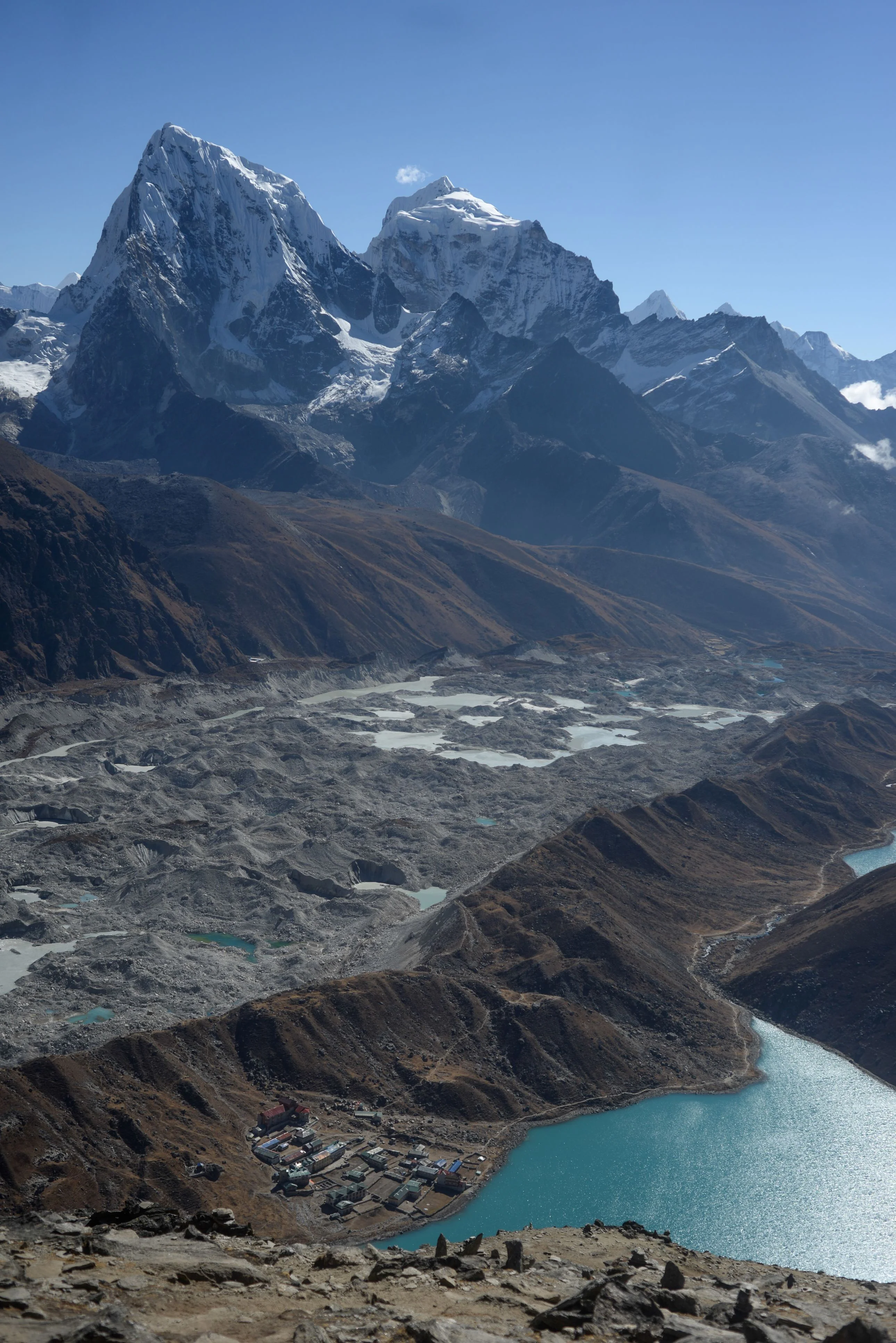
Everest Base Camp and Island Peak are two of the most sought-after objectives in the Khumbu, and this itinerary is built to do both properly rather than rushing either. The first half follows the classic Everest Base Camp route: Lukla, Namche Bazaar, Tengboche, and Dingboche, with acclimatization days built in at Namche and Dingboche, before continuing through Lobuche and Gorak Shep to Everest Base Camp itself and a sunrise hike to Kala Patthar, the highest point most trekkers ever reach on foot without ropes.
From there, instead of turning back toward Lukla, the route cuts across to Chhukung and continues up the Imja Valley to Island Peak Base Camp. Island Peak, known locally as Imja Tse, was named by members of the 1953 British Everest expedition for its appearance as an island in a sea of ice when viewed from Dingboche below. The mountain has a genuine connection to Everest history. Its southwest summit was first climbed in 1953 by a team that included Tenzing Norgay, Charles Evans, Alfred Gregory, and Charles Wylie, part of the same British expedition that went on to make the first ascent of Everest that same season. It was, in other words, a training climb for the original Everest team, and it still serves much the same role for climbers today.
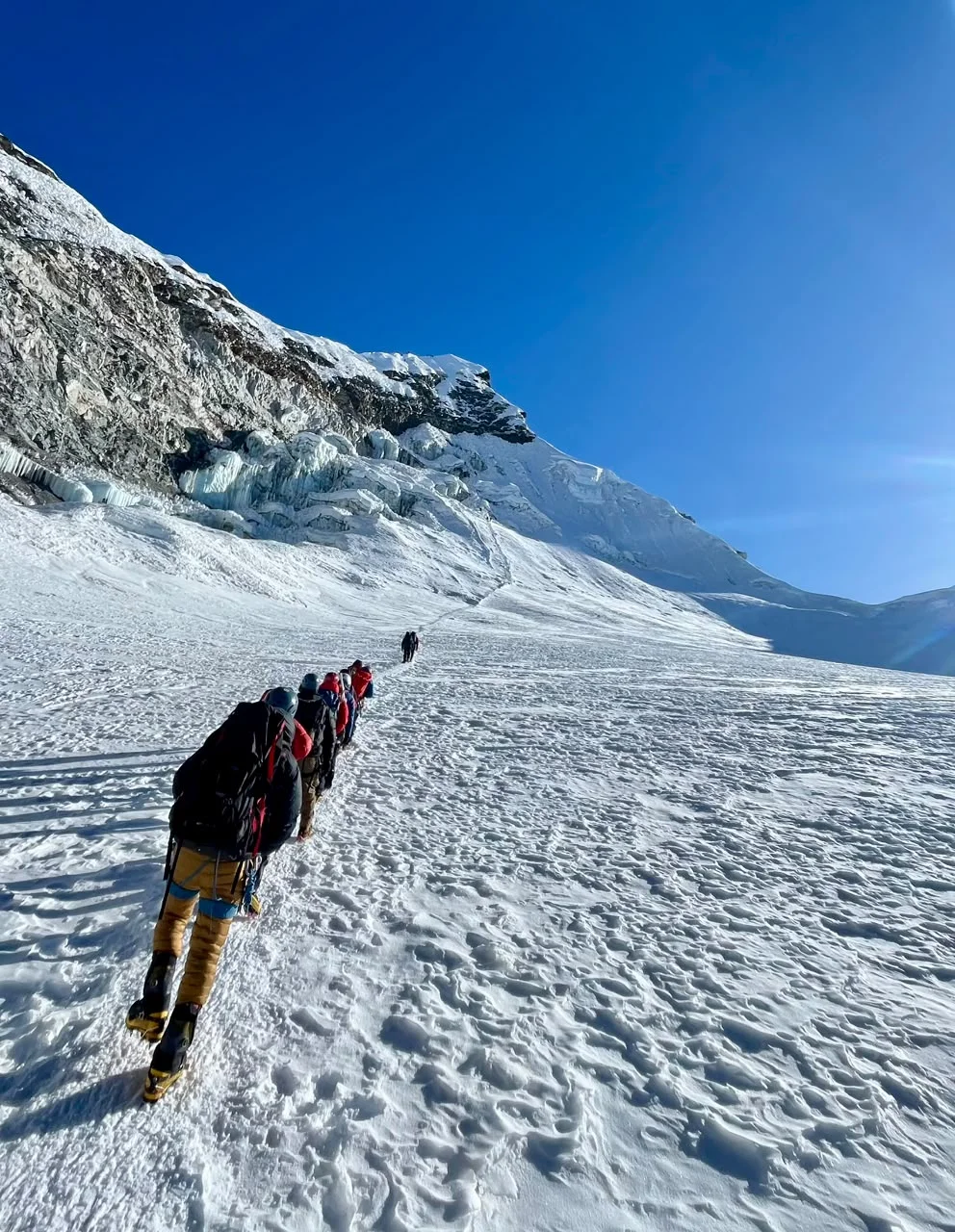
Classified as an NMA Group B peak with an Alpine grade of PD+, Island Peak is genuinely technical by trekking-peak standards: a long glacier crossing leads to a near-vertical headwall, roughly 200 to 300m of fixed rope on ice and rock, followed by a narrow, exposed summit ridge. None of it requires prior technical climbing experience, since your climbing Sherpa manages the rope systems and teaches the necessary technique at Base Camp, but it does demand real fitness and a properly acclimatized body, both of which the extended EBC approach in this itinerary builds in naturally.
The result is a itinerary that uses the Everest Base Camp trek's own acclimatization schedule as the lead-in to Island Peak's summit day, rather than treating the two as separate trips bolted together. By the time you reach Chhukung, your body has already spent a week and a half above 3,400m, including a night above 5,000m at Gorak Shep, which is a genuinely better acclimatization profile than most standalone Island Peak itineraries offer. Expedition Himalaya runs this combination best in spring (March to May) and autumn (September to November), with an experienced climbing guide managing the technical section and a reserve day held in case weather delays the summit push.
Trip Highlights – Island Peak Climbing
- Summit of Island Peak (6,189 m / 20,305 ft): Climb one of Nepal’s most respected trekking peaks, offering a true introduction to high-altitude mountaineering with panoramic views of Everest, Lhotse, Nuptse, and Ama Dablam.
- Stand at Everest Base Camp (5,364m) and watch sunrise from Kala Patthar (5,550m), the classic Khumbu Icefall and Everest view
- Progressive Acclimatization Through the Khumbu: A carefully planned trekking approach through Sherpa villages and high alpine valleys allows proper acclimatization before transitioning to technical climbing terrain.
- Strong Sherpa Support & Safety-Focused Operations: Climb with highly experienced Sherpa climbers who manage route preparation, rope systems, and pacing throughout the ascent.
- Ideal Preparation for Higher Objectives: Island Peak serves as an effective stepping stone for climbers planning future 7000 m and 8000 m expeditions in the Himalaya.
Itinerary
Day 1: Arrival in Kathmandu (1,330 m / 4,364 ft)
A representative from Expedition Himalaya meets you at Tribhuvan International Airport and transfers you to your hotel. The rest of the day is free to rest after international travel.
Day 2: Trip preparation, permit processing, and briefing in Kathmandu
Your Island Peak NMA climbing permit and other permits are all processed today. Personal and rented climbing gear, harness, helmet, crampons, ascender, ice axe, is checked item by item against the packing list, since anything missing is far easier to source in Kathmandu than at Chhukung. In the evening, your guide runs through the full 20-day route and explains explicitly how the EBC section functions as preparation for the Island Peak summit day, not just a scenic detour.
Day 3: Day 3: Fly to Lukla (2,860m / 9,383 ft), trek to Phakding (2,610m / 8,563 ft)
The short, roughly 30-minute flight to Lukla is one of the more dramatic short domestic routes in the Himalaya. From Lukla's angled runway, a gentle 3 to 4 hour walk follows the Dudh Koshi River downstream through pine forest and small villages to Phakding, an easy first day that eases the body into trekking rhythm before the climbing starts in earnest higher up.
Day 4: Trek to Namche Bazaar (3,440m / 11,286 ft)
A roughly 5 to 6 hour day, the trail follows the river valley, crossing several suspension bridges including the high Hillary Suspension Bridge, before a long, steady climb into Namche Bazaar, the trading and cultural hub of the Khumbu and the last town with real shops, bakeries, and internet cafes before the trail turns properly alpine.
Day 5: Acclimatization day in Namche Bazaar (3,440m / 11,286 ft)
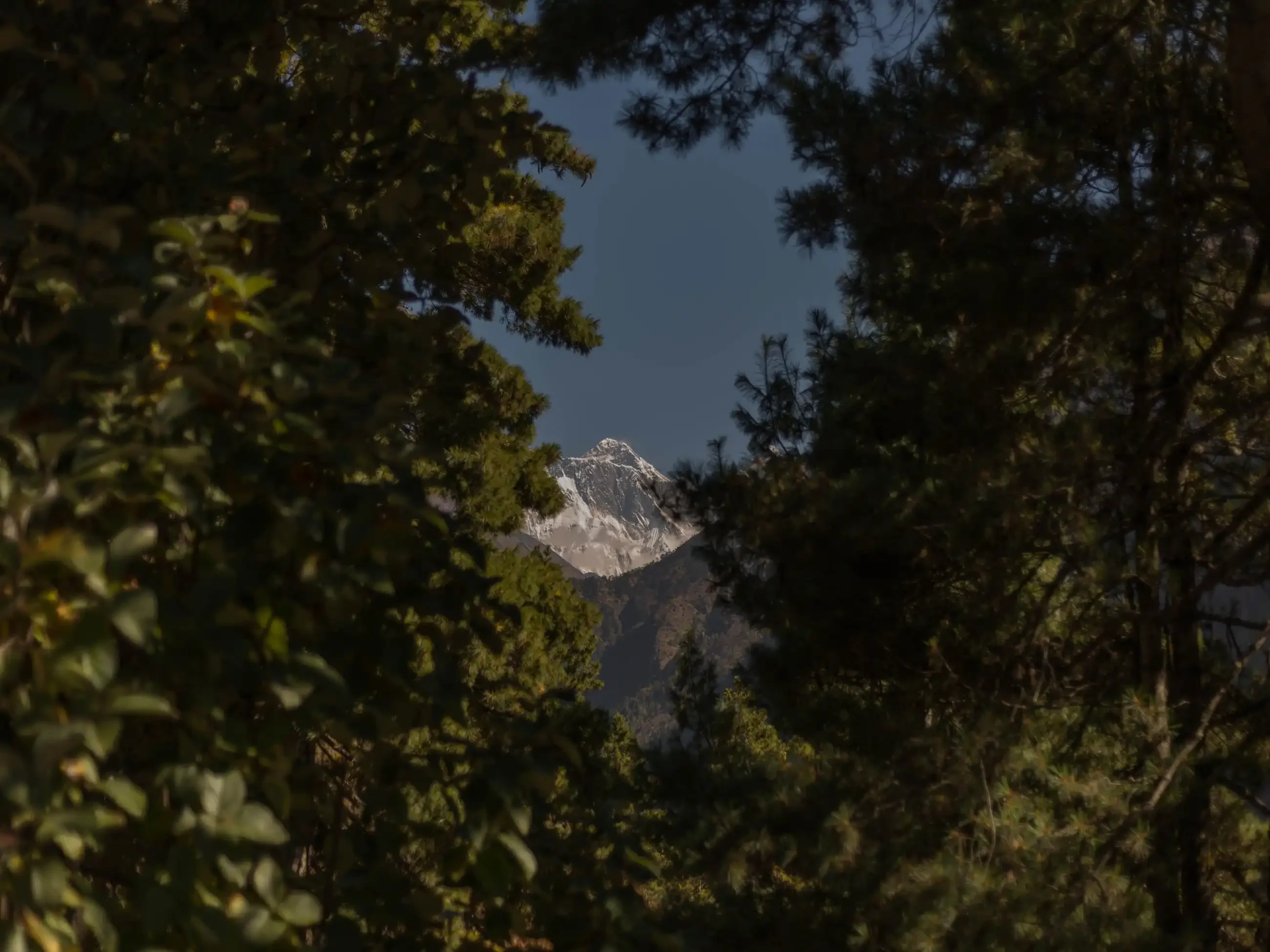
A short hike, 3 to 4 hours round trip, up to Syangboche and the Everest View Hotel area gives the first real payoff views, Everest, Lhotse, Ama Dablam, and Thamserku on a clear day, while the climb-high-sleep-low pattern does real acclimatization work rather than just filling a rest day.
Day 6: Trek to Tengboche (3,870m / 12,697 ft)
A roughly 5 hour day, descending to the river before climbing steadily to Tengboche, home to the region's most important monastery and one of its widest mountain panoramas. Many groups time their arrival for the afternoon puja (prayer ceremony) at the monastery if the schedule allows.
Day 7: Trek to Dingboche (4,410 m / 14,469 ft)
Around 5 to 6 hours of walking as the trees thin out and the trail enters more open, alpine terrain, passing stone-walled fields built to protect crops from wind and grazing animals, before reaching Dingboche beneath Ama Dablam's striking east face.
Day 8: Acclimatization day in Dingboche (4,410m / 14,469 ft)
A morning hike, 3 to 4 hours round trip, to Nangkartshang viewpoint above the village adds real altitude exposure without the exertion of a full trekking day, an important step before the higher, more remote terrain ahead. The afternoon is for rest and hydration.
Day 9: Trek to Lobuche (4,930m / 16,175 ft)
Roughly 5 hours, the trail follows the edge of the Khumbu Glacier, passing memorial cairns and chortens built for climbers who died attempting Everest, a sober, quiet stretch of trail, before the landscape opens into the stark, wind-scoured terrain around Lobuche.
Day 10: Trek to Gorak Shep (5,160m / 16,929 ft), hike to Everest Base Camp (5,364m / 17,598 ft)
A shorter trek, around 3 hours, to Gorak Shep, the last settlement before Base Camp, followed by a further 3 to 4 hours round trip across the Khumbu Glacier's loose rock and ice to Everest Base Camp itself. Base Camp is a seasonal site rather than a permanent one, busiest during spring climbing season and largely empty the rest of the year, but standing at the foot of the Khumbu Icefall, with its constantly shifting towers of ice, is the moment most trekkers come specifically for.
Day 11: Hike to Kala Patthar (5,550m / 18,209 ft), trek to Chhukung (4,730m / 15,518 ft)
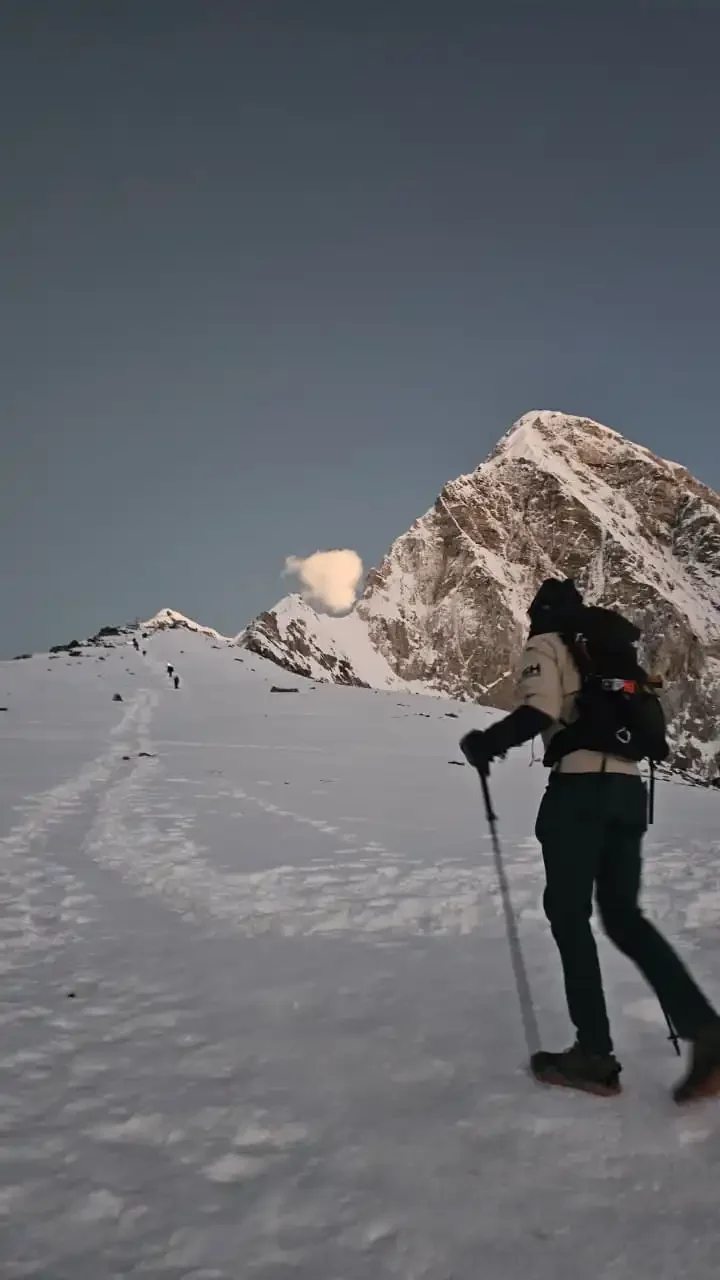
An early, cold pre-dawn start for the roughly 2 to 3 hour climb up Kala Patthar, the highest point most trekkers reach on this route, for the best close-up view of Everest, Nuptse, and the Khumbu Icefall available without climbing gear. After descending to Gorak Shep for breakfast, the trail turns south for a long day, 6 to 7 hours, crossing back through the Dingboche valley toward Chhukung, the last village before the Imja Valley narrows toward Island Peak. This is deliberately the longest trekking day of the itinerary, placed right before the climbing phase begins, so the following days can focus entirely on the mountain.
Day 12: Trek to Island Peak Base Camp (5,100m / 16,732 ft)
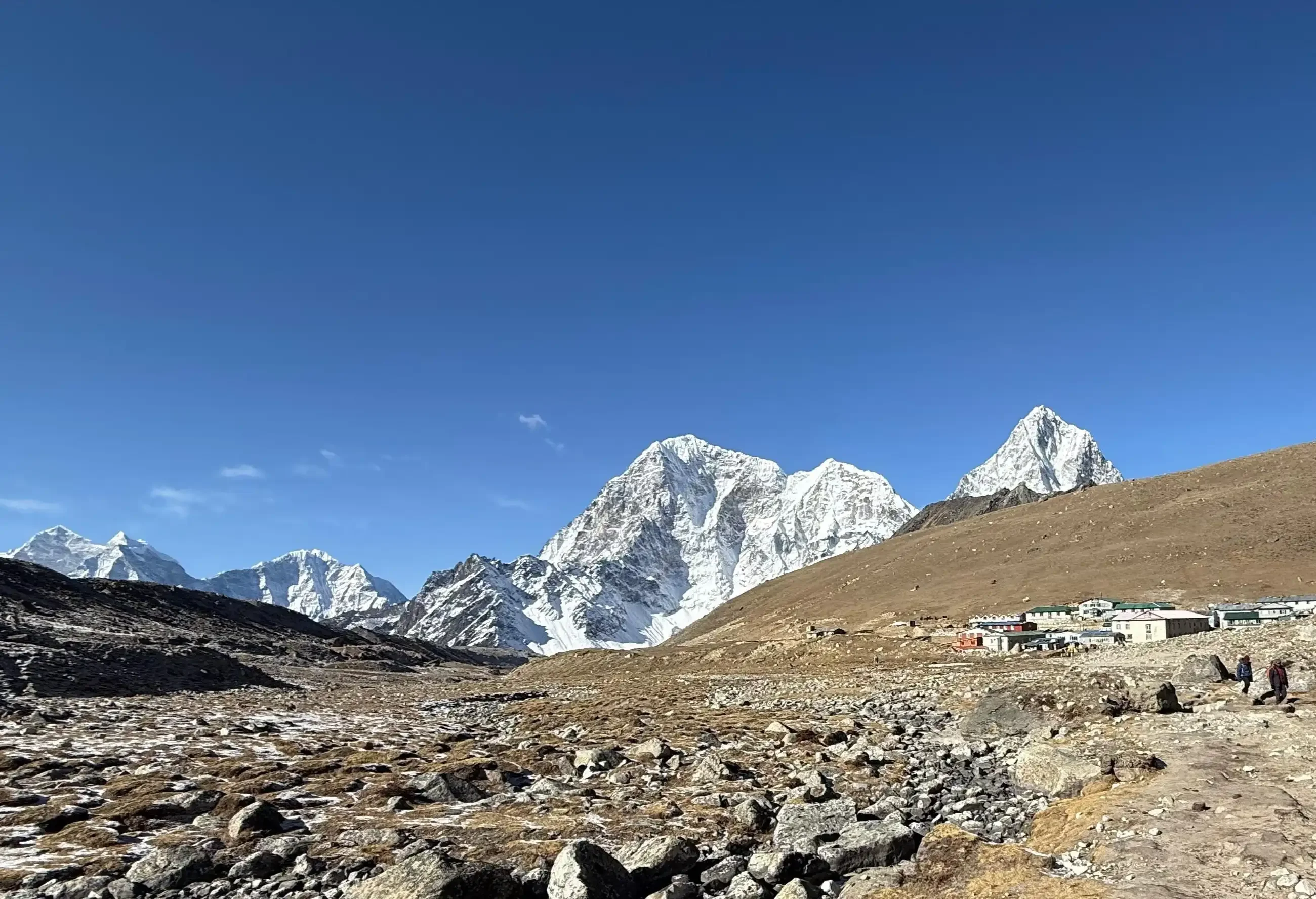
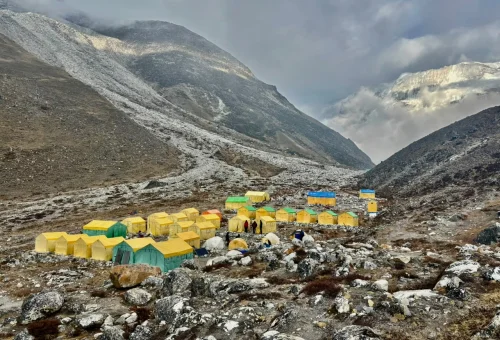
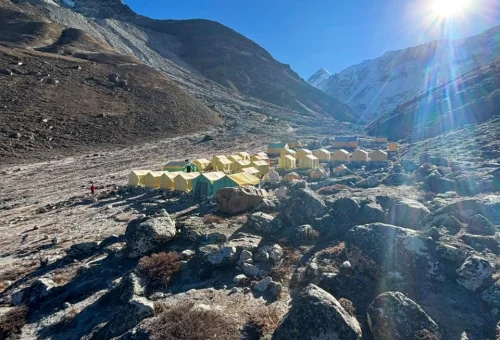
This is where the trip shifts from trekking to mountaineering. A shorter day, 3 to 4 hours, but a harder one, climbing steadily up the true right side of the Imja Valley onto rockier, glacier-fed moraine terrain with Island Peak itself in clear view for most of the walk. Base Camp sits on a flat, exposed shelf with no permanent infrastructure; your climbing Sherpa team has already gone ahead to set up tents, kitchen, and the group's climbing equipment cache. Expect noticeably colder temperatures and stronger wind than anywhere on the trekking section so far, this is now expedition terrain.
Day 13: Pre-climb training and rest at Base Camp (5,100m / 16,732 ft)
A full day dedicated entirely to preparation, not sightseeing. Your climbing Sherpa runs a hands-on training session on a nearby practice slope covering four things in sequence: crampon technique on mixed snow and rock, ice axe use including self-arrest, ascending and descending fixed rope with a jumar and figure-eight descender, and the clipping and unclipping procedure for moving safely along a fixed line. This isn't a formality, it's the single most important preparation day of the trip, since Day 14's headwall and summit ridge are not the place to be learning these skills for the first time. In the afternoon, final equipment checks are done, headlamps, harnesses, and layering are confirmed, and the team turns in early for the pre-dawn start ahead.
Day 14: Summit Island Peak (6,189m / 20,305 ft) and descend to Chhukung
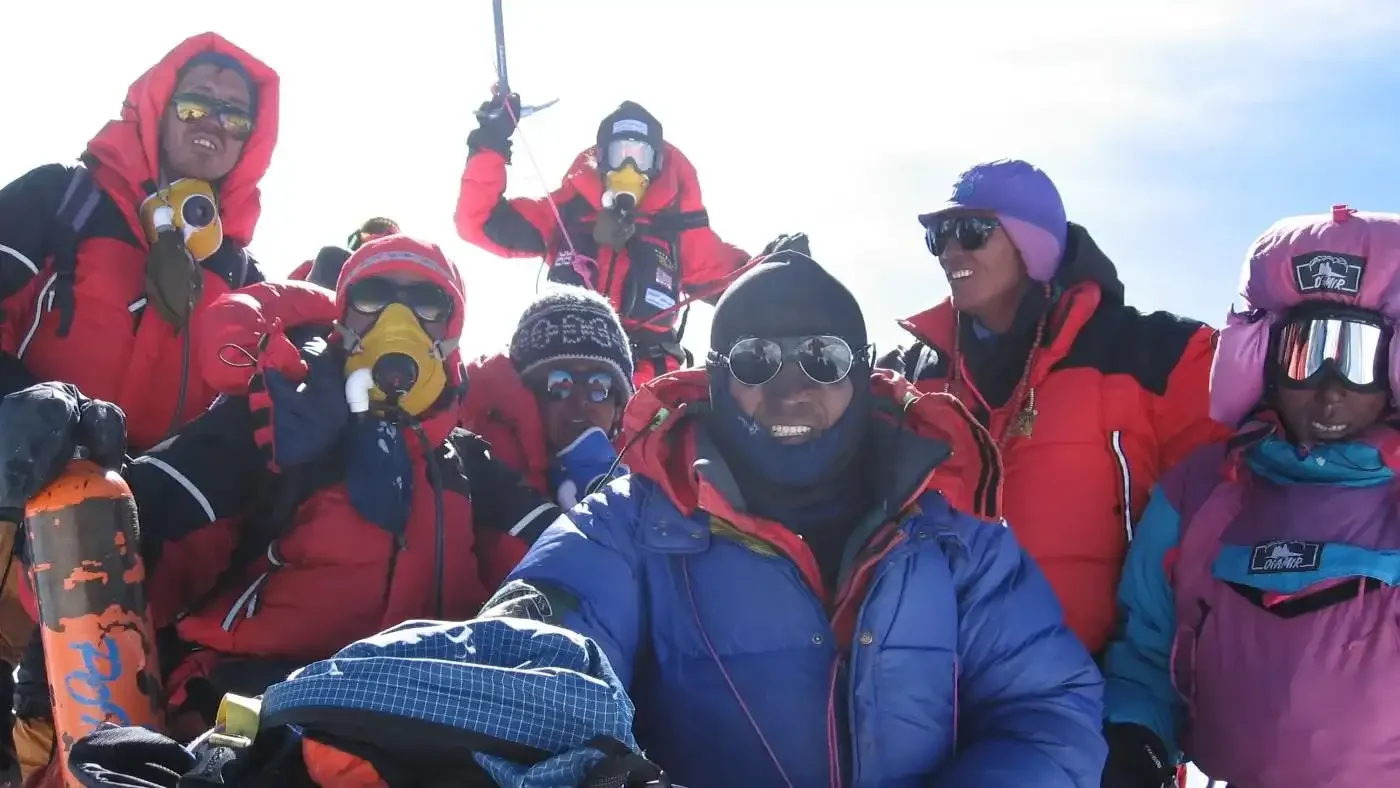
The core day of the entire expedition. The alpine start is early, typically 1 to 2 a.m., so the team crosses the glacier while the snow is still frozen hard and stable rather than softening in daytime sun. The route climbs from Base Camp onto the Imja Glacier, where the team ropes up in a fixed order (guide, climbers, assistant Sherpa) and threads between crevasses using headlamps in the dark. Reaching the base of the summit headwall usually takes 3 to 4 hours. The headwall itself, roughly 200 to 300m of fixed rope on ice and rock at 40 to 50 degrees, is the technical crux: climbers ascend using a jumar clipped to the fixed line, a slow, methodical, arm-and-leg process rather than a scramble, taking anywhere from 1 to 3 hours depending on group size and conditions, since climbers move one at a time on the fixed sections. Above the headwall, a narrow, corniced summit ridge with real exposure on both sides leads the final stretch to the true summit, still fixed-roped, with your guide managing pacing and clipping at each anchor point. Most groups reach the top by mid to late morning. From 6,189m / 20,305 ft: Lhotse and Nuptse rise close enough to feel touchable, with Makalu, Baruntse, Ama Dablam, and on clear days Everest itself visible further out, one of the most rewarding trekking-peak panoramas in Nepal. The descent retraces the same fixed lines, generally the more physically draining half of the day on tired legs and with the sun now softening the snow, back to Base Camp for a short rest, before the team continues down to Chhukung the same day. Total time from Base Camp departure to arrival in Chhukung commonly runs 12 to 15 hours; it is, by design, the single longest and hardest day of the trip.
Day 15: Contingency Day
A contingency day held in reserve specifically for the summit push, not an optional extra. Weather on Island Peak's headwall can close a summit window with little notice, high wind, fresh snow loading on the fixed lines, or poor visibility on the ridge are all valid reasons your guide may call off an attempt and hold the team at Base Camp for a second try the next day. If Day 14 goes as planned, this becomes a genuine rest day at Chhukung instead, and most climbers are glad of it after the previous day's exertion.
Day 16: Trek to Pangboche (3,985m / 13,074 ft)
Roughly 5 hours, the descent continues down the Imja Valley and rejoins the main Khumbu trail at Pangboche, home to one of the oldest monasteries in the region. The pace here is noticeably easier than the previous days, a welcome change after the climbing phase.
Day 17: Trek to Namche Bazaar (3,440m / 11,286 ft)
A long but familiar day, 6 to 7 hours, retracing part of the route from the first week, with thicker air and warmer temperatures returning steadily as the trail loses altitude.
Day 18: Trek to Lukla (2,860m / 9,383 ft)
Around 6 hours, the final trekking day follows the Dudh Koshi back to Lukla, closing the loop on both the trekking and climbing sections of the trip. Many groups mark the occasion with a celebratory dinner alongside the guides, climbing Sherpas, and porters who supported the climb.
Day 19: Fly to Kathmandu (1,330m / 4,364 ft)
A short domestic flight returns the group to Kathmandu. Lukla flights are weather-dependent, so this leg carries the least schedule flexibility in the whole itinerary; the rest of the day is free once you're back.
Day 20: International departure
Transfer to Tribhuvan International Airport for your international flight home.
Includes
- SERVICE IN KATHMANDU
- Airport Pick-up and Drop-off service in a private tourist vehicle
- Welcome dinner in Nepali restaurant
- 4 nights accommodation in 4-star category hotel in a bed and breakfast basis in a twin sharing basis
- Domestic Flights (Kathmandu - Lukla - Kathmandu) and all ground transfers by comfortable shuttle as per itinerary
- GOVERNMENT AND RELATED CHARGES
- Sagarmatha National Park entry permit
- Khumbu Pasang Lhamu Rural Municipality permit
- Island Peak climbing royalty and NMA permit fees
- Garbage deposit fee
- Summit certificate from Nepal Mountaineering Association
- SERVICES DURING THE TREK
- Accommodation in tea houses on a full-board meal plan (breakfast, lunch, dinner) throughout the trekking section
- Experienced, English-speaking, licensed trekking guide
- Porters as required by group size
- Medical Kit carried by the Guide/Sardar
- EXPEDITION SERVICE (ISLAND PEAK)
- One climbing Sherpa for every two members during the summit push
- High-calorie meals during the days at Base Camp and above
- Climbing equipment, transportation, lodging, food, and salaries for Sherpas and support staff
- Sherpa remuneration and load-carrying bonus (separate from the summit bonus)
- Comprehensive insurance coverage for Sherpa, guides, and porters (including helicopter evacuation for staff)
Excludes
- International airfare to and from Kathmandu, Nepal
- Nepal entry visa fees
- Lunches and dinners in Kathmandu (except the welcome dinner)
- Personal expenses such as telephone calls, laundry, bottled water, bar bills, etc.
- Personal climbing and trekking gear (available for hire in Kathmandu)
- Tips and gratuities for Climbing Sherpa, guides and local staff
- Any additional costs arising due to natural calamities, flight delays, or program changes
- Travel insurance covering helicopter evacuation, medical treatment, and trip cancellation (We recommend arranging this in your home country and providing a copy upon arrival)
- Any services, activities, or items not specifically listed under “Cost Includes”
Booking
Reviews

Good!
Exellent guide for solo trekking. The flexibility of the programm was good and everything worked with Expedition Himalaya.

FAQ's
Do I need prior climbing experience?
No technical climbing background is required. The trekking phase to Everest Base Camp demands no climbing skills at all, and for Island Peak, your climbing Sherpa teaches crampon technique, ice axe use, and rope work at Base Camp before the summit attempt. Good physical fitness and comfort with exposure on fixed lines make a real difference on summit day.
Why combine these two trips instead of doing them separately?
The extended Everest Base Camp approach gives you significantly better acclimatization heading into Island Peak's summit day than most standalone Island Peak itineraries provide, since you've already spent over a week above 3,400m, including a night near 5,200m, by the time you reach Chhukung. It also means one trip, one set of flights, and one guide team for both objectives.
What permits are required?
A Sagarmatha National Park entry permit, a Khumbu Pasang Lhamu Rural Municipality permit, and an NMA climbing permit for Island Peak. No separate TIMS card is required, since the park permit covers that function inside Sagarmatha National Park.
How difficult is the Island Peak summit day?
It's the most technically demanding day of the trip: a long glacier crossing roped up, followed by a near-vertical fixed-rope headwall (200 to 300m, 40 to 50 degrees) and a narrow, exposed summit ridge. It typically takes 10 to 14 hours round trip from Base Camp.
What if the weather delays the summit attempt?
A reserve day is built into the itinerary specifically for this. If Day 14's attempt is weathered out, the team can make a second attempt within that buffer before continuing the descent.
What is the best season?
Spring (March to May) and autumn (September to November), when weather is most stable for both the Everest Base Camp trek and the Island Peak summit push. Both seasons offer clear mountain views and predictable conditions on the headwall.
What if the weather delays the summit attempt?
A reserve day is built into the itinerary specifically for this. If Day 14's attempt is weathered out, the team can make a second attempt within that buffer before continuing the descent.
What accommodation is used throughout?
Tea houses for the entire trekking section, including Everest Base Camp approach and return. At Island Peak Base Camp, accommodation shifts to expedition tents, since there's no permanent infrastructure that high in the Imja Valley.
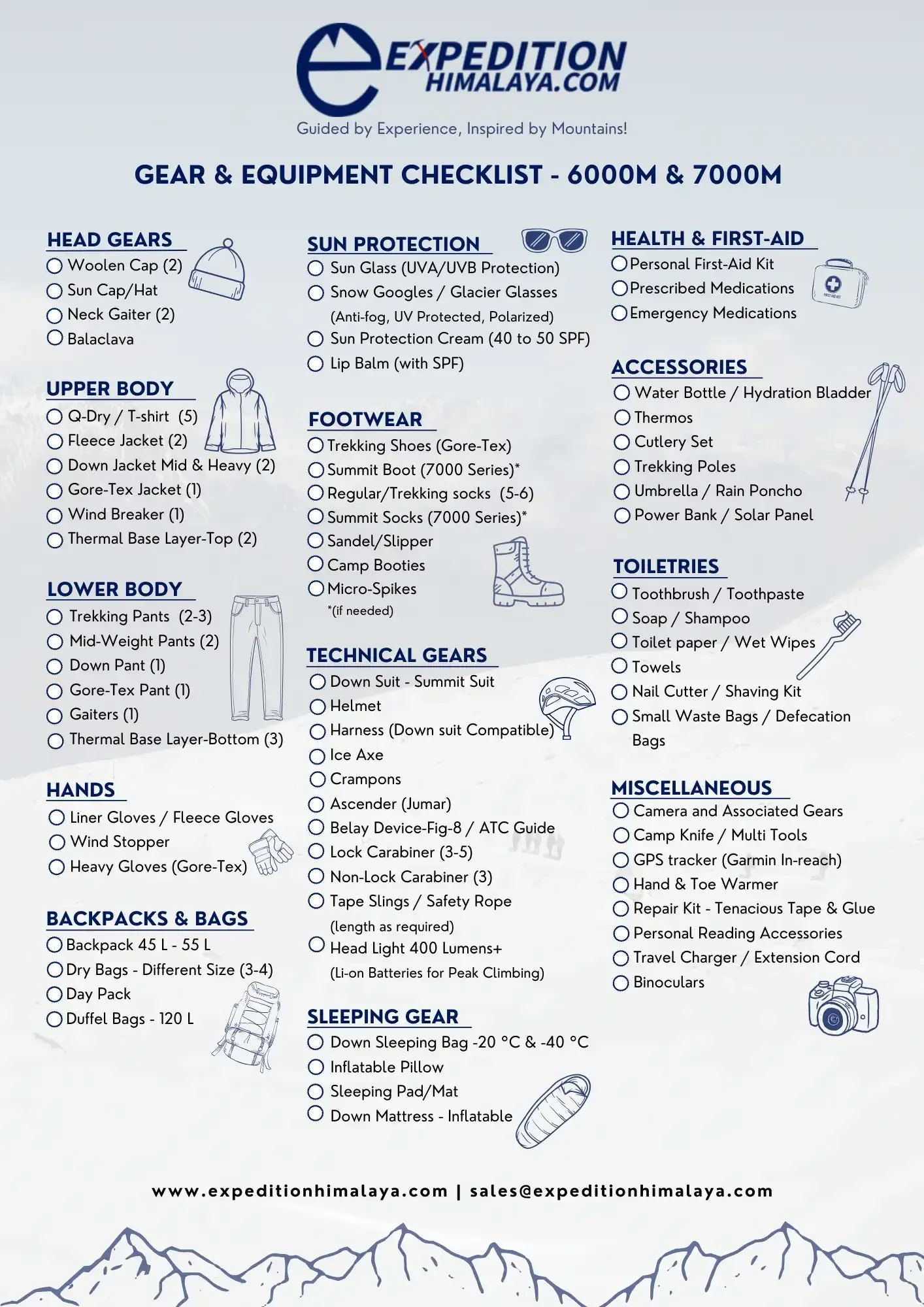
Required Climbing Gear – Island Peak / Imja Tse (6,189 m / 20,305 ft)
Island Peak is a genuine technical climb built around one obstacle: a near-vertical headwall just below the summit, roughly 200 to 300m of fixed rope on ice and rock at 40 to 50 degrees, followed by a narrow, exposed summit ridge. A climbing harness, ascender (jumar), descender, and helmet are essential, along with crampons and an ice axe used across glacier travel for most of the summit day. Base Camp has no permanent infrastructure, and the roughly 10 to 14 hour summit day starts in the early hours while temperatures at the headwall regularly sit well below -15°C. A four-season sleeping bag, insulated crampon-compatible mountaineering boots, and glacier glasses or goggles for the exposed ice sections are non-negotiable. As with Lobuche East, this is a technical climb rather than a high-altitude trek, so gear that's already broken in and familiar matters more here than on non-technical peaks like Yala or Mera.
Terms and Conditions
Destination Map

Customize Your Trip and Get a Quote
Inquiry Form
Related Tours