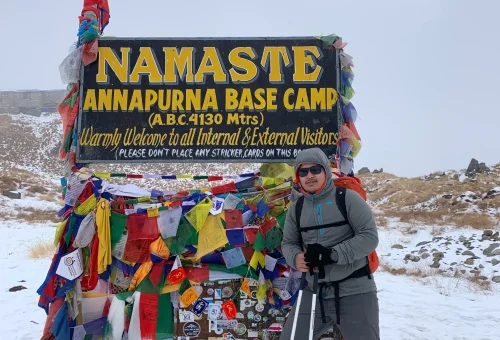
Annapurna Base Camp Trek - 12 Days
12 Days
Kathmandu
Kathmandu
4130 m
Spring and Autumn
Hotel and Tea house
Domestic Flights, Road Transportation as per itinerary
16 Pax
Introduction
The Annapurna Base Camp Trek is one of Nepal’s most rewarding Himalayan journeys, leading trekkers deep into the protected Annapurna Sanctuary—a natural amphitheater surrounded by towering peaks and dramatic alpine landscapes. The trail begins in the foothills, passing through traditional Gurung and Magar villages where daily life continues much as it has for generations. Stone houses, terraced fields, and local mountain culture form a strong connection between people and landscape.
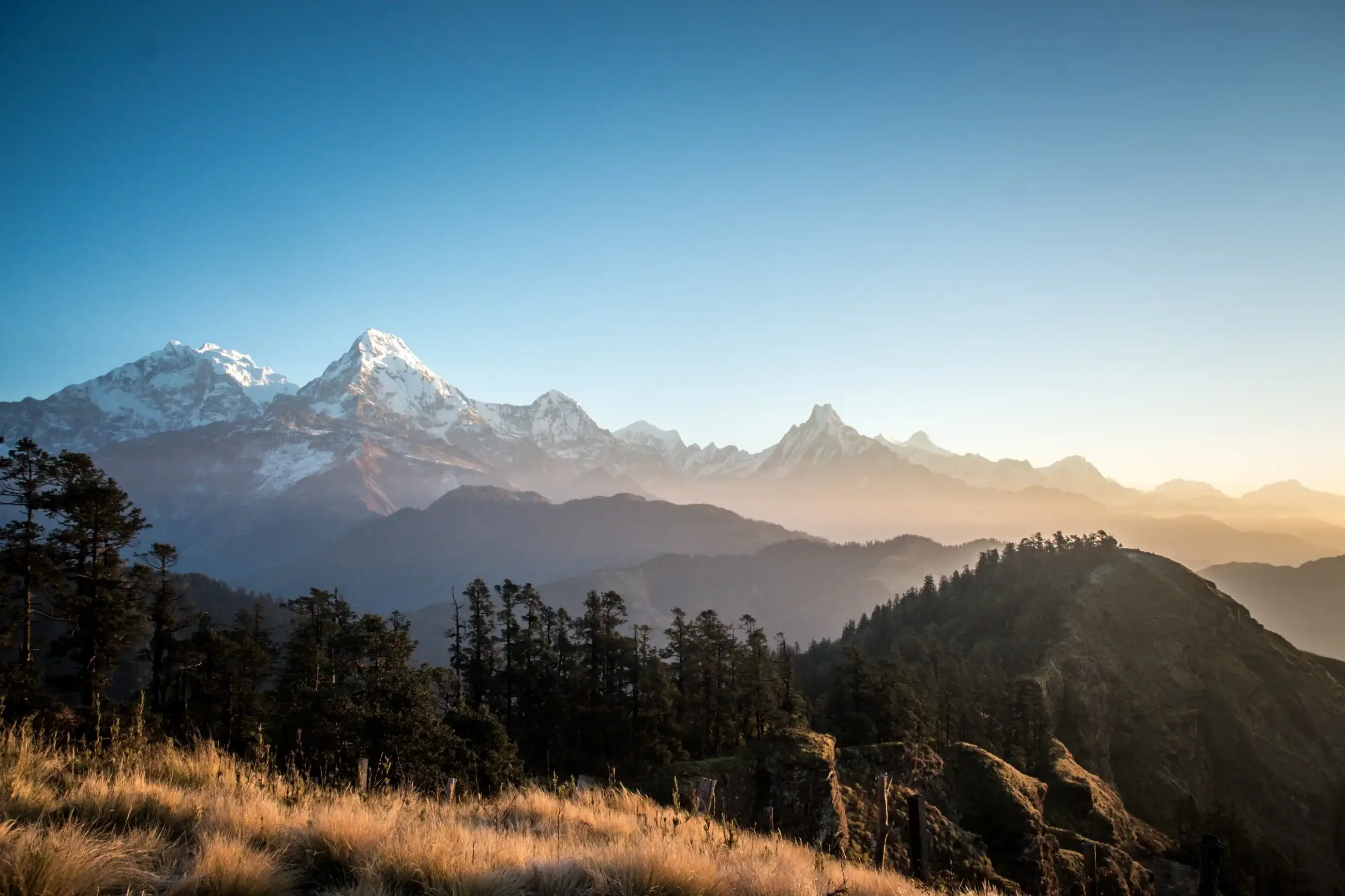
As the route climbs higher, the scenery changes steadily—from cultivated hillsides to dense rhododendron and bamboo forests, and eventually into a high-altitude glacial basin beneath Annapurna I, Machhapuchhre, Hiunchuli, and Annapurna South. The sanctuary itself is a place of remarkable scale and quiet beauty, where steep mountain walls rise sharply from the valley floor and the sense of isolation grows with each step.
The trek follows well-established trails shaped by decades of trekking history, making it accessible while still offering a true mountain experience. With a carefully paced itinerary and gradual elevation gain, the journey allows time to adjust, observe, and fully experience the surroundings. Guided by experienced local teams, Expedition Himalaya presents the Annapurna Base Camp Trek as a balanced Himalayan journey—defined by changing landscapes, cultural encounters, and a deep sense of place within one of Nepal’s most iconic mountain regions.
Itinerary
Day 1: International Arrival in Kathmandu (1,330 m / 4,364 ft)
Upon arrival at Tribhuvan International Airport, you are met and transferred to Hotel Manaslu or Hotel Tibet, a hotel set in the quiet Lazimpat area of Kathmandu. After check-in, the remainder of the day is free to rest or recover from international travel. The hotel’s peaceful setting offers a comfortable introduction to Nepal before heading toward the mountains.
Day 2: Trek Preparation & Leisure Day in Kathmandu
This day is reserved for trek preparation and final arrangements. Time is spent reviewing equipment, completing any required documentation, and meeting the trekking team. The remainder of the day is free for rest or light exploration of Kathmandu, allowing you to relax and prepare comfortably before heading toward the Annapurna region.
Day 3: Fly to Pokhara (822 m / 2,697 ft) & Drive to Ghandruk
A scenic morning flight takes you from Kathmandu to Pokhara, offering views of rolling hills and Himalayan ranges when weather permits. From Pokhara, a drive leads through terraced farmland and river valleys to Ghandruk, one of the largest Gurung villages in the region. Stone houses, traditional lifestyles, and views of Annapurna South, Hiunchuli, and Machapuchare define the village setting.
Day 4: Trek to Chhomrong (2,170 m / 7,119 ft)
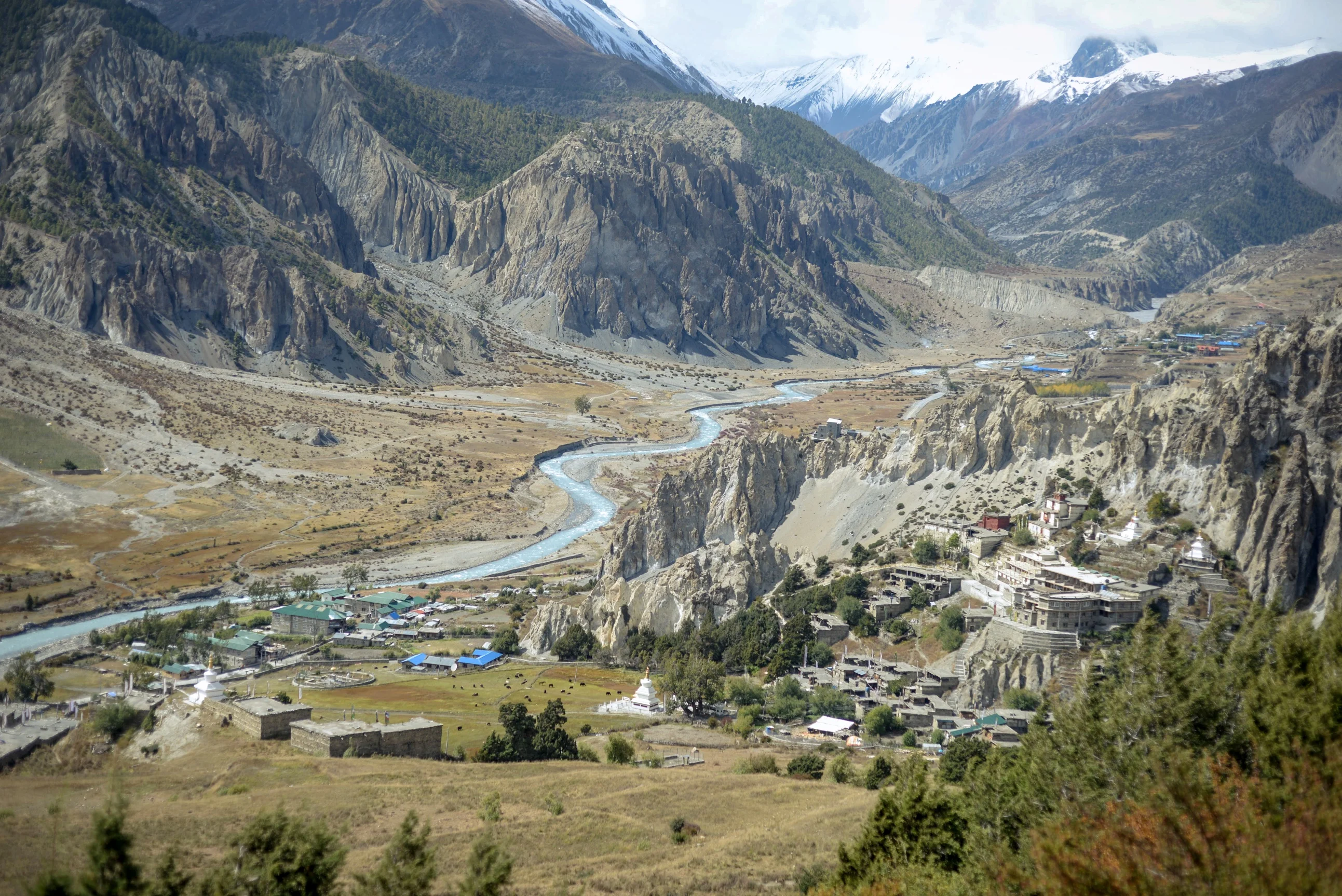
The trek begins through cultivated fields, forest trails, and small settlements inhabited mainly by Gurung and Magar communities. The route descends to river crossings before climbing steadily toward Chhomrong, a prominent village perched above the Modi Khola. From here, the first close views of Annapurna South and Machapuchare dominate the horizon.
Day 5: Trek to Dovan (2,600 m / 8,530 ft)
The trail descends steeply from Chhomrong to the river before gradually climbing through dense bamboo and rhododendron forest. As the route moves deeper into the Annapurna Sanctuary, the landscape becomes quieter and more enclosed, with forested slopes, streams, and shaded trails shaping the day’s trek.
Day 6: Trek to Deurali (3,230 m / 10,597 ft)
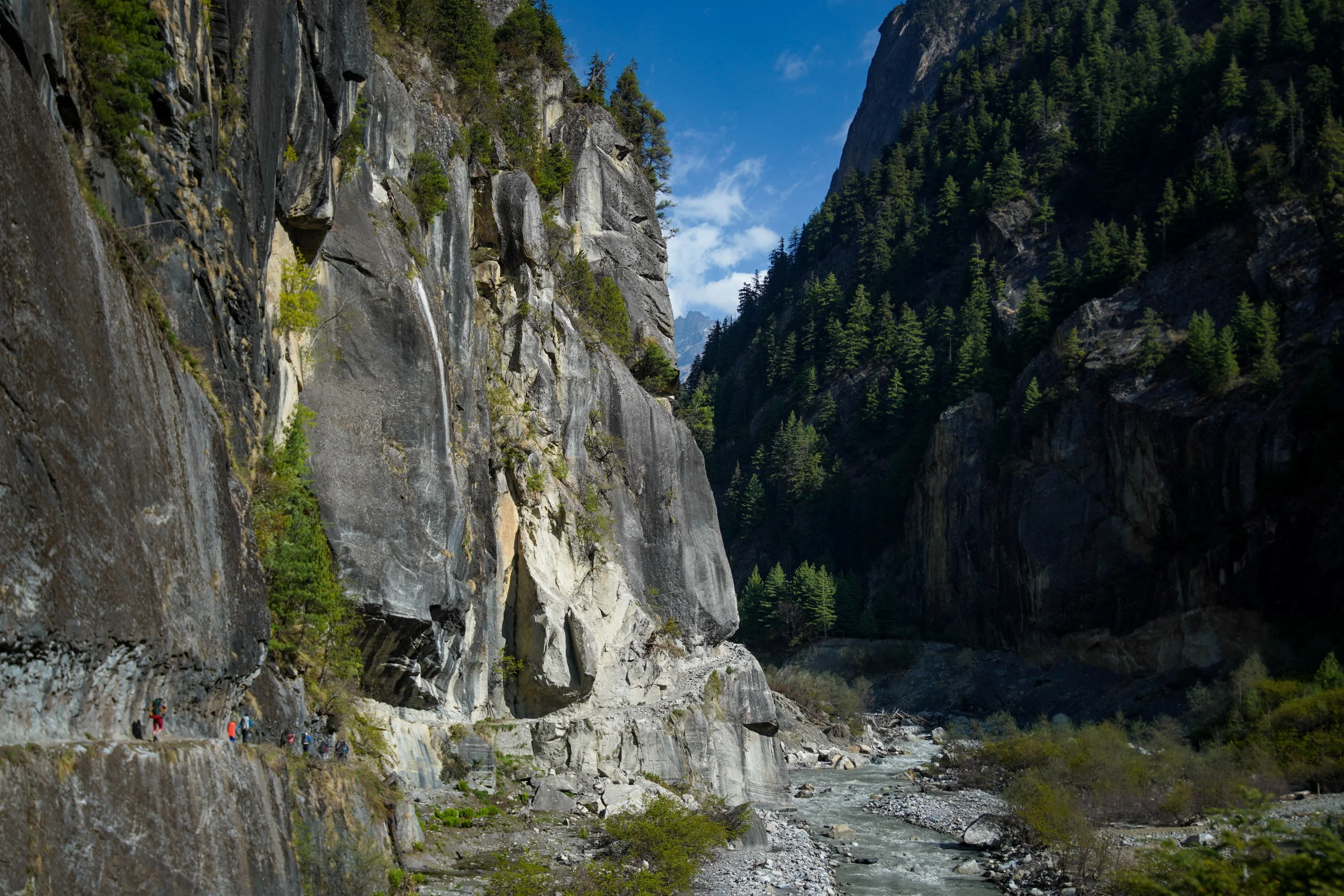
The trail ascends gradually through Himalaya, following the river valley as cliffs rise higher on both sides. Waterfalls and rock faces define the landscape, and vegetation becomes sparser with altitude. By the time you reach Deurali, the environment feels distinctly alpine, signaling entry into the upper sanctuary.
Day 7: Trek to Annapurna Base Camp (4,130 m / 13,550 ft)
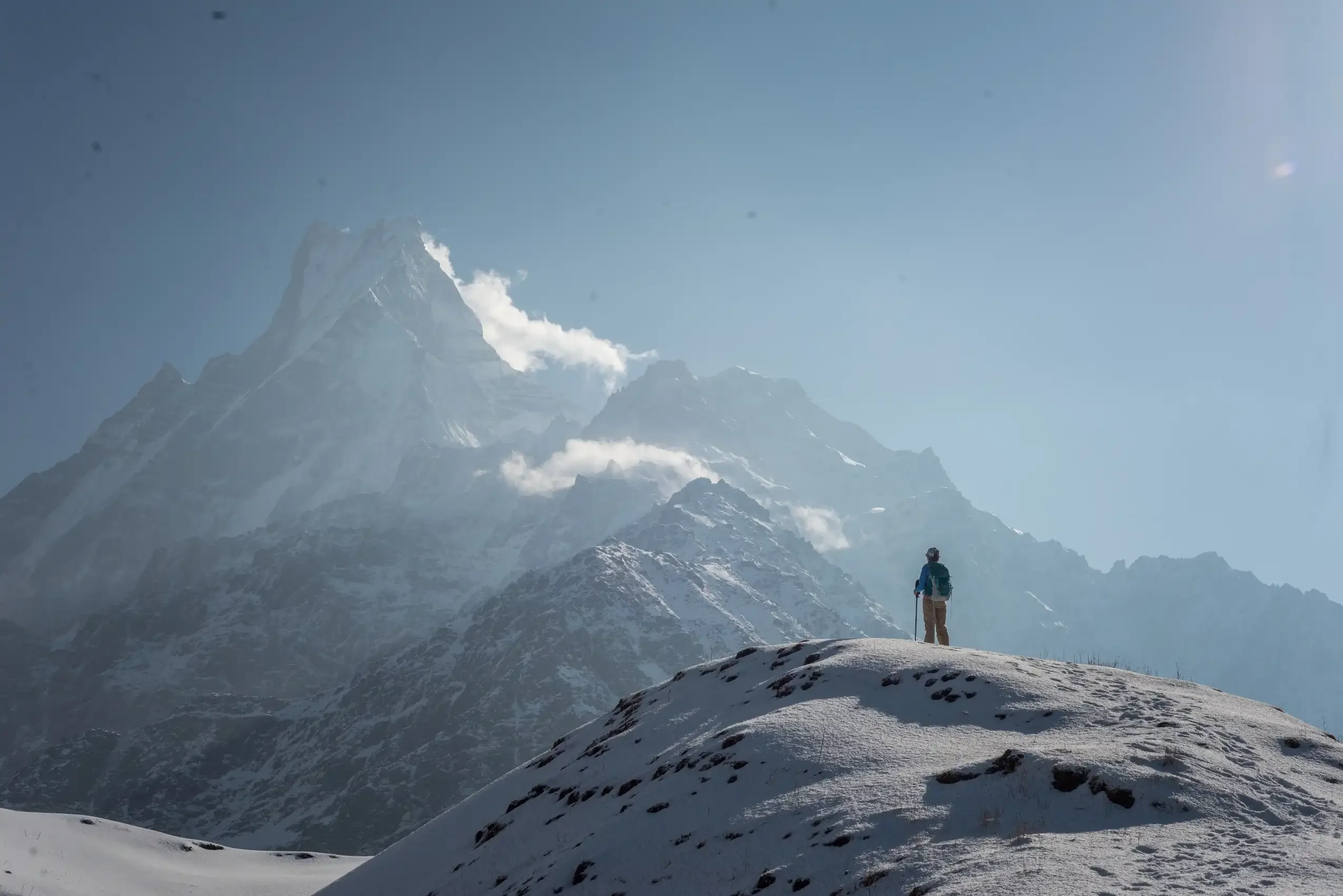
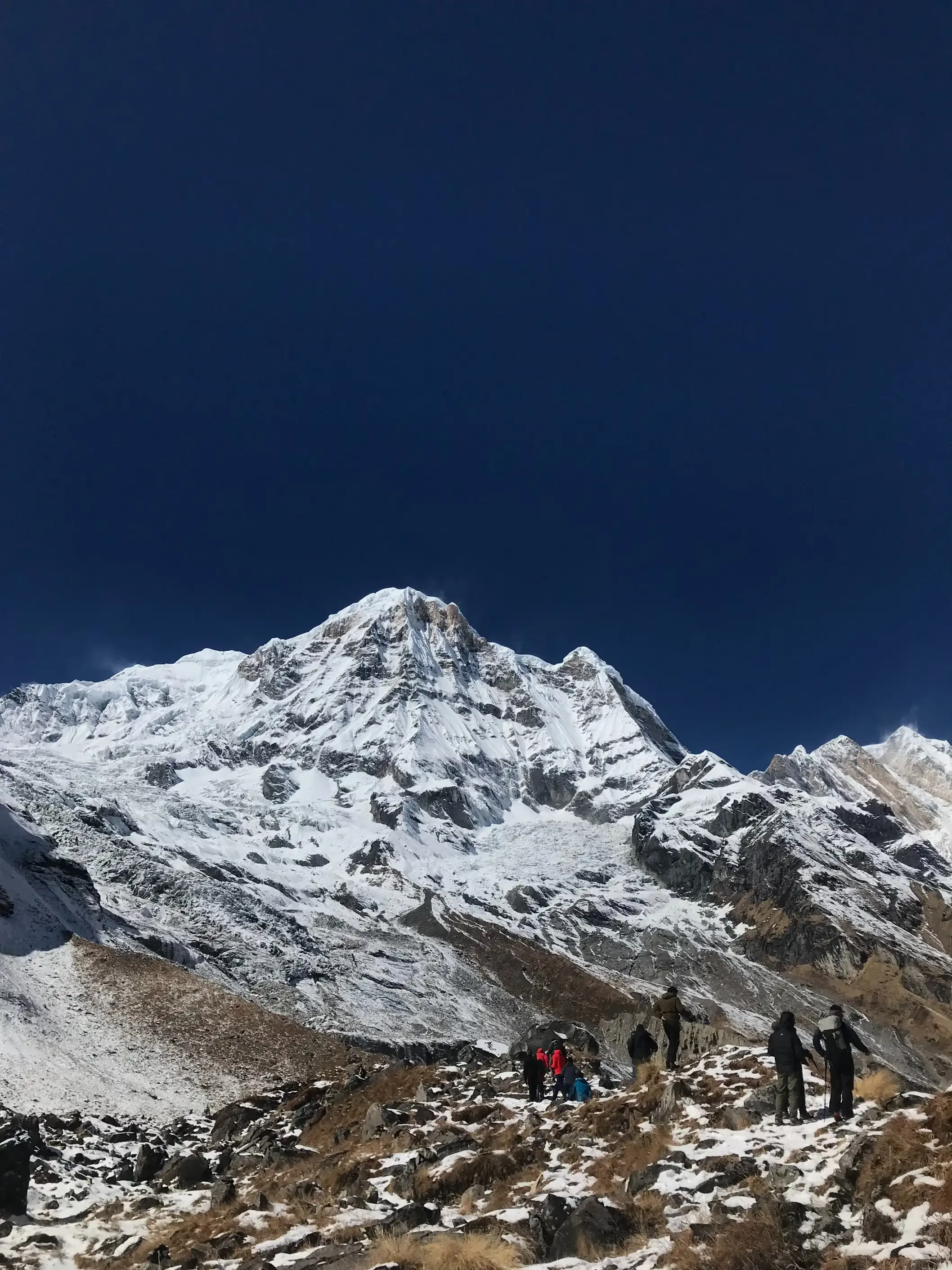
Passing Machapuchare Base Camp, the valley opens into the Annapurna Sanctuary—an immense glacial basin encircled by towering Himalayan peaks. Annapurna Base Camp lies beneath Annapurna I, Annapurna South, Hiunchuli, Gangapurna, and Machapuchare, creating one of the most dramatic mountain settings in Nepal. The sense of isolation and scale here is profound.
Day 8: Trek to Bamboo (2,310 m / 7,579 ft)
The return journey retraces the same route, offering a new perspective on the landscape while descending back into forests. The warmer air and richer vegetation provide contrast after time spent in the high sanctuary.
Day 9: Trek to Chhomrong (2,170 m / 7,119 ft)
Continuing downhill and across suspension bridges, the trail climbs back to Chhomrong. Familiar views return, along with cultivated fields and village life that mark the transition out of the sanctuary area.
Day 10: Trek to New Bridge & Drive to Pokhara (822 m / 2,697 ft)
After breakfast, we take a comfortable drive back to Pokhara. The rest of the day is free for rest or exploration. You may take a walk along the lakeside, visit local markets, or enjoy a peaceful boat ride on Phewa Lake with views of Machapuchare in the distance.
Day 11: Fly to Kathmandu (1,330 m / 4,364 ft)
A short flight brings you back to Kathmandu. You return to Hotel Manaslu, where the remainder of the day is free for rest, reflection, or light exploration of the city.
Day 12: International Departure
Our team will provide transportation to the international airport. You will leave Nepal with incredible memories of the Annapurna region and the warm hospitality of its people.
Includes
- Services in Kathmandu
- Private airport pick-up and drop-off service
- Welcome dinner at an authentic Nepali restaurant
- Three nights’ accommodation at Hotel Manaslu or Hotel Tibet on a Bed & Breakfast (BB) basis, with twin-sharing rooms
- Domestic flights (Kathmandu–Pokhara–Kathmandu) and comfortable shuttle transfers as per the itinerary
- Government and Permit Fees
- Annapurna Conservation Area Permit along with all associated permit charges
- Services During Trek
- Accommodation in standard tea houses on a full board meal plan
- Experienced English-speaking local guide
- Porters as required, including all their expenses
- Comprehensive medical kit carried by the guide or Sardar
- Insurance coverage and salaries for Sherpas, trekking guides, and porters
Excludes
- International airfare to and from Kathmandu
- Nepal visa fees
- Travel and medical insurance, including coverage for emergency rescue and evacuation
- Meals in Kathmandu other than the welcome dinner
- Personal expenses such as telephone calls, laundry, bottled water, bar bills, trekking or climbing equipment, etc.
- Gratuities for Sherpas and local staff
- Daily weather forecast charges
Booking
Reviews

Good!
Exellent guide for solo trekking. The flexibility of the programm was good and everything worked with Expedition Himalaya.

Frequently Asked Questions
How difficult is the Annapurna Base Camp Trek?
The Annapurna Base Camp Trek is considered moderate in difficulty. It involves daily trekking of 5–7 hours on well-maintained trails with stone steps and gradual elevation gain. No technical climbing skills are required, but good fitness and regular walking preparation are recommended.
How difficult is the Annapurna Base Camp Trek?
The Annapurna Base Camp Trek is considered moderate in difficulty. It involves daily trekking of 5–7 hours on well-maintained trails with stone steps and gradual elevation gain. No technical climbing skills are required, but good fitness and regular walking preparation are recommended.
Do I need previous trekking experience?
Previous trekking experience is helpful but not mandatory. The trek is suitable for first-time Himalayan trekkers who are reasonably fit and prepared. A steady pace and proper acclimatization make the journey manageable.
Do I need previous trekking experience?
Previous trekking experience is helpful but not mandatory. The trek is suitable for first-time Himalayan trekkers who are reasonably fit and prepared. A steady pace and proper acclimatization make the journey manageable.
What is the maximum altitude on this trek?
The highest point of the trek is Annapurna Base Camp at 4,130 m / 13,550 ft. The itinerary is designed with gradual altitude gain to reduce the risk of altitude-related issues.
What is the maximum altitude on this trek?
The highest point of the trek is Annapurna Base Camp at 4,130 m / 13,550 ft. The itinerary is designed with gradual altitude gain to reduce the risk of altitude-related issues.
How do you manage acclimatization?
Acclimatization is managed through a carefully paced itinerary, steady elevation gain, and adequate rest. The route allows the body to adjust naturally as you move higher into the Annapurna Sanctuary.
How do you manage acclimatization?
Acclimatization is managed through a carefully paced itinerary, steady elevation gain, and adequate rest. The route allows the body to adjust naturally as you move higher into the Annapurna Sanctuary.
What kind of accommodation is available during the trek?
Accommodation during the trek is in local teahouses, offering basic but comfortable rooms. Facilities are simple, with shared bathrooms at most locations.
What kind of accommodation is available during the trek?
Accommodation during the trek is in local teahouses, offering basic but comfortable rooms. Facilities are simple, with shared bathrooms at most locations.
Can I charge my electronic devices during the trek?
Yes, charging is available at most teahouses, usually for a small additional cost. Power supply may be limited at higher elevations, so carrying a power bank is recommended.
Can I charge my electronic devices during the trek?
Yes, charging is available at most teahouses, usually for a small additional cost. Power supply may be limited at higher elevations, so carrying a power bank is recommended.
Is drinking water available on the trail?
Bottled water is not available for purchase along the trail. Trekkers are encouraged to use water purification tablets or filters to reduce plastic waste and ensure safe drinking water.
Is drinking water available on the trail?
Bottled water is not available for purchase along the trail. Trekkers are encouraged to use water purification tablets or filters to reduce plastic waste and ensure safe drinking water.
Who will be guiding the trek?
The trek is led by experienced, licensed local guides, supported by porters. Expedition Himalaya places strong emphasis on safety, local knowledge, and responsible trekking practices.
Who will be guiding the trek?
The trek is led by experienced, licensed local guides, supported by porters. Expedition Himalaya places strong emphasis on safety, local knowledge, and responsible trekking practices.
Is the Annapurna Base Camp Trek suitable for families?
The Annapurna Base Camp Trek is suitable for families and can be customized based on the needs, pace, and experience of individual members. With proper preparation and a well-planned itinerary, active families with children can enjoy this journey comfortably through the Annapurna region.
Is the Annapurna Base Camp Trek suitable for families?
The Annapurna Base Camp Trek is suitable for families and can be customized based on the needs, pace, and experience of individual members. With proper preparation and a well-planned itinerary, active families with children can enjoy this journey comfortably through the Annapurna region.
Terms and Conditions
Map