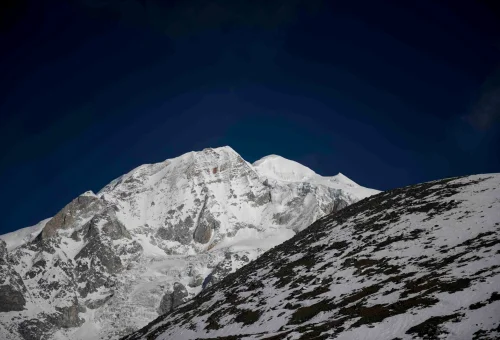
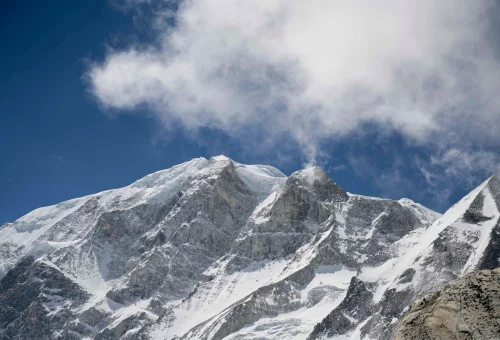
Larkya Peak (North) - 18 Days
18 Days
Kathmandu
Kathmandu
6249m
Spring and Autumn
Tea house & Camping
Jeep
15 pax Maximum
6000er
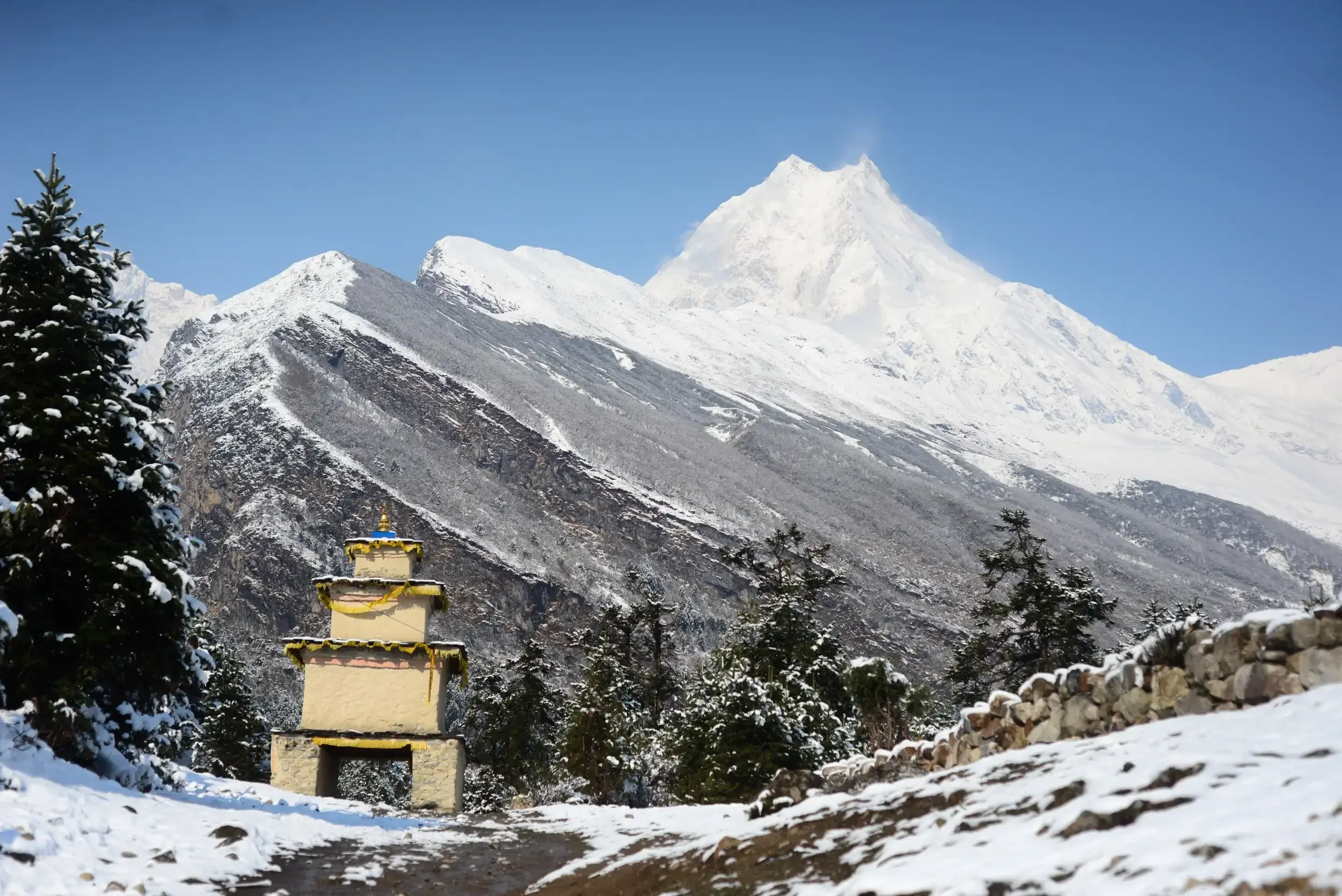
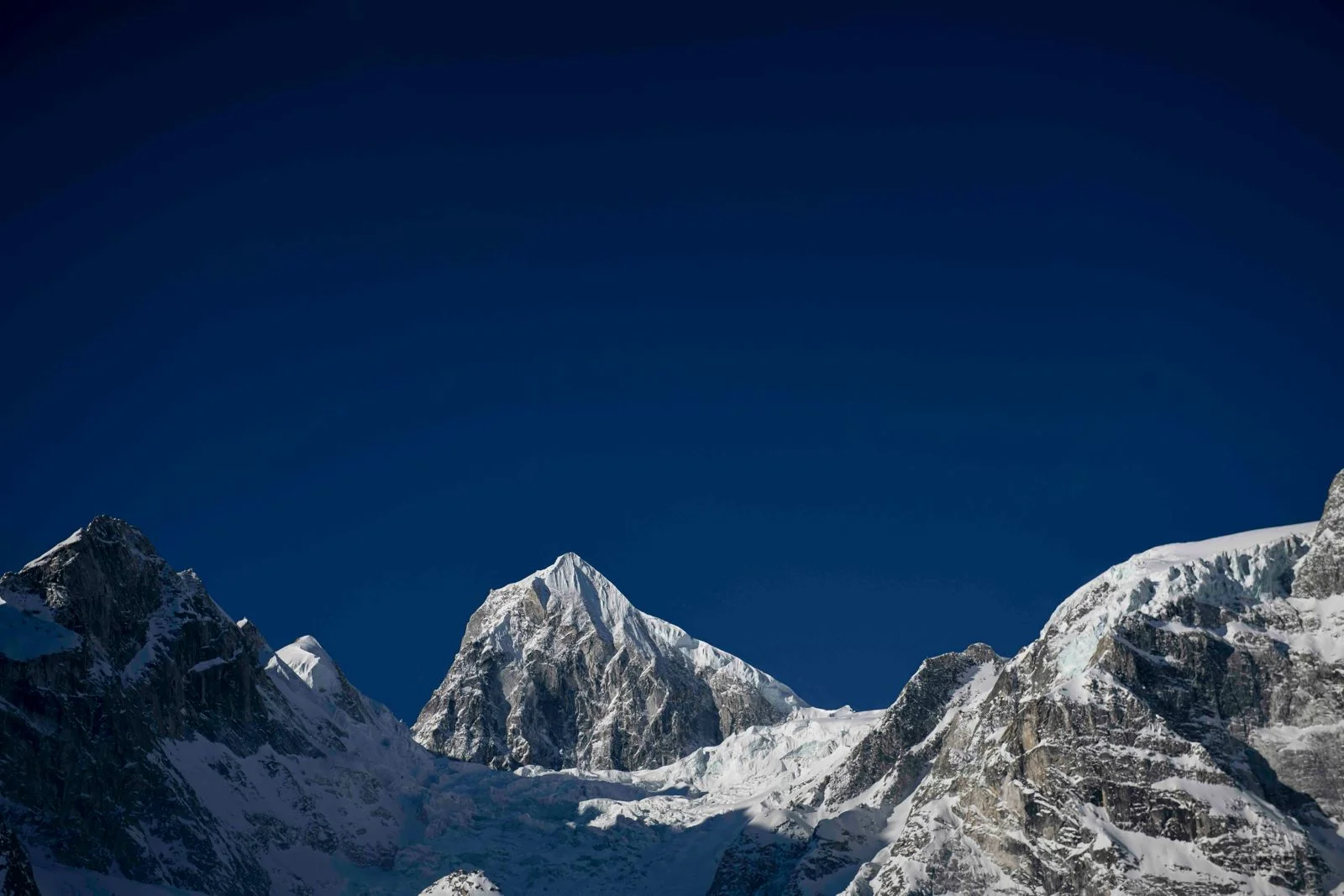
Join a guided ascent of Larkya Peak (North), a 6,249 m summit in Nepal's Manaslu region, combined with the classic Manaslu Circuit Trek and a route that passes within sight of Manaslu Base Camp, the world's eighth-highest mountain.
Introduction
The Larkya massif sits on the Gorkha–Manang border inside the Manaslu Conservation Area, and it's often misunderstood by climbers researching it online: the range actually holds three named summits, not one. Sano Larkya, Larkya North, and Thulo Larkya (the true high point, first climbed by a Georgian team in 2017) are frequently lumped together under a single "Larkya Peak" label across trekking sites. This itinerary is built specifically for Larkya North, registered with the Nepal Mountaineering Association (NMA) as a Group A trekking peak at 6,249 m, with permits issued through Nepal's Department of Tourism.
The route to get there follows the Manaslu Circuit itself - one of Nepal's most rewarding restricted-area treks. From Machha Khola, the trail climbs the Budhi Gandaki gorge through Jagat, Deng, and Namrung before opening into the high Manaslu valley at Samagaon and Samdo, where Mount Manaslu (8,163 m) dominates the skyline. Two full acclimatization days at these villages prepare climbers for the push above 4,000 m, continuing to Dharamshala and Larkya North High Camp before the summit day itself.
Compared to a technical expedition, Larkya North is a moderate objective: snow and scree slopes with fixed ropes in the steeper sections, well within reach of trekkers who have some prior high-altitude experience and reasonable fitness, rather than requiring advanced ice or rock climbing skills. It's a common choice for climbers building toward bigger 7,000 m and 8,000 m objectives, as well as for strong trekkers looking to add a genuine summit to a Manaslu Circuit trip. After the summit, the route continues over Larkya La Pass (5,106 m) - the highest point of the Circuit itself - before descending to Bimthang and back toward Kathmandu via Dharapani and Besisahar.
Expedition Himalaya operates this climb with a licensed climbing guide, dedicated high-camp support, and a built-in contingency day for the summit push, so a single bad-weather day doesn't cost the whole climb. All permits, conservation fees, and government royalties are all covered.
Larkya North - Trip Highlights
- Summit Larkya Peak (North) at 6,249 m, an accessible introduction to 6,000-meter mountaineering in the Manaslu region.
- Cross the full Manaslu Circuit and the Larkya La Pass (5,106 m), its highest point, with views of Manaslu, Himlung Himal, and the Annapurna range.
- Pass close to Manaslu Base Camp, beneath the world's eighth-highest mountain (8,163 m), through Gurung and Tibetan-influenced villages along the way.
- Climb with a licensed guide and a built-in weather contingency day, so a single bad-weather day doesn't cost the summit
Itinerary
Day 1: Arrival in Kathmandu (1,330 m / 4,363 ft)
Upon arrival at Tribhuvan International Airport, a representative will assist you with your transfer to the hotel. Relax or explore the vibrant city of Kathmandu in your free time.
Day 2: Rest, document preparation, and sightseeing
Day 2 will be your preparation day for the expedition. Begin your day with a leisurely breakfast, followed by document preparation and sightseeing, visit Kathmandu Durbar Square, Hindu temples and shrines, Buddhist stupas, or simply relax at the hotel.
Day 3: Drive to Machha Khola (930 m / 3,051 ft)
Since the road has been extended beyond Sotikhola, it is recommended to drive directly to Machhakhola, avoiding an overnight stay in Soti Khola. We will start our journey with a 157-kilometer drive from Kathmandu to Machha Khola, passing through Arughat and Sotikhola on unpaved roads. Situated along the banks of the Budhi Gandaki River, Machhakhola marks the beginning of our trek through the Manaslu Valley. This river will guide us as we make our way up to the Larkya La Pass, where we will discover its source.
Day 4: Trek to Jagat (1,410 m / 4,625 ft)
We begin our day by trekking leisurely through Khorla Besi and heading towards Tatopani, known for its natural hot springs. After enjoying the soothing waters, we undertake a steep ascent to Dobhan, entering the Manaslu Conservation Area. From there, we continue to Jagat, where we are greeted by rugged landscapes and narrow, paved trails.
Day 5: Trek to Deng (1,860 m / 6,102 ft)
Starting from Jagat, you follow the well-paved trails through terraced fields and picturesque villages. The trail gradually ascends, as you make your way to Deng, you will cross suspension bridges over the rushing waters of the Budhi Gandaki River, adding a sense of adventure to your trek. The route takes you through lush forests filled with rhododendrons, pine, and bamboo, offering occasional glimpses of exotic wildlife. Highlights include the village of Philim, known for its cultural charm and traditional Tibetan-influenced architecture. As you approach Deng, the landscape opens, revealing high, snow-capped peaks in the distance and serene rivers, creating a peaceful ambiance amidst the challenging terrain
Day 6: Trek to Namrung (2,660 m / 8,727 ft)
The trek from Deng to Namrung takes you through lush forests, across suspension bridges, and along the Budhi Gandaki River. You will pass through traditional villages like Rana and Bihi Phedi, experiencing the local Tibetan-influenced culture. The trail ascends, offering stunning views of mountains and valleys, while navigating rugged landscapes with cliffs and gorges. As you approach Namrung, you will enjoy panoramic views of the Manaslu range. Namrung is a welcoming village with stone houses, providing a perfect rest spot before continuing your journey through the Manaslu region.
Day 7: Trek to Sama Gaon (3,520 m / 11,548 ft)
The trek from Namrung to Sama Gaon takes you through a variety of stunning landscapes and vibrant cultural experiences. As you leave Namrung, the trail climbs gradually, offering breathtaking views of mountains and forests. You will pass through charming villages like Lho and Shyala, where traditional Tibetan-influenced architecture and local lifestyles are on display. As you approach Sama Gaon, the valley opens to reveal expansive views of the majestic Manaslu and other peaks. Sama Gaon is a picturesque village where you can rest and acclimatize, soaking in the rich cultural heritage and stunning surroundings.
Day 8: Acclimatization / Rest Day
After passing the village of Lho, trek further through beautiful valleys and arrive at Samagaon, a village at the base of Mount Manaslu. The area offers stunning views of the surrounding peaks.
Day 9: Trek to Samdo (3,690 m / 12,106 ft)
Leaving Sama Gaon, the trail gradually ascends through picturesque landscapes, offering stunning views of the surrounding mountains. As you approach Samdo, the scenery becomes increasingly dramatic, with towering peaks and expansive valleys. Samdo, situated at an altitude of around 3,875 meters (12,713 feet), is a traditional Tibetan village that offers a unique cultural experience. Here, you can interact with the local people, learn about their way of life, and enjoy the breathtaking panoramic views. The trek to Samdo is a blend of natural beauty and cultural richness, making it a memorable part of your journey through the Manaslu region.
Day 10: Trek to Dharamshala (4470 m / 14,665 ft)
The trek from Samdo to Dharamshala is a challenging yet rewarding journey. As you leave Samdo, you will notice the landscape becoming more rugged and dramatic, with towering peaks surrounding you. The trail steadily ascends, offering panoramic views of the Himalayas and the opportunity to see wildlife unique to this high-altitude environment. Dharamshala, also known as Larkya Phedi, is a small settlement situated at an altitude of approximately 4,460 meters (14,632 feet). It serves as a base camp for trekkers preparing to cross the Larkya La Pass.
Day 11: Trek to Larkya North High Camp (5,140 m / 16,863 ft)
The trek from Dharamshala to Larkya North High Camp is an exhilarating journey through rocky terrain and alpine landscapes, with panoramic views of towering peaks and glaciers. As you ascend through moraines and potentially snowy patches, the air becomes thinner and the environment harsher, heightening the sense of adventure. Reaching the Larkya North High Camp at 5,140 meters (16,863 feet), you are rewarded with stunning views and a prime location to rest and acclimatize before the final ascent, setting the stage for an unforgettable experience in the high Himalayas.
Day 12: Summit Larkya North Peak (6,065 m / 19,898 ft) and descend to High Camp
The trek today takes you towards Larkya Phedi, the base camp for the Larkya Peak climb. This is a challenging section of the trek, and you’ll be walking on rugged terrain.
Today is the day for the thrilling ascent to the summit of Larkya North Peak, standing tall at 6,065 meters (19,898 feet). The climb is challenging, with steep sections and potentially icy conditions, but the views from the top are incredibly rewarding. Once you reach the summit, you will be greeted with breathtaking panoramic views of the surrounding Himalayas.
After taking in the stunning views and celebrating your achievement, you will begin the descent back to High Camp. The descent requires careful navigation, but the sense of accomplishment and the beauty of the high mountains will keep your spirits high. Upon returning to High Camp, you can rest and reflect on the incredible experience of summiting Larkya North Peak.
Day 13: Contingency Day
This day serves as a buffer to accommodate any unforeseen delays, such as adverse weather conditions or other challenges that may arise during the trek. It ensures that the expedition remains on schedule while providing flexibility for rest and recovery if needed. This extra day helps to maintain the safety and well-being of all participants, allowing for a more relaxed and successful trip.
Day 14: Trek to Bhimthang (3,720 m / 12,204 ft) via Larke La Pass (5,106 m / 16,752 ft)
The trek from High Camp to Bhimthang is an exhilarating and challenging journey that takes you over the famous Larke La Pass, standing at 5,106 meters (16,752 feet). You will start early in the morning to make the most of the clear weather and stunning views. The ascent to the pass is steep and demanding, but reaching the top is incredibly rewarding. The descent from the pass is equally challenging, requiring careful navigation through rocky terrain and potentially snowy patches. As you descend, you will be greeted by changing landscapes, from the barren high-altitude terrain to lush forests. Bhimthang, located at 3,720 meters (12,204 feet), is a picturesque destination where you can rest and recover from the strenuous day.
Day 15: Trek to Tilche (2,560 m / 8,398 ft)
The trek from Bhimthang to Tilche takes you through beautiful rhododendron forests, meadows, and along scenic river trails, offering stunning mountain views. As you descend to lower altitudes, you will pass through charming villages and terraced fields, where you can experience the local culture and hospitality. Reaching Tilche, at 2,560 meters (8,398 feet), you will find a peaceful spot to rest and reflect on the day's journey.
Day 16: Drive to Besisahar (760 m / 2,493 ft) then to Kathmandu (1330 m / 4,363 ft)
After a fulfilling trek, you will begin your journey back by driving to Besisahar, located at 760 meters (2,493 feet). From there, you will continue your drive to Kathmandu, situated at 1,330 meters (4,363 feet). This drive takes you through beautiful landscapes and scenic views, offering a relaxing end to your adventure. Upon reaching Kathmandu, you can rest and reflect on the incredible experiences and memories made during your trek.
Day 17: Leisure Day in Kathmandu (1330 m / 4,363 ft)
Enjoy a well-deserved leisure day in Kathmandu. This day is perfect for relaxing, exploring the city, or visiting some of its famous cultural and historical sites. You can wander through the bustling streets, savor the local cuisine, and take in the rich heritage of Kathmandu. In the evening, you will be treated to a special farewell dinner at an authentic Nepali restaurant. This is a wonderful opportunity to enjoy traditional Nepali dishes, reflect on your trekking adventure, and celebrate with your fellow trekkers.
Day 18: International Departure
It is time for your final departure. You will be transferred to Tribhuvan International Airport for your flight back home. As you leave Kathmandu, you will carry with you the unforgettable memories and experiences from your trek through the Manaslu region. Safe travels and farewell!
Includes
- SERVICE IN KATHMANDU
- Airport Pick-up and Drop-off service in a private tourist vehicle and transfers as per itinerary
- Welcome dinner in Nepali restaurant
- 4 nights’ accommodation in Kathmandu in Hotel Manaslu or Hotel Tibet (Bed & Breakfast Plan) with a twin room supplement
- Transfers by comfortable shuttle as per itinerary
- GOVERNMENT AND RELATED COSTS
- Larkya North climbing royalty fees
- Garbage deposit fees
- Summit certificates from respective governments
- SERVICES DURING TREK
- Accommodation in tea houses on a full board meal plan
- English speaking experienced local guide
- Medical Kit carried by the Guide/Sardar
- BASE CAMP SERVICE
- Base Camp Accommodation with an individual sleeping tent with mattress.
- EPI gas and High-altitude foods during the climb having high calories
- EXPEDITION SERVICE
- One experienced climbing Sherpa for every two members during the summit push
- Fixed ropes and group climbing equipment for the ascent
- Walkie-talkie and satellite phone communication at High Camp (additional cost apply)
- Comprehensive first-aid kit carried by the climbing guide
- Sherpa remuneration and load-carrying bonus (summit bonus not included, payable separately if the summit is reached)
- Climbing equipment, transportation, lodging, food, and salaries for all Sherpas and expedition staff
- Insurance coverage for the climbing Sherpa, trekking guide, and porters, plus salary for all support staff
Excludes
- International airfare to and from Kathmandu and Nepal Visa Fees
- Travel & medical insurance including insurance for emergency rescue & evacuation
- Extra meals in Kathmandu (meals indicated in the itinerary will be provided)
- Personal expenses such as telephone, laundry, bottled water, bar bills, trekking/climbing gears, etc.
- Filming: Special filming, camera, and drone permit fee.
- Tips for Sherpa & tips for local staffs
- Cost for the daily weather forecast
- Any extra cost arising out of natural calamities or cancellation of the program
- All other items not mentioned in the list of ‘Inclusions’
Booking
Reviews

Good!
Exellent guide for solo trekking. The flexibility of the programm was good and everything worked with Expedition Himalaya.

Frequently Asked Questions!
How high is Larkya Peak (North), and where is it located?
Larkya Peak (North) rises to 6,249 m (20,501 ft) in the Manaslu Conservation Area, on the Gorkha–Manang border of Nepal, close to Larkya La Pass — the highest point of the Manaslu Circuit trek.
Is Larkya North the same peak as "Larkya Peak" or "Sano Larkya"?
Not always, and it's a genuine source of confusion when researching this region. The Larkya massif has three named summits: Sano Larkya, Larkya North, and Thulo Larkya — the true high point at 6,416 m, first climbed in 2017. Different operators use these names inconsistently. This itinerary specifically climbs Larkya North at 6,249 m, registered with the Nepal Mountaineering Association (NMA) as a Group A trekking peak.
Do I need prior mountaineering experience to climb Larkya North?
Formal technical climbing experience isn't mandatory but is strongly recommended. The route crosses snow and scree slopes with fixed ropes on the steeper sections near the summit, along with crampon and ice-axe use. Climbers should be comfortable with multi-day high-altitude trekking above 4,800 m and in solid physical condition; prior experience on a peak like Island Peak or Mera Peak helps but isn't required.
How difficult is Larkya North compared to other Nepal trekking peaks?
It's graded Strenuous — harder than a standard trek, but a single non-technical summit day rather than sustained ice or rock climbing. That makes it a reasonable first 6,000 m objective for strong trekkers, and a common acclimatization or training climb for those preparing for higher peaks.
What is the best season to climb Larkya North?
Spring (March–May) and autumn (September–November), when weather is most stable and mountain views are clearest. Winter brings heavy snow and closes the high camp; the monsoon (June–August) brings poor visibility and unstable river crossings lower on the trail.
What kind of accommodation is used during the trek and climb?
Teahouses up to Dharamshala; above that, the trip switches to tented camping at High Camp, with an individual sleeping tent, mattress, and high-altitude food supplies provided.
Can beginners join this climb?
Yes, with the right preparation. Larkya North is often used as an entry point into 6,000-meter mountaineering. Beginners should arrive reasonably fit and be prepared to follow crampon, ice-axe, and rope-fixing instruction from the climbing guide before the summit push.
Required Climbing Gear – Larkya Peak (North) (6,249 m / 20,501 ft)
Climbing Larkya Peak (North) requires standard trekking-peak mountaineering gear rather than full 8000m expedition equipment. The route is technically moderate - snow and loose rocky slopes with fixed ropes on the steeper sections near the summit - but High Camp sits above 5,100 m, where night-time temperatures can drop well below –15°C to –20°C and wind exposure increases sharply on summit day. Proper layering, footwear, and basic climbing gear are essential for both safety and summit success.