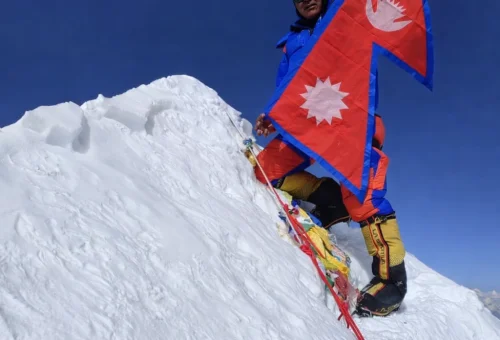
Makalu Expedition – Nepal's 5th Highest Peak - 8485 M - 49 Days
49 Days
Kathmandu
Kathmandu
Spring Season
Hotel, Tea house & Camping
Domestic Flights and Road Transfers
15 Pax
8485 m
The Mount Makalu Expedition is a serious 8000-meter climb via the South East Ridge, combining sustained technical difficulty, remote access through the Makalu–Barun Valley, and professionally managed high-altitude operations for experienced climbers.
Introduction
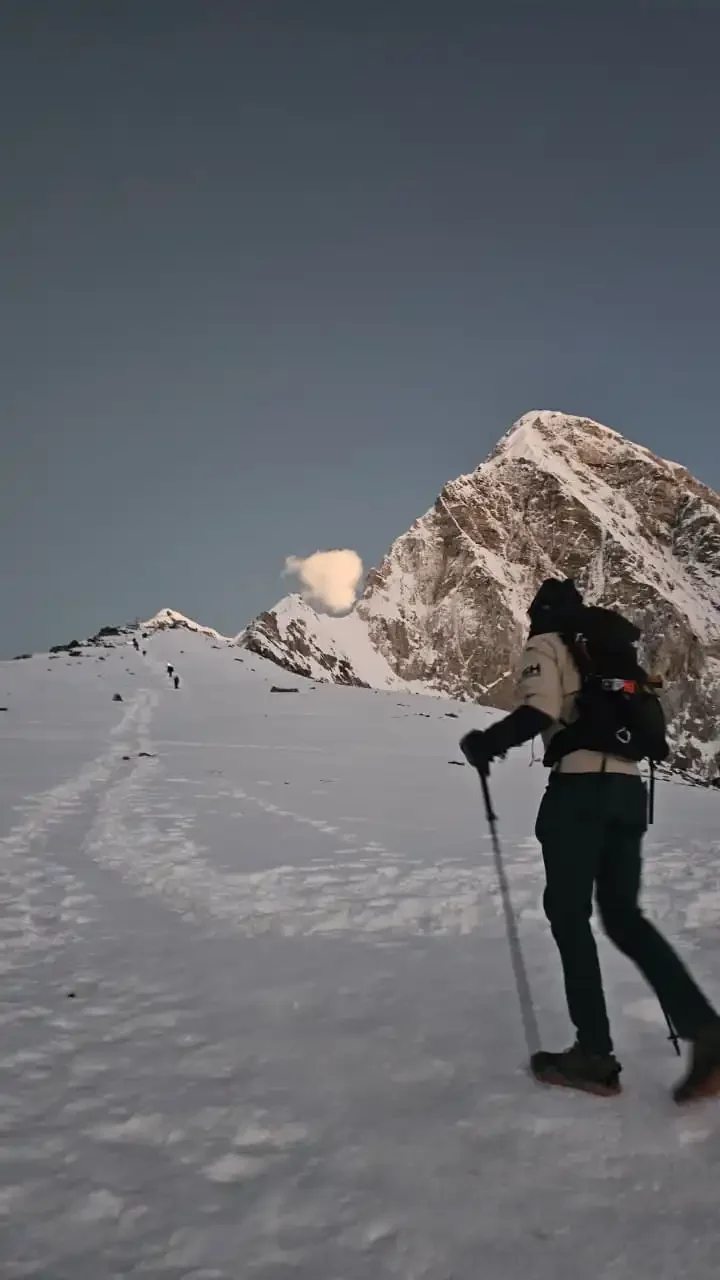
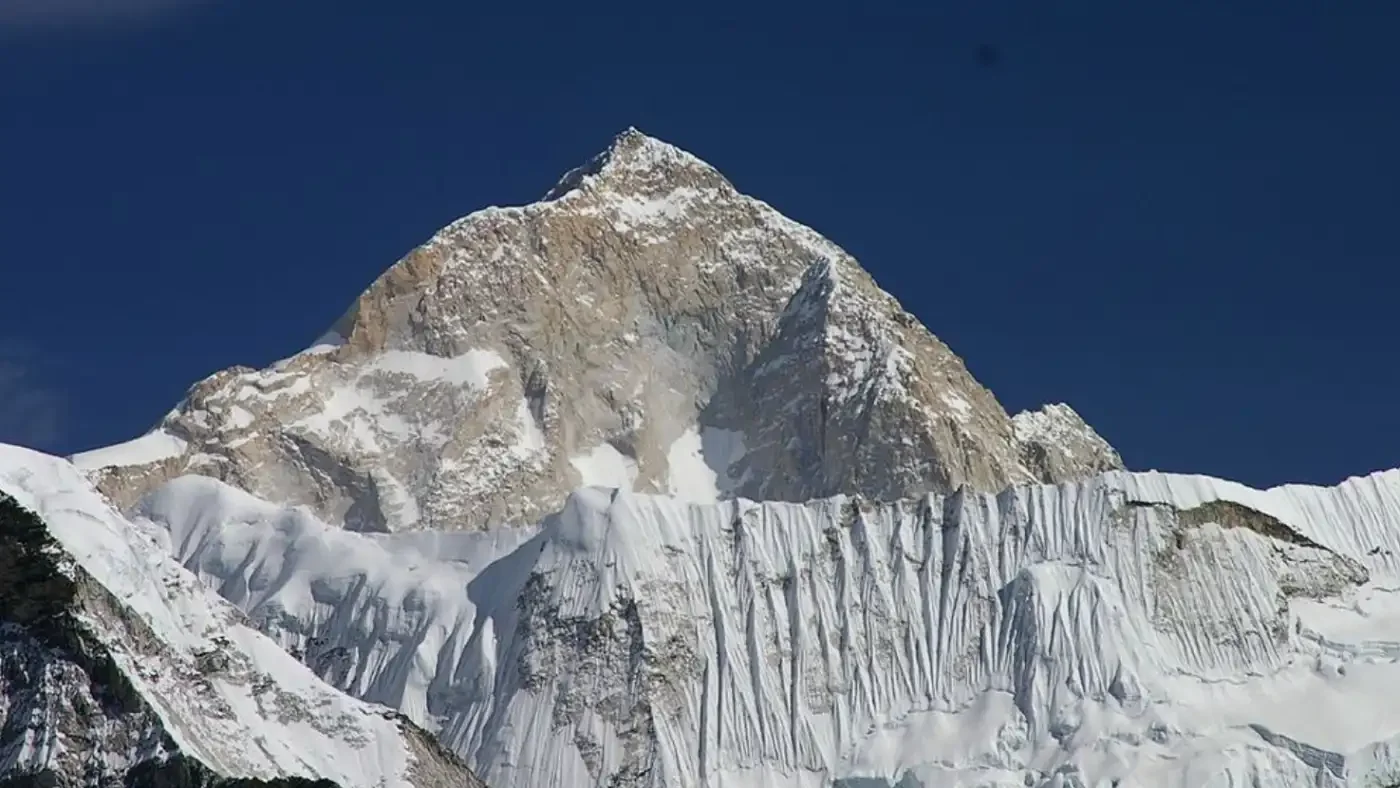
Mount Makalu, rising to 8,485 meters (27,838 ft), is the world’s fifth-highest mountain and one of the most technically demanding among the eight-thousanders. Located in the Mahalangur Himalaya, southeast of Mount Everest, Makalu shares the border between Nepal and Tibet (China). Its unmistakable four-sided pyramid shape, steep faces, and sharply defined ridges make it one of the most visually striking and formidable peaks in the Himalaya.
Makalu is widely respected for its sustained technical difficulty. The upper mountain demands steep snow, ice, and mixed climbing on exposed terrain, particularly across the summit pyramid and ridge sections. Knife-edged ridges, long sections of hard climbing at extreme altitude, and rapidly changing weather conditions place Makalu among the most serious 8000-meter objectives. It is a mountain suited only for experienced climbers with strong technical skills, high-altitude endurance, and sound judgment.
The Makalu massif is further defined by significant subsidiary peaks, including Kangchungtse (Makalu II – 7,678 m) and Chomo Lonzo (7,804 m), adding to the scale and complexity of the region. The standard climbing route, first established by the successful French expedition in 1955, follows the South East Ridge, accessed via the Makalu La. This route remains the primary and most realistic line for modern expeditions, though it retains a high level of technical and physical challenge.
Trek to Makalu Base Camp passes through the remote Makalu–Barun Valley, a protected area within Makalu Barun National Park. This region is regarded as one of the most pristine alpine environments in Nepal, defined by dramatic elevation changes—from deep river gorges and dense forests to high glaciers beneath towering Himalayan peaks. Limited access and minimal human settlement have preserved both the ecological and cultural integrity of the valley, making the approach itself a defining part of the expedition.
The Makalu Expedition is a demanding undertaking that combines technical climbing, true remoteness, and prolonged exposure to extreme altitude. At Expedition Himalaya, Makalu is approached with careful preparation, experienced leadership, and strong Sherpa support, emphasizing disciplined acclimatization, safety-focused decision-making, and responsible expedition practice. Makalu does not offer shortcuts or guarantees—only a serious test for climbers prepared to engage with one of the Himalaya’s most uncompromising mountains.
Trip Highlights – Makalu Expedition
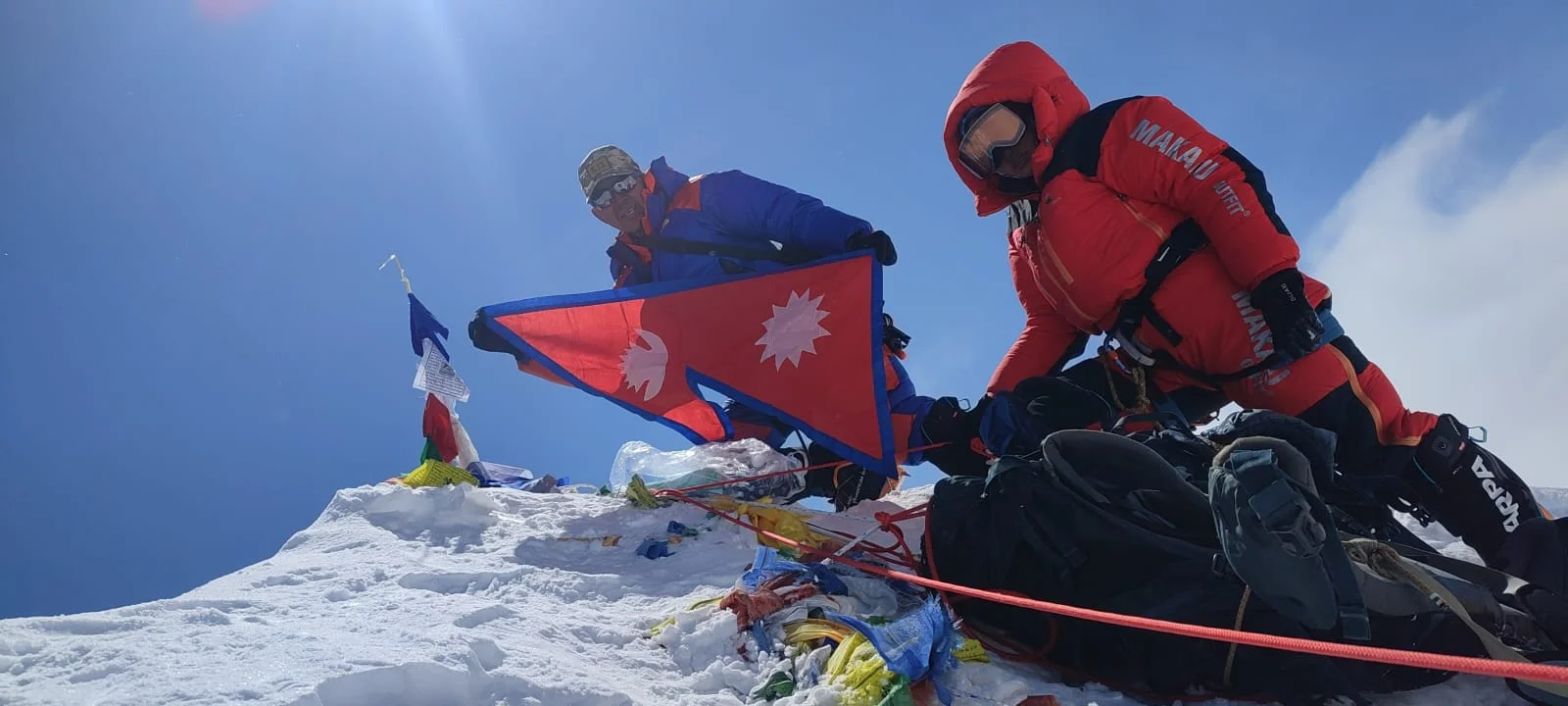
- Summit of Mount Makalu (8,485 m / 27,838 ft): Climb the world’s fifth-highest mountain, recognized for its steep faces, sharp ridges, and sustained technical difficulty among the 8000-meter peaks.
- South East Ridge (Normal Route): Climb Makalu via the historic South East Ridge, first climbed by the French expedition in 1955 and still the standard route for serious Himalayan expeditions.
- Remote Approach Through the Makalu–Barun Valley: Trek through one of Nepal’s most pristine and least-traveled alpine regions within Makalu Barun National Park, known for dramatic terrain and minimal human impact.
- Highly Technical High-Altitude Climbing: Experience prolonged steep snow, ice, and mixed climbing, including exposed ridge sections and the demanding upper summit pyramid.
Itinerary
Day 1: Arrival in Kathmandu (1,330 m / 4,364 ft)
Arrive in Kathmandu, Nepal’s capital city. Upon arrival at Tribhuvan International Airport, you are received by the Expedition Himalaya team and transferred to your hotel. The remainder of the day is free to rest after international travel or take a short walk nearby to experience the city’s atmosphere.
2-3: Expedition Preparation & Briefings in Kathmandu (1,330 m / 4,364 ft)
These days are reserved for expedition preparation. Activities include permit processing, gear checks, team briefings, and final logistical arrangements. You will meet the climbing Sherpa team and expedition leaders, review safety procedures, and discuss the overall climbing strategy.
Day 4: Fly to Tumlingtar (518 m / 1,699 ft) & Drive to Num (1,560 m / 5,118 ft)
A morning domestic flight takes you east to Tumlingtar, offering views of hills, rivers, and distant Himalayan ranges. From Tumlingtar, the journey continues by road toward Num along winding mountain routes. The drive passes terraced farmland, forested slopes, and small rural settlements. Num sits above the Arun River valley and marks the gateway to the Makalu region.
Day 5: Trek to Seduwa (1,500 m / 4,921 ft)
The trek begins with a steep descent from Num to the Arun River, followed by a gradual climb through cultivated fields and forested trails. Entering Makalu Barun National Park, the route passes through small villages and farmland. Seduwa lies on a hillside with a quiet mountain atmosphere.
Day 6: Trek to Tashigaon (2,070 m / 6,791 ft)
The trail climbs steadily through forested terrain and traditional settlements inhabited mainly by Rai and Sherpa communities. The surrounding landscape becomes increasingly rugged as elevation increases. Tashigaon is the final permanent village on the route and an important staging point before higher alpine terrain.
Day 7: Acclimatization Day at Tashigaon (2,070 m / 6,791 ft)
A full acclimatization day is spent in and around Tashigaon. Short hikes to nearby ridges and higher ground help the body adjust to increasing altitude. The remainder of the day is reserved for rest, hydration, and preparation for the steeper ascent ahead. This day plays an important role in safe acclimatization before entering higher terrain.
Day 8: Trek to Khongma Danda (3,500 m / 11,483 ft)
A demanding ascent leads through dense forest and rhododendron stands before emerging onto open ridges. As vegetation thins, views open across deep valleys and distant peaks. Khongma Danda sits on a high ridge and marks the transition into the high-altitude environment.
Day 9: Trek to Dobato (3,860 m / 12,664 ft) via Khongma La (3,870 m / 12,697 ft)
The route crosses Khongma La Pass, traversing rocky terrain and exposed ridgelines. After the pass, the trail descends into a stark alpine zone with minimal vegetation. Dobato lies beneath surrounding ridges and offers expansive views of the upper valleys.
Day 10: Trek to Yangri Kharka (3,630 m / 11,909 ft)
Descending into open grazing land, the trail enters wide alpine meadows used seasonally by yak herders. The valley broadens and is framed by steep mountain walls shaped by glaciers and erosion.
Day 11: Trek to Langmale Kharka (4,410 m / 14,469 ft)
The trail follows the Barun River upstream, climbing gradually through glacial terrain. The landscape becomes increasingly austere, dominated by rock, ice, and moraine. Langmale Kharka serves as an important acclimatization point before Base Camp.
Day 12: Trek to Makalu Base Camp (4,870 m / 15,978 ft)
The final trek to Base Camp crosses rocky moraines and glacial sections. Makalu Base Camp is established on a broad glacial plateau beneath the massive south face of Makalu. Once you reach Base Camp, your tents will be ready with warm drinks ready for you at the dinning.
13 -38: Climbing Period on Makalu (8,485 m / 27,838 ft)
After completing the climb, begin your descent to Yangle Kharka (3,600m). This will help your body adjust back to lower altitudes and allow you to reflect on the climb.
This period is dedicated to structured acclimatization rotations, load carries, camp establishment, and summit attempts via the Southeast Ridge route.
Climbers typically complete two full acclimatization rotations between Base Camp and higher camps before attempting the summit. Rest days are taken between rotations to ensure proper recovery.
The summit attempt is attempted only during a suitable weather window. The ascent involves steep snow and ice climbing and exposed ridges leading to the summit of Makalu. All decisions prioritize safety, weather conditions, and team health.
Day 39: Rest, Base Camp Pack-Up & Clean-Up (4,870 m / 15,978 ft)
After the climbing phase, time is allocated for rest, equipment organization, and Base Camp clean-up before beginning the return journey.
Day 40: Trek to Langmale Kharka (4,410 m / 14,469 ft)
The descent from Makalu Base Camp begins across familiar glacial terrain and rocky moraine. Moving away from the high camp environment, the trail follows the upper Barun Glacier before gradually descending into broader alpine ground. The surroundings remain stark and open, with towering ridges and ice-covered slopes dominating the landscape. Reaching Langmale Kharka, the slightly lower altitude brings noticeable physical relief after the climbing phase.
Day 41: Trek to Yangri Kharka (3,630 m / 11,909 ft)
The route continues downhill through wide alpine meadows shaped by glaciers and seasonal grazing. As altitude decreases, vegetation slowly returns and the valley opens further, revealing long views across the Barun Valley. The trail follows gentle contours, allowing a steady pace and time to reflect on the expedition as the environment becomes more forgiving.
Day 42: Trek to Dobato (3,860 m / 12,664 ft)
Leaving the open valley, the trail gradually climbs back toward Dobato, crossing rolling ridges and high pastures. The terrain alternates between rocky paths and grassy sections, with expansive views of surrounding peaks and valleys. This section marks a return to higher ridgelines, offering a final perspective over the remote upper Makalu region.
Day 43: Trek to Khongma Danda (3,500 m / 11,483 ft)
The route continues along exposed ridges before descending slightly toward Khongma Danda. The trail passes through alpine terrain with wide views across deep valleys and distant mountain walls. Khongma Danda sits prominently on a high ridge and provides one of the last sweeping viewpoints of the expedition.
Day 44: Trek to Tashigaon (2,070 m / 6,791 ft)
A long descent leads back into forested terrain, with rhododendron and mixed forests gradually replacing alpine ground. The air becomes warmer and more humid as the trail passes through traditional villages and cultivated land. Tashigaon marks a clear transition back into permanent settlement and everyday mountain life.
Day 45: Trek to Seduwa (1,500 m / 4,921 ft)
The trail descends gently through farmland, cardamom plantations, and forest paths within Makalu Barun National Park. Passing small villages and cultivated terraces, the route reflects the agricultural rhythm of the lower hills. This day offers a relaxed pace after the high-altitude section of the journey.
Day 46: Drive to Tumlingtar (518 m / 1,699 ft)
The final trekking section concludes with a road journey from Seduwa to Tumlingtar. The drive follows winding mountain roads through river valleys, forests, and rural settlements. Arriving in Tumlingtar marks the end of the remote mountain journey and a return to easier access and infrastructure.
Day 47: Fly to Kathmandu (1,330 m / 4,364 ft)
A domestic flight brings you back to Kathmandu. The remainder of the day is free to rest and recover.
Day 48: Leisure Day in Kathmandu (1,330 m / 4,364 ft)
This day is kept free for rest and personal exploration after returning from the expedition. You may choose to explore Kathmandu’s historic neighborhoods, visit nearby UNESCO World Heritage Sites, or spend time in local markets and cafés. It is also an ideal opportunity to enjoy a massage, reflect on the journey, or simply rest and recover. This flexible day also serves as a buffer for weather-related delays earlier in the expedition.
Day 49: International Departure
Expedition Himalaya arranges your transfer to Tribhuvan International Airport for your international departure. As you leave Nepal, the journey concludes with lasting memories of the mountains, landscapes, and people that defined your expedition.
Includes
- SERVICE IN KATHMANDU
- Airport Pick-up and Drop-off service in a private tourist vehicle.
- 5 night’s accommodation in Kathmandu at 4-star category hotel including breakfast on twin sharing basis.
- Kathmandu-Tumlingtar and return flights as per itinerary. (Extra cost for Heli Flight)
- Welcome dinner at an authentic Nepali restaurant in Kathmandu
- GOVERNMENT & RELATED CHARGES
- Makalu climbing royalty fees,
- Garbage deposit fees, Rope-fixing charge
- Liaison officer and all expenses related to Liaison Officer
- Makalu-Barun national park permit fee and other relatable permit fees
- SERVICE DURING TREK
- Accommodation during the trek in local Teahouse/Lodges.
- Meals - Full Board (Breakfast, Lunch and Dinner) during the trek.
- Services of an experienced English-speaking trekking guide during the trek and their entire expenses.
- Porters (One porter for every 1 members) and their entire expenses
- First Aid Kit (Carried by trek guide)
- BASE CAMP SERVICE
- Base Camp Accommodation with an individual sleeping tent with mattress.
- Base Camp service (shared with the group) includes a kitchen tent with the cook, kitchen boy, dining tent with tables and chairs, shower tent, toilet tent, storage tent, gas heater,etc.
- EPI gas and High altitude foods during the climb having high calories.
- First aid kit
- EXPEDITION SERVICE
- 4 bottles of supplementary oxygen for Climber and 2 bottles for Climbing Sherpa including mask and regulator
- One climbing Sherpa for one climbing member during the climbing period.
- Sherpa's remuneration and load-bearing bonus (this bonus does not include the summit bonus)
- Climbing equipment, transportation, lodging, food, and salaries for Sherpas and staff are provided.
- The expenses of Insurance for Sherpa, trekking guide and porters and salary for all staffs. (includes Heli evacuation for Sherpa)
- Walkie-Talkie and Satellite Phone (Charges Per Call)
Excludes
- International airfare to and from Kathmandu and Nepal Visa Fees
- Travel & medical insurance including insurance for emergency rescue & evacuation
- Lunches and dinners in Kathmandu except welcome or farewell dinner
- Personal expenses such as telephone, laundry, bottled water, bar bills, trekking/climbing gears, etc.
- Summit bonus for Sherpa ($1000) & tips for local staffs ($200)
- Cost for the daily weather forecast
- Any extra cost arising out of natural calamities or cancellation of the program
- All other items not mentioned in the list of ‘Inclusions
Reviews

Good!
Exellent guide for solo trekking. The flexibility of the programm was good and everything worked with Expedition Himalaya.

Frequently Asked Questions
What prior experience is required to join the Makalu Expedition?
Participants should have previous experience on at least one 7000-meter peak or an 8000-meter expedition, along with solid skills in snow, ice, and mixed climbing. Familiarity with fixed ropes, crampon technique, and self-care at extreme altitude is essential.
What is the standard climbing route on Makalu?
The expedition follows the standard Southeast Ridge route, first established by the French expedition in 1955. This route involves glacier travel, steep snow and ice sections, and exposed ridge climbing near the summit.
What makes Makalu particularly challenging?
Makalu is known for:
- Sustained steep climbing
- Technical summit pyramid
- Knife-edged ridges exposed to wind
- Limited safe resting platforms
- Rapidly changing weather
These factors demand patience, discipline, and strong decision-making.
How difficult is Mount Makalu compared to other 8000-meter peaks?
Mount Makalu is considered one of the most technically demanding eight-thousanders. Steep snow and ice slopes, exposed ridges, and a challenging summit pyramid make it more technical than peaks like Cho Oyu or Manaslu. It is best suited for climbers with strong high-altitude and technical climbing experience.
How remote is the Makalu Expedition?
Makalu is one of the most remote 8000-meter expeditions in Nepal. The approach trek passes through the Makalu–Barun National Park, with limited infrastructure and long access routes. Self-sufficiency and logistical planning are critical.
Is communication available during the expedition?
Satellite phones and limited internet might be available at Base Camp. Radio communication is used between camps. Satellite calls are charged separately.
What is the best season for climbing Makalu?
The primary season is spring (April–May). Autumn ascents are rare due to colder temperatures and less stable conditions.
Is reaching the summit guaranteed?
No. There are no guarantees on Makalu or any 8000-meter peak. Success depends on weather, conditions, acclimatization, and individual health. Safety always takes precedence over summit goals.
What food is provided during the expedition?
At Base Camp, meals are prepared by experienced expedition cooks and include nutritious, high-calorie food. At higher camps, food becomes lighter and more functional, focusing on hydration and energy.
What accommodation is provided during the expedition?
Accommodation includes:
- Hotel stays in Kathmandu
- Tea House\Lodge during the approach trek
- A fully serviced Base Camp
- High-altitude tents at climbing camps
Facilities become progressively more basic with altitude.
Why choose Expedition Himalaya for Makalu?
Expedition Himalaya approaches Makalu with realistic itineraries, experienced leadership, strong Sherpa support, and conservative decision-making. The focus is on preparation, safety, and responsible expedition management rather than rushed summit attempts.
Gear List