sales@expeditionhimalaya.com
+977 985-1004278
Customize Trip
All Packages
Trekking
Everest Region
Annapurna Region
Langtang Region
Makalu Region
Manaslu Region
Wilderness & Remote Trek
Expeditions
8000ers
7000ers
6000ers
Combo
Tours
Nepal Experiences
Scenic Helicopter Tours
Tibet
Information
Booking Terms and Conditions
Expedition & Trekking Gear Guide
Permit | Garbage
Nepal Travel & Visa Guide (Updated 2026)
Tibet Tour Guide Book
A Dining Guide by Expedition Himalaya
Company
About Expedition Himalaya
Meet the Team
Blog
Testimonials
Legal Documents
Contact Us
Traveler Login
Open main menu
Close menu
All Packages
Trekking
Everest Region
Annapurna Region
Langtang Region
Makalu Region
Manaslu Region
Wilderness & Remote Trek
Expeditions
8000ers
7000ers
6000ers
Combo
Tours
Nepal Experiences
Scenic Helicopter Tours
Tibet
Information
Booking Terms and Conditions
Expedition & Trekking Gear Guide
Permit | Garbage
Nepal Travel & Visa Guide (Updated 2026)
Tibet Tour Guide Book
A Dining Guide by Expedition Himalaya
Company
About Expedition Himalaya
Meet the Team
Blog
Testimonials
Legal Documents
Contact Us
Traveler Login
sales@expeditionhimalaya.com
+977 985-1004278
Customize Trip
All Packages
Trekking
Everest Region
Annapurna Region
Langtang Region
Makalu Region
Manaslu Region
Wilderness & Remote Trek
Expeditions
8000ers
7000ers
6000ers
Combo
Tours
Nepal Experiences
Scenic Helicopter Tours
Tibet
Information
Booking Terms and Conditions
Expedition & Trekking Gear Guide
Permit | Garbage
Nepal Travel & Visa Guide (Updated 2026)
Tibet Tour Guide Book
A Dining Guide by Expedition Himalaya
Company
About Expedition Himalaya
Meet the Team
Blog
Testimonials
Legal Documents
Contact Us
Traveler Login
Open main menu
Close menu
All Packages
Trekking
Everest Region
Annapurna Region
Langtang Region
Makalu Region
Manaslu Region
Wilderness & Remote Trek
Expeditions
8000ers
7000ers
6000ers
Combo
Tours
Nepal Experiences
Scenic Helicopter Tours
Tibet
Information
Booking Terms and Conditions
Expedition & Trekking Gear Guide
Permit | Garbage
Nepal Travel & Visa Guide (Updated 2026)
Tibet Tour Guide Book
A Dining Guide by Expedition Himalaya
Company
About Expedition Himalaya
Meet the Team
Blog
Testimonials
Legal Documents
Contact Us
Traveler Login
sales@expeditionhimalaya.com
+977 985-1004278
Customize Trip
Why Autumn Is the Best Season for Himalayan Expeditions and Trekking
Written by:
Niren Maharjan
Published On Jul 12, 2026
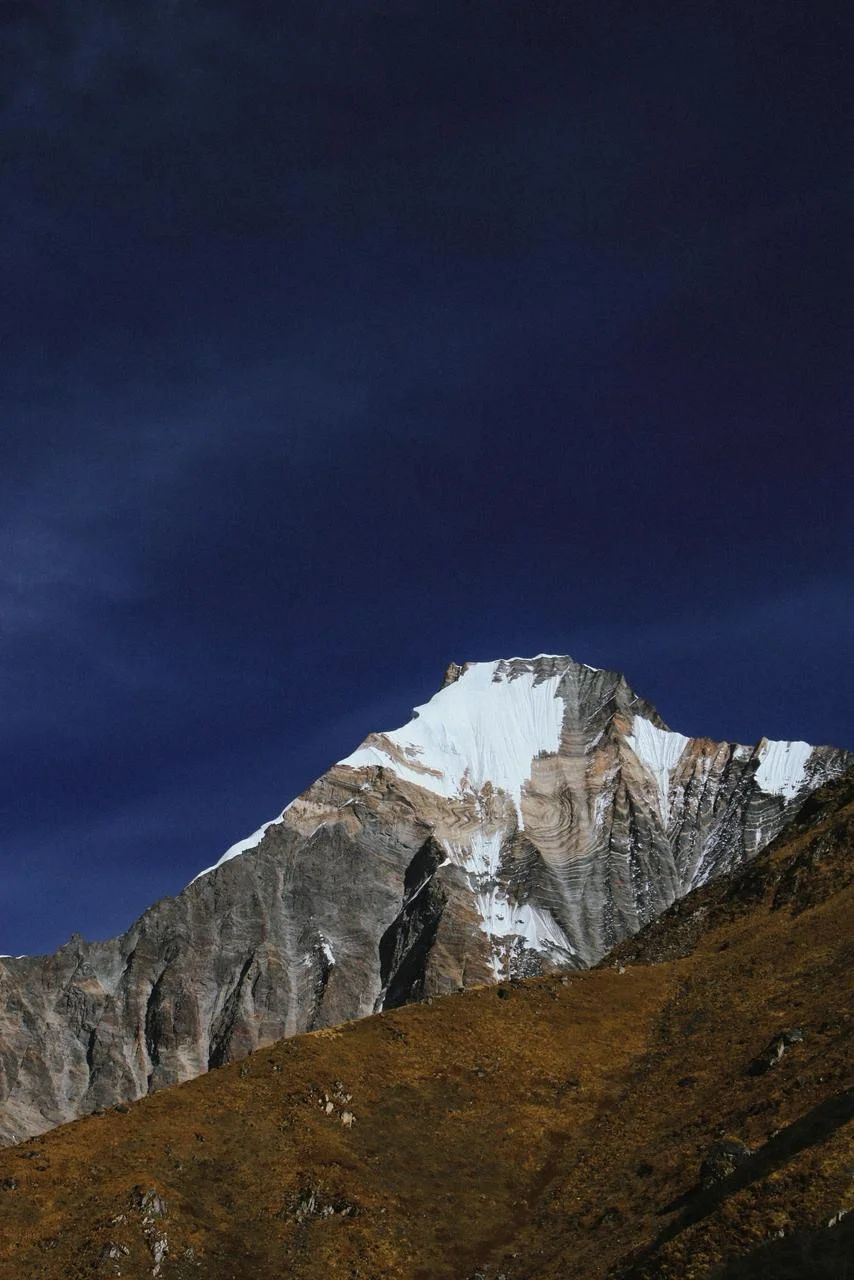
{"time":1783865277380,"blocks":[{"id":"EsnEEIxHbQ","type":"paragraph","data":{"text":"By the last week of August,\nthe clouds that have sat over the Himalayas since June start breaking apart, and\nwithin a week or two the ridgelines that have been hidden all summer are\nvisible again, sharp against a blue sky that holds for days at a time. This\nshift, from monsoon haze to post-monsoon clarity, is the single biggest reason\nautumn has become Nepal's busiest trekking and climbing season. It is not\nmarketing. It is what the weather actually does at this time of year, and\nunderstanding the mechanics behind it, along with the real differences between\nSeptember, October, and November, makes for a much better-informed booking\ndecision than simply being told \u201cautumn is best.\u201d"}},{"id":"YLCKAwTuDd","type":"header","data":{"text":"What Autumn Actually Means in Nepal","level":2}},{"id":"44yABCUaGk","type":"paragraph","data":{"text":"Nepal's seasons do not map\ncleanly onto the Western calendar. In the context of trekking and expeditions,\n\u201cautumn\u201d refers to the post-monsoon period, roughly mid-September through late\nNovember, and what drives it is a genuine shift in atmospheric circulation, not\njust a change of month."}},{"id":"Yd5rIdimoJ","type":"paragraph","data":{"text":"Through the monsoon (mid-June to early-September), the subtropical jet stream sits north of the Himalayan range, which\nallows warm, moisture-laden air from the Bay of Bengal to push northward into\nNepal. That moisture is what produces the persistent cloud cover, heavy rain in\nthe middle hills, and poor high-altitude visibility that defines the monsoon\nmonths. Once the monsoon begins withdrawing in September, the jet stream shifts\nback south of the range, and dry northwesterly airflow replaces the moist\nsoutherly flow. According to Nepal's Department of Hydrology and Meteorology,\nthe average monsoon withdrawal date for eastern Nepal, including the Everest\nregion, falls in early October, though it shifts a week or two either way from\nyear to year."}},{"id":"-W9BmDViGq","type":"paragraph","data":{"text":"The practical result is what\nexpedition teams call a weather window: multi-day stretches of stable high\npressure, low wind at altitude, and minimal precipitation. On a Manaslu or Ama\nDablam expedition, these windows are what a summit push is actually built\naround."}},{"id":"6LP_9tb3sp","type":"image","data":{"url":"https:\/\/media.tripcart.com\/images\/2552\/web_2552_1778136441_644879_8864_1600x1067.webp","caption":"","alt":"Larkya NORTH 2","width":1063,"height":709,"withBorder":false,"withBackground":false,"stretched":false}},{"id":"KM63_sYipx","type":"header","data":{"text":"September, October, November: Three Different Months","level":2}},{"id":"85rPJ6GPdz","type":"paragraph","data":{"text":"Treating \u201cautumn\u201d as one uniform\nseason misses real differences between its three months, and the right one for\nyou depends on what you're prioritizing."}},{"id":"w38xILFue5","type":"paragraph","data":{"text":"<b>September <\/b>is a transition\nmonth. The first two weeks can still carry residual monsoon weather,\nparticularly in the lower hills, with wet trails and swollen rivers. From\nroughly the third week onward, conditions improve quickly at higher elevations,\nand by late September most routes above 3,500m are already seeing the first\nstretches of post-monsoon stability. Expedition teams heading to autumn peaks\nlike <a href=\"https:\/\/expeditionhimalaya.com\/package\/manaslu-expedition\/\" target=\"_blank\" rel=\"nofollow\">Manaslu<\/a> often use September as approach season, trekking to base camp and\nbeginning early acclimatization rotations while the higher mountain still\nfinishes clearing. September trekkers should be ready for the possibility of\nrain on lower trails, but are rewarded with lush, just-washed greenery and\nnoticeably thinner crowds than October."}},{"id":"eRygusO5Ch","type":"paragraph","data":{"text":"<b>October <\/b>is, by most\nmeasures, the strongest month of the year for both trekking and climbing. The\nmonsoon has fully cleared, the jet stream has stabilized, and high pressure\ndominates. Daytime temperatures at typical trekking elevations (3,500m to\n5,000m) generally run 5 to 15\u00b0C, with nights below freezing above 4,000m. At\nexpedition high camps on the 8,000m peaks, October nights can fall to minus\n20\u00b0C to minus 35\u00b0C before wind chill, which is normal for high-altitude\nmountaineering but demands proper equipment. Visibility is what draws most\npeople to October specifically: after four months of monsoon cloud, the\nmountains emerge in a clarity that photographs accurately capture, and in the\n<a href=\"https:\/\/expeditionhimalaya.com\/destinations\/everest-region-trekking\/\" target=\"_blank\" rel=\"nofollow\">Everest region<\/a> the larch forests below Namche turn gold, adding a visual marker\nof the season that spring simply doesn't have. The trade-off is that October is\nalso the single busiest trekking month of the year, and routes like the\nNamche-to-Tengboche section of the EBC trail can feel genuinely crowded."}},{"id":"AdIL2AGOEo","type":"paragraph","data":{"text":"<b>November <\/b>extends the\nseason into early winter with real advantages of its own. Crowds thin out\nsubstantially once Dashain and Tihar end, and visibility often stays excellent\nsince the air has had more time to fully dry out. The trade-off is temperature:\nabove 4,500m, November nights regularly fall to minus 15\u00b0C or colder, and high\npasses like Thorong La on the <a href=\"https:\/\/expeditionhimalaya.com\/package\/annapurna-circuit-trek\/\" target=\"_blank\" rel=\"nofollow\">Annapurna Circuit (5,416m)<\/a> can start accumulating\nsnow by mid-November, occasionally complicating crossings. For expedition\nclimbing, most teams aim to complete summit attempts by early November, since\nby mid to late November the jet stream repositions closer to the range and\nsummit-level wind speeds increase. As a trekking window, November through\nroughly the 20th is excellent; after that, conditions depend heavily on route\nand elevation."}},{"id":"IKDw-GiCaC","type":"header","data":{"text":"Temperature and Conditions by Elevation","level":2}},{"id":"gsSCL6j3qe","type":"table","data":{"withHeadings":false,"stretched":false,"content":[["<b>Elevation\n Band<\/b>\n ","<b>Typical\n Daytime \/ Overnight Temperature<\/b>\n "],["Lower valleys\n (Lukla, Phakding, 2,600-2,800m)\n ","15 to 20\u00b0C \/ 5\n to 10\u00b0C\n "],["Mid hills\n (Namche Bazaar, Tengboche, 3,400-3,900m)\n ","10 to 15\u00b0C \/ 0\n to 5\u00b0C\n "],["High valleys\n (Dingboche, Lobuche, 4,300-4,900m)\n ","5 to 10\u00b0C \/\n minus 5 to minus 10\u00b0C\n "],["Base camps and\n high camps (5,000m+)\n ","minus 5 to 5\u00b0C\n \/ minus 10 to minus 20\u00b0C\n "],["Expedition high\n camps (7,000m+)\n ","Well below\n freezing \/ minus 20 to minus 35\u00b0C before wind chill\n "]]}},{"id":"4q2cSIz9Gc","type":"image","data":{"url":"https:\/\/media.tripcart.com\/images\/2552\/web_1768987394_531827_1753_85_2600x1537.webp","caption":"","alt":"Mohare Danda","width":1063,"height":628,"withBorder":false,"withBackground":false,"stretched":false}},{"id":"Z2c6kYCwTN","type":"header","data":{"text":"Autumn vs Spring: An Honest Comparison","level":2}},{"id":"ofvtaUy7DZ","type":"paragraph","data":{"text":"Spring (March to May) is Nepal's\nother major season, and it has genuine strengths of its own rather than being\nsimply inferior to autumn."}},{"id":"487AQO0OkL","type":"paragraph","data":{"text":"<b>The case for spring: <\/b>rhododendron\nforests bloom below 3,500m, especially in March and April, adding color that\nautumn doesn't have. Daytime temperatures on the trail run warmer than autumn.\nFor <a href=\"https:\/\/expeditionhimalaya.com\/package\/everest-expedition\/\" target=\"_blank\" rel=\"nofollow\">Everest<\/a> and <a href=\"https:\/\/expeditionhimalaya.com\/package\/lhotse-expedition\/\" target=\"_blank\" rel=\"nofollow\">Lhotse<\/a> specifically, spring is the dominant season and the one\nnearly every operator, ourselves included, runs those expeditions in."}},{"id":"RWHduM92in","type":"paragraph","data":{"text":"<b>The case for autumn: <\/b>post-monsoon\nvisibility is generally clearer than pre-monsoon haze, since spring afternoons\ncan build cloud and dust, particularly in drier regions like Mustang. Summit\nwindows on peaks like <a href=\"https:\/\/expeditionhimalaya.com\/package\/manaslu-expedition\/\" target=\"_blank\" rel=\"nofollow\">Manaslu<\/a>, <a href=\"https:\/\/expeditionhimalaya.com\/package\/ama-dablam-expedition\/\" target=\"_blank\" rel=\"nofollow\">Ama Dablam<\/a>, <a href=\"https:\/\/expeditionhimalaya.com\/package\/himlung-himal-expedition\/\" target=\"_blank\" rel=\"nofollow\">Himlung<\/a>, and <a href=\"https:\/\/expeditionhimalaya.com\/package\/baruntse-amphu-lapcha-expedition\/\" target=\"_blank\" rel=\"nofollow\">Baruntse<\/a> tend to be longer and\nmore predictable in October than in spring, partly because spring expeditions\noperate against the pressure of an approaching monsoon with a variable arrival\ndate, while autumn has no equivalent deadline. The festival season, Dashain and\nTihar, adds a cultural layer spring doesn't have, and the golden larch forests\nof the Everest region are an autumn-only sight."}},{"id":"rYB33a-BzE","type":"paragraph","data":{"text":"For climbers targeting Manaslu,\nAma Dablam, Baruntse, or the popular 6,000m trekking peaks, autumn is generally\nthe operationally preferred season. For Everest specifically, spring remains\ndominant due to established logistics, permit concentration, and decades of\nroute-fixing tradition on that mountain."}},{"id":"75ig0WkyR-","type":"header","data":{"text":"The Cultural Layer: Dashain and Tihar","level":2}},{"id":"94rNmVaOGF","type":"paragraph","data":{"text":"Autumn overlaps with Nepal's two\nlargest festivals. Dashain, the most important festival in the Nepali calendar,\nis a roughly two-week celebration that typically falls in the first half of\nOctober, and Tihar, the festival of lights, follows two to three weeks later in\nlate October or early November. Because both follow the lunar calendar, exact\ndates shift year to year, so it's worth checking current dates when planning."}},{"id":"NUeH-wy8ac","type":"paragraph","data":{"text":"For trekkers passing through\nvillages during this period, the experience is genuinely worthwhile: houses\ndecorated, families reunited, a warmth in teahouse towns that doesn't exist at\nother times of year. There is one practical consideration worth knowing. During\nthe peak days of Dashain, some local transport and services slow down as staff\ntake leave to be with family, which rarely affects an organized trek or\nexpedition arranged well in advance, but can catch independent travelers\npiecing together logistics in Kathmandu off guard."}},{"id":"j6MvCKQZIh","type":"header","data":{"text":"Trail Conditions After the Monsoon","level":2}},{"id":"hn-sqt9iyt","type":"paragraph","data":{"text":"Whether autumn trails are in\nbetter shape than spring trails depends on what you're comparing. After the\nmonsoon, lower-elevation vegetation is lush and intensely green, waterfalls run\nstrong, and the landscape has a freshness that months of rain leave behind. At\nhigher elevations, particularly on routes crossing passes above 5,000m, the\nmonsoon deposits snow that has generally compacted or cleared by late September\non the main routes, though early-season trekkers on high routes should confirm\ncurrent conditions with their operator. The dust that characterizes some spring\nroutes, particularly in Mustang and the drier western sections of the Annapurna\nCircuit, is largely absent in autumn, which is part of why mountain views from\nlower elevations often read clearer in this season."}},{"id":"OG0cJA13S3","type":"image","data":{"url":"https:\/\/media.tripcart.com\/images\/2552\/web_2552_1767892445_657849_8475_2580x1722.webp","caption":"","alt":"Langtang","width":1063,"height":709,"withBorder":false,"withBackground":false,"stretched":false}},{"id":"TtEv1_MAjC","type":"header","data":{"text":"Planning for an Autumn Trek or Expedition","level":2}},{"id":"laQ2326fLe","type":"paragraph","data":{"text":"<b>Book early. <\/b>Autumn\ndepartures, October especially, fill well in advance. Teahouses at key stops on\npopular routes (Namche, Dingboche, Lobuche) reach capacity during peak weeks,\nand expedition permit slots are limited per season per peak. If a specific\nautumn departure matters to you, confirm it several months ahead rather than a\nfew weeks out."}},{"id":"Rfzp-5iZ3N","type":"paragraph","data":{"text":"<b>Understand your permit\nrequirements. <\/b>These vary by region: the Everest and Annapurna regions\nrequire a national park entry permit plus a local area permit; the Manaslu\nCircuit additionally requires a Restricted Area Permit; peak climbing and\nexpedition permits are separate applications through the Nepal Tourism Board or\nNepal Mountaineering Association. Expedition Himalaya handles all the paperwork and your permit process, so you don't have to worry. You can fully focus on your trip."}},{"id":"0sCpxpVp3S","type":"paragraph","data":{"text":"<b>Prepare for cold nights, even\nwhile trekking. <\/b>A sleeping bag rated to at least minus 10\u00b0C is appropriate\nfor high-elevation teahouses in October and November. Expedition camping at\nhigh altitude requires significantly warmer equipment again."}},{"id":"PrKxZTk27Q","type":"paragraph","data":{"text":"<b>Build in buffer days. <\/b>Autumn\nweather is excellent on the whole, but the mountains still make their own\ndecisions. Expedition itineraries include weather contingency days, and\ntrekkers should allow for the possibility of a delayed flight or an extra rest\nday at altitude. This is practical planning, not pessimism."}},{"id":"1b06QHvoB2","type":"header","data":{"text":"The Trade-offs: What Autumn Isn't","level":2}},{"id":"9sDhxQmCdv","type":"paragraph","data":{"text":"Autumn is Nepal's busiest\nseason, and that has real consequences. Teahouses on popular routes fill up\nquickly in October, flights to Lukla can be harder to book on short notice, and\nsome of the most photographed viewpoints will have other trekkers in the frame\nwith you. If solitude matters more than statistical odds of clear weather, late\nNovember, winter, or the quieter shoulders of spring may suit you better. If\nyou want autumn specifically but fewer crowds, a mid-to-late November departure\non popular routes is a reasonable compromise: weather generally stays favorable\nwhile trail traffic thins out considerably once Tihar ends."}},{"id":"4TSEV7GGhw","type":"header","data":{"text":"How Expedition Himalaya Plans Around the Season","level":2}},{"id":"avAKwhX6rm","type":"paragraph","data":{"text":"We build our Autumn 2026 fixed\ndepartures around this seasonal pattern rather than against it. Itineraries\ninclude contingency days precisely because even in the most reliable season of\nthe year, high-altitude weather can still close a summit window or delay a\nflight. Permits, staffing, and teahouse bookings for our autumn departures are\narranged months in advance specifically because October fills up fast across\nthe whole Khumbu and Manaslu regions. If you're planning an autumn trek or\nclimb with us, booking early is less about urgency marketing and more a\nstraightforward reflection of how limited teahouse and permit capacity actually\ngets during this window."}},{"id":"nDZm7Ylvk_","type":"header","data":{"text":"Frequently Asked Questions About Autumn Trekking and Climbing in Nepal","level":2}},{"id":"dm0Ip_Y7ge","type":"paragraph","data":{"text":"<b>Q: When exactly does the\nautumn trekking season start in Nepal?<\/b>"}},{"id":"GUVUHKi1S-","type":"paragraph","data":{"text":"A: Generally considered to begin\nin mid-September, though the most reliable conditions arrive from late\nSeptember onward. October 1 is a reasonable working start date for the best\nconditions on most routes."}},{"id":"BZASebVzcR","type":"paragraph","data":{"text":"<b>Q: Is October or November\nbetter for trekking?<\/b>"}},{"id":"yEB7xujvJz","type":"paragraph","data":{"text":"A: October offers warmer\ntemperatures and the peak of post-monsoon clarity, but it is also the busiest\nmonth. November is quieter with often excellent visibility, but colder,\nespecially above 4,000m, and high passes can start accumulating snow by mid-November.\nMost trekkers find October the best overall balance; November suits those who\nprioritize quiet trails over warmth."}},{"id":"V6eydN3Kwt","type":"paragraph","data":{"text":"<b>Q: Can I trek in Nepal in\nSeptember?<\/b>"}},{"id":"iCxVzpNVv9","type":"paragraph","data":{"text":"A: Yes, with awareness. The\nfirst two weeks can still carry monsoon weather at lower elevations. By late\nSeptember, conditions on most routes above 3,500m are good and improving daily,\nwith the reward of lush scenery and noticeably thinner crowds than October."}},{"id":"XxVnEkm_uT","type":"paragraph","data":{"text":"<b>Q: How cold does it get\nduring an autumn trek?<\/b>"}},{"id":"pspJpR6OLh","type":"paragraph","data":{"text":"A: It depends heavily on\nelevation and month. Lower valleys stay relatively mild, 15 to 20\u00b0C by day. At\nhigh camps and base camps above 5,000m, nighttime temperatures regularly fall\nto minus 10 to minus 20\u00b0C, and expedition high camps above 7,000m can see minus\n20 to minus 35\u00b0C before wind chill."}},{"id":"_mcvhyAimh","type":"paragraph","data":{"text":"<b>Q: Are autumn expeditions\nsafer than spring expeditions?<\/b>"}},{"id":"XRJJP42lmh","type":"paragraph","data":{"text":"A: Neither season is inherently\nsafer, both require full preparation and experienced guidance. Post-monsoon\nweather windows in autumn are generally more stable and predictable on peaks\nlike Manaslu and Ama Dablam, which see their primary season in autumn, partly\nbecause autumn climbing doesn't operate against an approaching monsoon deadline\nthe way spring does on some peaks."}},{"id":"I2cxzYFqZ1","type":"paragraph","data":{"text":"<b>Q: Will Dashain and Tihar\naffect my trek?<\/b>"}},{"id":"7oTswLBEtW","type":"paragraph","data":{"text":"A: Generally no, organized treks\nand expeditions continue running through both festivals. Some staff and porters\nmay want time with family around Dashain specifically, which a well-organized\noperator plans for well in advance. Independent travelers piecing together\nlogistics in Kathmandu may notice some services slow down during peak festival\ndays."}},{"id":"y0cAIp0Emv","type":"paragraph","data":{"text":"<b>Q: How far in advance should\nI book an autumn trek or expedition?<\/b>"}},{"id":"iQ4-HUE173","type":"paragraph","data":{"text":"A: For fixed-departure\nexpeditions, 6 months ahead is recommended, since permits need early\napplication and group sizes are limited. For trekking, 2 to 4 months gives good\noptions; October departures on popular routes should be confirmed earlier rather\nthan later."}},{"id":"FR475QSEBw","type":"paragraph","data":{"text":"<b>Q: Why do most big\nexpeditions in Nepal run in autumn rather than spring?<\/b>"}},{"id":"olxcKwlMOD","type":"paragraph","data":{"text":"A: A combination of factors:\ngenerally more consolidated post-monsoon snow conditions on several peaks,\nestablished fixed-rope and route-opening logistics for autumn objectives like\nManaslu, and a support chain, permits, liaison officers, base camp supply,\nbuilt specifically around this season. Everest and Lhotse remain the major\nexceptions, still run predominantly in spring."}},{"id":"3r_ciVZiPH","type":"header","data":{"text":"Related Reading from Expedition Himalaya","level":2}},{"id":"TH8-HkQntZ","type":"paragraph","data":{"text":"\u2022 \n<a href=\"https:\/\/expeditionhimalaya.com\/manaslu-expedition-complete-guide\/\">Manaslu\nExpedition: Complete Guide for Climbers<\/a>"}},{"id":"-WKeRuxpEr","type":"paragraph","data":{"text":"\u2022 \n<a href=\"https:\/\/expeditionhimalaya.com\/everest-base-camp-trek-complete-guide\/\">Everest\nBase Camp Trek: The Complete Guide<\/a>"}}],"version":"2.31.0"}
Previous
Mera Peak Climbing (6,476m): A Mountaineer's Complete Guide to Nepal's Highest Trekking Peak
Next
Common Mistakes First-Time Trekkers Make in Nepal