
Mera Peak Climbing (6,476m) – Nepal's Highest Trekking Peak - 18 Days
18 Days
Kathmandu
Kathmandu
6476 M
Spring and Autumn
Hotel, Tea house & Camping
Domestic Flight
Highest Trekking Peak
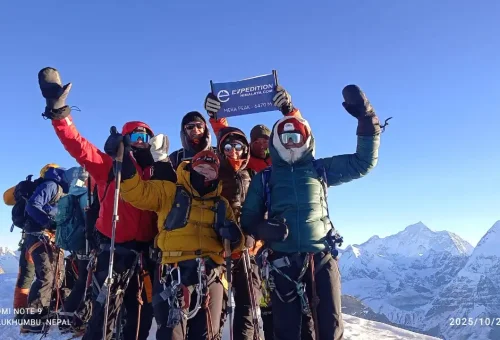
An 18-day non-technical climb to Mera Peak (6,476m), Nepal's highest trekking peak, following a quiet route through the remote Hinku Valley to a summit with views of five 8,000m giants, including Everest.
Introduction
Mera Peak rises to 6,476m in the Hinku Valley, east of the Everest region and inside Makalu Barun National Park, and holds the title of Nepal's highest trekking peak. Unlike the busier approaches to Island Peak or the Everest Base Camp trail, the standard route in follows quiet trails through Rai and Sherpa villages that see a fraction of the foot traffic, real Himalayan wilderness rather than a crowded highway to a summit.
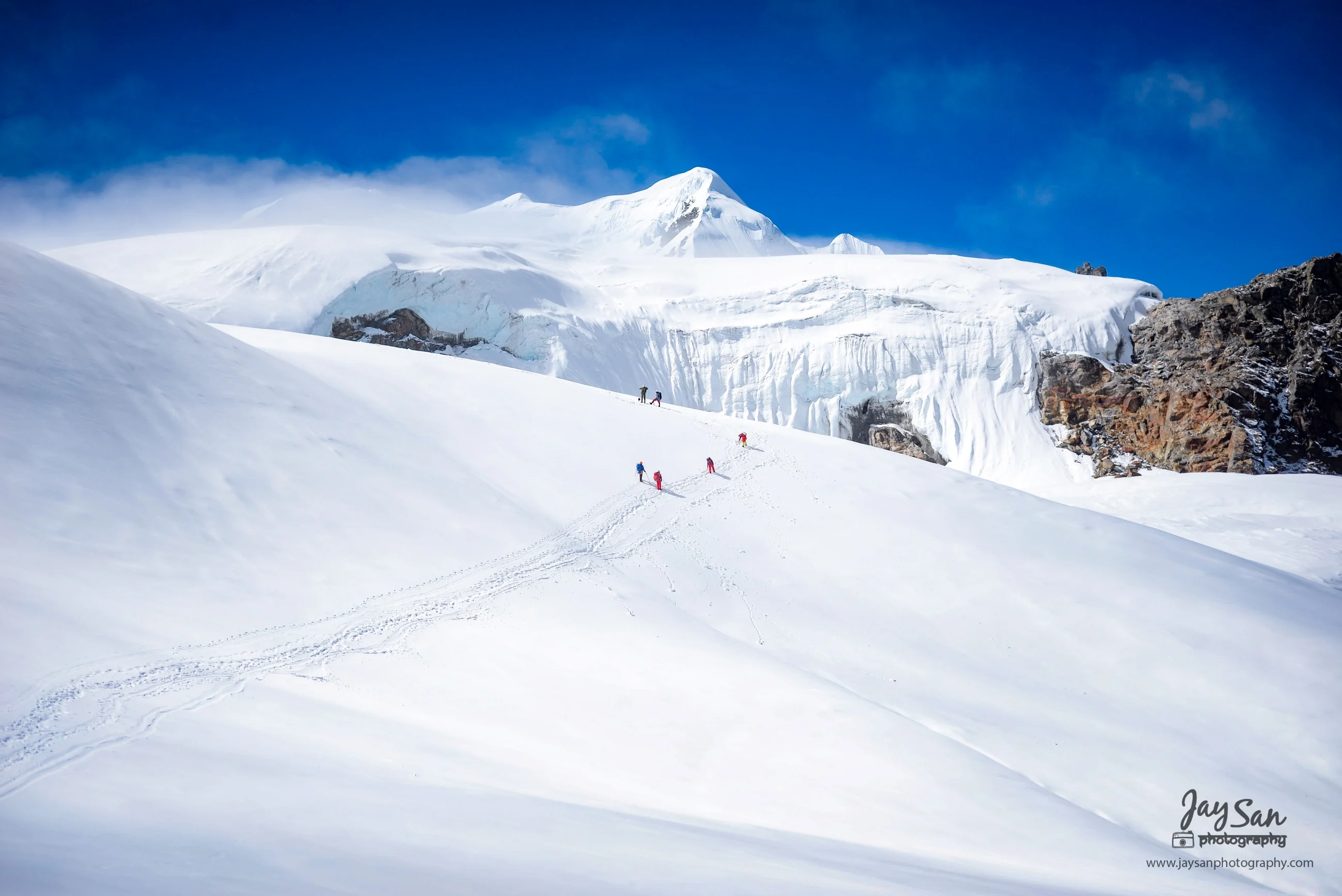
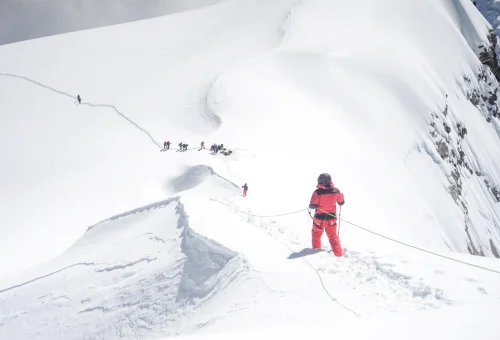
The climb is classified non-technical, and the Himalayan Index currently grades it PD (a step up from the older F grading, following changes to the summit block in recent years), but non-technical doesn't mean easy. The approach gains altitude steadily over more than a week before the route moves onto the Mera Glacier for the final push from High Camp, where climbers rope up and use crampons and an ice axe on broad snow slopes to the summit. No prior technical climbing is required, but strong fitness and prior experience trekking above 5,000m make a real difference on summit day.
From the top, on a clear day, the reward is one of the widest panoramas available from any trekking peak in Nepal: Everest, Lhotse, Makalu, Cho Oyu, and Kanchenjunga, five of the world's highest mountains, visible in a single sweep. Expedition Himalaya's itinerary is built around that view rather than a rushed attempt at it: gradual altitude gain, dedicated acclimatization days at Thangnak and Khare, and a full contingency day held in reserve so a single bad-weather day doesn't decide the whole climb.
Mera Peak Climbing runs best in spring (April to May) and autumn (September to November), when weather is most stable and the mountain views are clearest. With experienced local guides, a conservative, safety-first approach to summit decisions, and logistics built specifically around this remote valley, Expedition Himalaya offers a well-paced, responsible route to the top of Nepal's highest trekking peak.
Trip Highlights
- Summit Mera Peak (6,476m), the highest trekking peak in Nepal, on a route that stays quiet and uncrowded compared with the main Everest trails.
- Enjoy the panoramic view of the world's 5 highest mountains from the summit: Everest, Lhotse, Makalu, Cho Oyu, and Kanchenjunga.
- Trek through the remote Hinku Valley, past traditional Rai and Sherpa villages rarely visited by other trekking groups.
- A carefully paced itinerary with dedicated acclimatization days and a built-in summit contingency day
Itinerary
Day 1: Arrival in Kathmandu (1,330 m / 4,364 ft)
A representative from Expedition Himalaya meets you at Tribhuvan International Airport and transfers you to your hotel. If daylight allows, a short walk toward Durbar Square or through Thamel is a good way to get oriented before the climb's logistics take over. In the evening, a brief welcome briefing introduces the expedition plan.
Day 2: Expedition Preparation in Kathmandu
This day is dedicated to final expedition preparations. A detailed briefing covers the route day by day, safety procedures, and the overall climbing strategy, including what the summit push from High Camp actually involves. Personal and rented gear is checked item by item against the packing list, since anything missing is far easier to source in Kathmandu than in Khare. The rest of the day is free for last-minute errands or a first look at the city.
Day 3: Fly to Lukla & Trek to Paiya (2,760 m / 9,055 ft)
A detailed briefing covers the route day by day, safety procedures, and the overall climbing strategy, including what the summit push from High Camp actually involves. Personal and rented gear is checked item by item against the packing list, since anything missing is far easier to source in Kathmandu than in Khare. The rest of the day is free for last-minute errands or a first look at the city.
Day 4: Trek to Pangom (2,980 m / 9,777 ft)
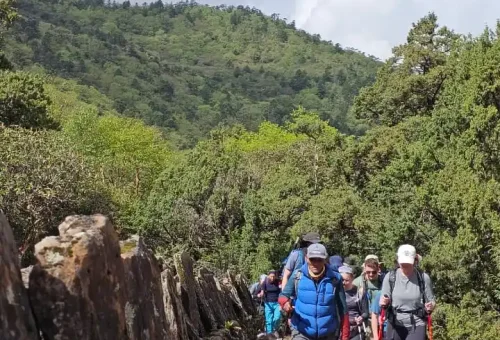
A roughly 5 to 6 hour day through terraced farmland, rhododendron and oak forest, and small Rai and Sherpa villages where daily life still runs on agricultural and seasonal rhythms rather than tourist traffic. The trail undulates rather than climbing steadily, crossing several side ridges before reaching Pangom, which offers genuinely warm local hospitality and one of the clearest cultural introductions on the route.
Day 5: Trek to Ramailo Danda (3,350 m / 10,991 ft)
As the trail gains altitude, roughly 5 hours of walking, the landscape opens from forest into broader forested ridgelines with wider views. Ramailo Danda sits on an open ridge with sweeping outlooks across the mid-hills and toward the mountains ahead, a good, gentle step in the acclimatization process before the route pushes into the Hinku Valley.
Day 6: Trek to Kothe – Entering the Hinku Valley (3,590 m / 11,778 ft)
The trek leaves the mid-hill villages behind and enters the remote Hinku Valley, one of the least-visited approach routes to any major trekking peak in Nepal. The trail, roughly 6 hours, drops through forest and crosses the Hinku Khola on a series of bridges, with the first clear views of Mera Peak itself appearing through gaps in the tree line. Kothe is a small, seasonal settlement, busy only during the spring and autumn climbing windows, that marks the real start of the high-altitude section of the trip.
Day 7: Trek to Thangnak (4,350 m / 14,272 ft)
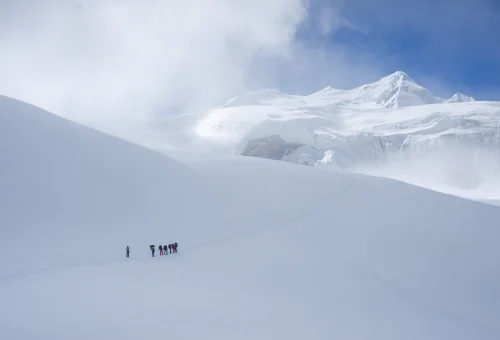
The environment shifts decisively to alpine terrain over this roughly 4 to 5 hour day, following the true left bank of the Hinku Khola through glacial moraine and increasingly sparse vegetation. Kusum Kanguru's dramatic profile dominates the skyline for much of the walk, and the first glacier ice comes into view near Thangnak, which sits beneath towering terrain and serves as an important acclimatization stop before Khare.
Day 8: Acclimatization Day at Thangnak
A full rest day built around a short acclimatization hike rather than actual rest, following the standard climb-high-sleep-low principle. Most groups walk up toward nearby viewpoints for an hour or two before returning to rest at the teahouse for the remainder of the day. The stillness here, wide glacial valleys, icy peaks on every side, is a preview of what the days above Khare will feel like.
Day 9: Trek to Khare (4,900 m / 16,076 ft)
A shorter but harder day, roughly 3 to 4 hours, climbing steadily along glacier moraine into fully alpine terrain shaped by rock, ice, and snow. Khare is the last permanent settlement before the climbing section begins in earnest, and also the point where the trip visibly shifts from trekking to mountaineering, crampons, harnesses, and climbing gear start coming out of duffel bags here.
Day 10: Rest & Climbing Preparation at Khare
A dedicated preparation and recovery day. Your guide runs through glacier travel technique, crampon use, and rope work, essential regardless of prior experience, and checks all climbing equipment one final time. The rest of the day is for physical rest and mental preparation; Khare's altitude alone makes this a demanding stop even without any walking.
Day 11: Climb to Mera High Camp (5,800 m / 19,029 ft)
The route moves onto the Mera Glacier here, the clearest marker that the trip has become a genuine climb rather than a trek. The ascent, roughly 4 to 5 hours, is steady rather than technical, with fixed ropes protecting the steeper sections. High Camp is dramatically positioned on exposed, wind-scoured terrain, and on a clear evening the view already includes Everest, Lhotse, Makalu, Cho Oyu, and Kanchenjunga, the same five peaks visible from the summit itself.
Day 12: Summit Mera Peak (6,476 m / 21,247 ft) and descend to Khare
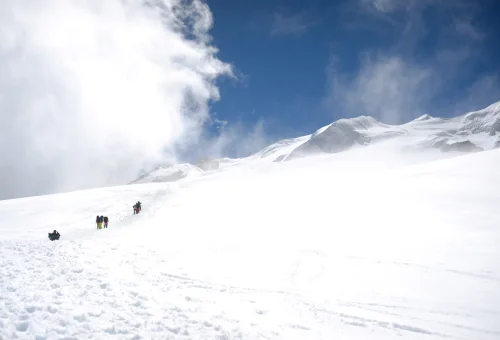
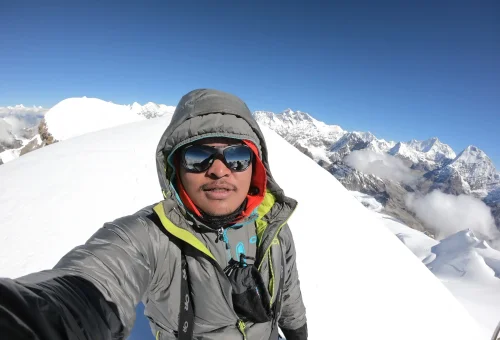
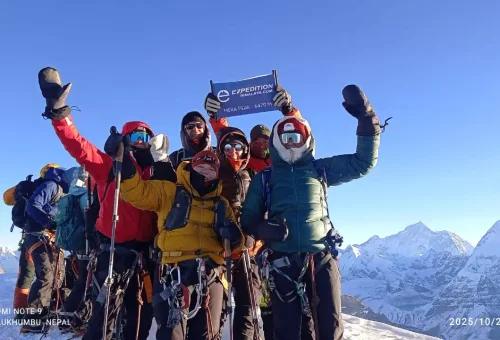
An early alpine start, typically well before dawn, gets the team onto the mountain while the snow is firm. The ascent follows broad, moderate-angle snow slopes rather than a technical climbing line, which is what makes Mera achievable without advanced climbing skills, though the combination of altitude and a long summit day still makes it a serious undertaking. From the top, a genuinely rare 360-degree view: five of the world's highest peaks visible at once, among the widest panoramas available from any trekking peak in Nepal. After time on the summit, the descent continues the same day back down to Khare, generally the more demanding half of the day on tired legs.
Day 13: Contingency Day
A reserve day held specifically for weather or additional acclimatization needs. If Day 12's summit attempt is weathered out, this day absorbs the delay and the team makes a second attempt rather than losing the summit outright. If the climb goes as planned, it becomes an easier, unhurried day instead, a welcome break after the exertion of summit day.
Day 14: Trek to Kothe (3,590 m / 11,778 ft)
The descent retraces the approach route back down through the Hinku Valley. The pace feels noticeably more relaxed than the climbing days, and thicker air and returning vegetation make for a welcome change after a week spent mostly above 4,000m.
Day 15: Trek to Thuli Kharka (4,100 m / 13,451 ft)
The trail climbs back up across open alpine terrain toward Thuli Kharka, a final push back to higher ground before the route turns toward Zatrwa La. This is typically a 5 to 6 hour day and offers some of the last high-altitude mountain views before the descent to Lukla.
Day 16: Trek to Lukla via Zatrwa La (2,840 m / 9,320 ft)
A demanding final trekking day, crossing Zatrwa La (approximately 4,600m) before a long, steep descent to Lukla. This pass crossing on the way out, rather than on the approach, is the more gradually acclimatized version of this route and the one most established operators use for exactly that reason. Arriving in Lukla closes the loop on the trekking and climbing sections of the trip, often shared with the guides, Sherpa staff, and porters who supported the climb.
Day 17: Flight to Kathmandu (1,330 m / 4,364 ft)
A short domestic flight returns the group to Kathmandu, weather and Lukla's runway conditions permitting, this sector can occasionally see delays, which is one reason the itinerary keeps a buffer day earlier in the trip rather than at the very end. The rest of the day is free to rest, reflect, or explore the city.
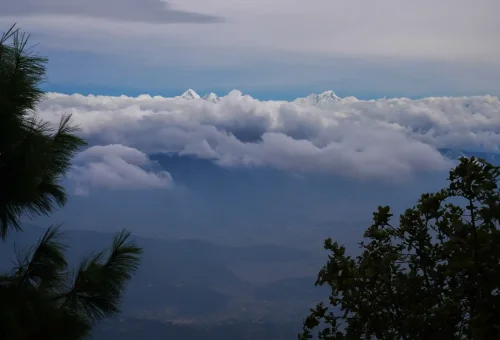
Day 18: Departure from Kathmandu
Members are transferred to the airport for onward international travel as per the departure schedule, concluding the Mera Peak Climbing Expedition with Expedition Himalaya.
Includes
- SERVICE IN KATHMANDU
- Airport Pick-up and Drop-off service in a private tourist vehicle
- Welcome dinner in Nepali restaurant
- 3 nights accommodation in Hotel Manaslu Hotel Tibet or similar (Bed and Breakfast Plan) with a twin room
- Domestic Flights (Kathmandu - Lukla - Kathmandu) and transfers by comfortable shuttle as per itinerary
- GOVERNMENT AND RELATED CHARGES
- Mera Peak Climbing Permit
- Makalu Barun National Park permit, and all cost related to permits
- Garbage deposit fees
- Summit certificates from Nepal Mountaineering Association
- SERVICES DURING TREK
- Accommodation in tea houses on a full board meal plan on sharing basis
- English speaking experienced local guide
- Medical Kit carried by the Guide/Sardar
- CLIMBING SERVICES
- Supplementary Oxygen 1 set for emergency, including mask and regulator (charges per usage)
- 2 Member : 1 Climbing Sherpa for member during the climb
- High Camp foods during the climb having high calories
- Sherpa's remuneration and load-bearing bonus (this bonus does not include the summit bonus)
- Climbing equipment, transportation, lodging, food, and salaries for Sherpas and staff are provided.
- The expenses of Insurance for sherpa, trekking guide and porters and salary for all staffs.
Excludes
- International airfare to and from Kathmandu and Nepal Visa Fees
- Travel & medical insurance including insurance for emergency rescue & evacuation
- Lunches and dinners in Kathmandu
- Personal expenses such as telephone, laundry, bottled water, bar bills, trekking/climbing gears, etc.
- Tips for Sherpa & tips for local staffs
- Cost for the daily weather forecast
- Any extra cost arising out of natural calamities or cancellation of the program
- All other items not mentioned in the list of ‘Inclusions’
Booking
Reviews

Good!
Exellent guide for solo trekking. The flexibility of the programm was good and everything worked with Expedition Himalaya.

Frequently Asked Questions
Who will be leading the expedition?
The expedition is led by experienced, licensed Nepalese climbing guides with extensive high-altitude experience, including multiple ascents of Mera Peak and other Himalayan peaks. The support team includes assistant guides and high-altitude Sherpa staff.
How difficult is Mera Peak, and is prior climbing experience required?
Mera Peak is classified as a trekking peak and does not require advanced technical climbing skills. However, it is physically demanding due to its altitude. Prior high-altitude trekking experience above 5,000 meters is strongly recommended. Basic mountaineering skills such as walking with crampons and using an ice axe are required, and these skills are practiced during the expedition.
What is the success rate for reaching the summit?
Our itinerary is designed with gradual acclimatization and includes multiple rest days and a contingency day. These factors significantly improve summit success. While weather always plays a role in the Himalayas, our success rate on Mera Peak is consistently high due to careful planning and conservative decision-making.
What mountains can be seen from Mera Peak?
From the summit of Mera Peak, climbers can see five of the world’s highest mountains: Everest, Lhotse, Makalu, Cho Oyu, and Kanchenjunga. Few peaks in Nepal offer such an extensive 360-degree panorama, making Mera Peak one of the most rewarding viewpoints in the Himalayas.
What type of accommodation is provided during the expedition?
Accommodation is primarily in local lodges during the trekking portion of the expedition. At higher elevations, including Mera High Camp, camping is required. Expedition Himalaya provides high-quality expedition tents and camping equipment for these sections.
How are acclimatization and safety managed?
Acclimatization is built into the itinerary with dedicated rest days and gradual altitude gain. Our guides monitor health closely, and oxygen saturation is checked regularly. If symptoms of altitude sickness appear, immediate action is taken, which may include rest, descent, or evacuation if necessary.
What personal equipment do I need to bring?
Climbers are required to bring personal climbing boots, harness, helmet, crampons (if not rented), layered clothing, and personal medical supplies. A detailed gear checklist is shared well in advance. Selected climbing gear can be rented in Kathmandu if required.
What happens if the weather turns bad on summit day?
Yes. Safety always comes first. A contingency day is built into the itinerary to allow flexibility. Summit attempts are only made when conditions are suitable. If the weather does not improve, we make conservative decisions in the interest of safety.
When is the best season to climb Mera Peak?
The best seasons are spring (March–May) and autumn (September–November), when weather conditions are generally stable and mountain visibility is at its best.
Why choose Expedition Himalaya for Mera Peak?
Expedition Himalaya focuses on well-paced itineraries, experienced leadership, small group sizes, and strong local knowledge. Our approach prioritizes safety, realistic planning, and responsible mountain travel rather than rushing summit attempts.
Required Climbing Gear – Mera Peak (6,476 m / 21,247 ft)
Mera Peak is graded non-technical by Himalayan standards, but it's still a genuine glacier climb: the final approach from High Camp crosses the Mera Glacier roped up, with crampons and an ice axe in use for several hours on summit day. Khare (4,900m) and Mera High Camp (5,800m) both sit well above where most trekking gear stops being adequate, night temperatures at High Camp regularly drop to -15°C to -25°C even in the recommended spring and autumn seasons, and wind exposure is constant and severe once you're above Khare. A four-season sleeping bag rated to at least -20°C, insulated double or high-altitude climbing boots compatible with your crampons, and a full high-altitude layering system are essential, along with a climbing harness, ascender, and helmet for the fixed-rope sections near the summit. Most technical climbing equipment can be rented in Kathmandu if you don't want to bring your own.