
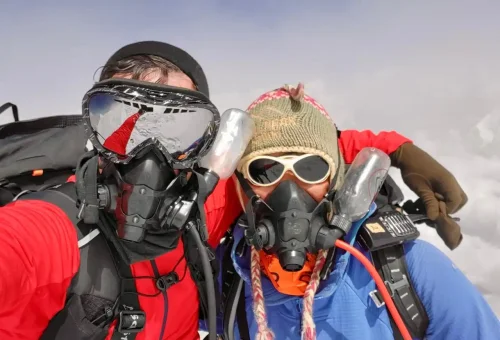
Manaslu Expedition – The Mountain of the Spirit – 8,163m - 36 Days
36 Days
Kathmandu
Kathmandu
8,163m (26,781 ft)
Autumn Season
Hotel, Tea House and Camping
Jeep
15 pax Maximum
Heli ride back to Kathmandu (Additional Cost) from Samagaun
8000er Ultra (UIAA)
Manaslu Expedition (8,163 m) | Mountain of the Spirit.
Introduction
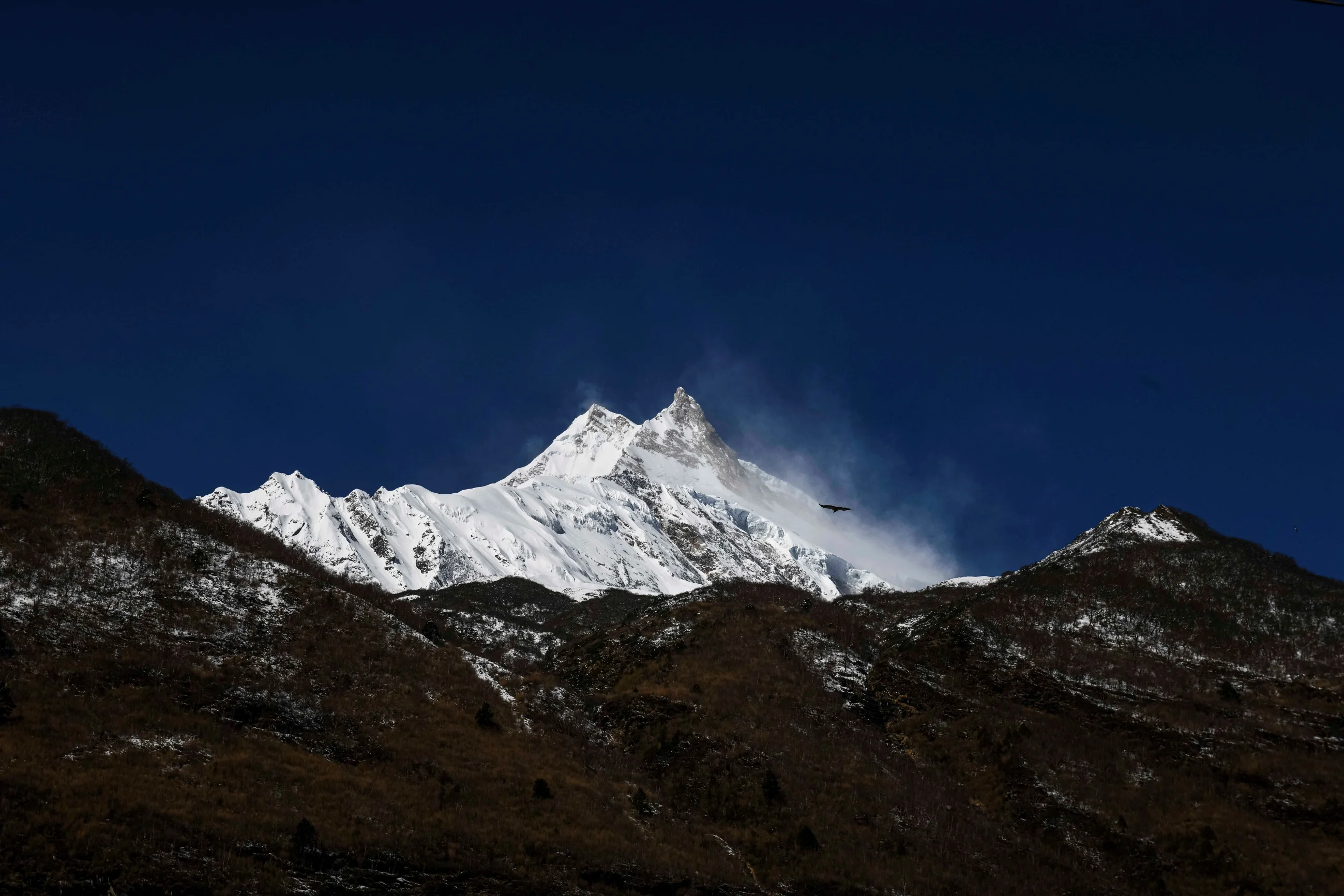
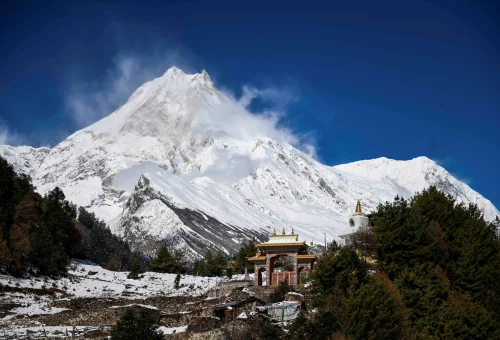
The Manaslu Expedition (8,163 m / 26,781 ft) offers climbers the opportunity to ascend the eighth highest mountain in the world through one of Nepal’s most culturally rich and remote Himalayan regions. Located in west-central Nepal, Mount Manaslu rises above the Budhi Gandaki Valley, where traditional Tibetan-influenced villages, ancient monasteries, and high mountain pastures shape the journey long before the climb begins.
The expedition follows a gradual approach through the Manaslu Conservation Area, allowing proper acclimatization while moving through diverse landscapes—subtropical river valleys, alpine forests, high glacial basins, and finally the snow and ice slopes above base camp. The standard route on Manaslu is known for its long sections of snow and glaciated terrain, making it suitable for experienced high-altitude climbers seeking their first or next 8,000-meter peak, provided they are well prepared.
From Manaslu Base Camp (4,700 m), climbers progress through a structured expedition setup with multiple high camps and acclimatization rotations. Above base camp, the mountain demands patience, endurance, and disciplined decision-making. Summit attempts are planned only when weather, snow conditions, and team health align, reflecting the expedition-style approach required on an 8,000-meter mountain.
With its strong blend of cultural depth, remote trekking approach, and serious high-altitude climbing, the Manaslu Expedition is well suited for climbers looking for a complete Himalayan expedition experience. Expedition Himalaya plans and operates the Manaslu Expedition with a focus on realistic pacing, experienced leadership, and responsible mountain practices, ensuring safety and preparedness remain central throughout the climb.
Itinerary
Day 1: Arrival in Kathmandu (1,330 m / 4,364 ft)
Upon arrival at Tribhuvan International Airport, members are received by the Expedition Himalaya team and transferred to the hotel. The remainder of the day is kept free to rest after international travel or take a short walk nearby.
Day 2: Document Preparation & Sightseeing
Today your climbing permits and official documentation will be completed, and you attend a detailed expedition briefing covering the route, acclimatization plan, safety procedures, and climbing period. You also visit selected UNESCO World Heritage Sites such as Swayambhu Nath and Kathmandu Durbar Square. These sites reflect Nepal’s Hindu and Buddhist traditions, ancient art, and history. In the afternoon, you can visit Thamel, the main trekking market, for final equipment checks and last-minute shopping.
Day 3: Drive to Besisahar (760 m / 2,493 ft)
You begin the journey to the west by private vehicle. The drive takes you along rivers, terraced farmland, and hill towns. As you move away from Kathmandu, the landscape becomes quieter and more rural. Besisahar is a busy town and the main gateway to trekking routes in this region.
Day 4: Drive to Dharapani (1,860 m / 6,102 ft)
The drive continues on mountain roads following river valleys and forested slopes. You pass small villages and waterfalls along the way. As altitude increases, the air becomes cooler. Dharapani sits at the meeting point of the Manaslu and Annapurna regions and marks your entry into the high mountain environment.
Day 5: Trek to Gowa (2,530 m / 8,300 ft)
Today you will begin trekking. The trail follows the Budhi Gandaki River, crossing suspension bridges and walking through pine and rhododendron forests. Stone houses, prayer flags, and mani walls appear along the route, showing strong Tibetan Buddhist influence. The day is steady and helps your body begin adapting to altitude.
Day 6: Trek to Bhimthang (3,720 m / 12,205 ft)
The trail climbs higher into alpine terrain. Forests slowly thin out, and open valleys appear. You begin to see snow-covered peaks and glacial landscapes. Bhimthang is a wide glacial basin surrounded by mountains and is an important place for acclimatization. The environment here feels remote and powerful.
Day 7: Rest & Acclimatization Day
You spend the day acclimatizing. Short walks to nearby ridges help your body adjust to the altitude. The rest of the day is spent resting, hydrating, and preparing for the higher sections ahead. This day is important for your safety and overall performance during the expedition.
Day 8: Trek to Samdo (3,872 m / 12,703 ft) via Larke Pass (5,160 m / 16,929 ft)
This is one of the most demanding days of the trekking days. You start early and climb gradually toward Larke Pass, the highest point of the trekking route. From the pass, you see wide views of Manaslu, Himlung Himal, and surrounding peaks. After crossing the pass, you descend carefully to Samdo. Samdo is a traditional Tibetan-style village near the Tibetan border.
Day 9: Trek to Sama Gaun (3,541 m / 11,617 ft)
You follow a gentle trail across open valleys and yak pastures toward Sama Gaun. This village is one of the most important settlements in the region. You will see monasteries, Mani walls, and prayer flags throughout the village. Manaslu’s massive north face dominates the landscape above Sama Gaun/
Day 10: Trek to Manaslu Base Camp (4,700 m / 15,420 ft)
The trail climbs gradually over rocky ground and glacial moraines. As you approach Base Camp, the terrain becomes more rugged and alpine. Manaslu Base Camp is set beneath the north face of the mountain, surrounded by glaciers and icefalls. This is where the expedition settles in and prepares for the climbing phase.
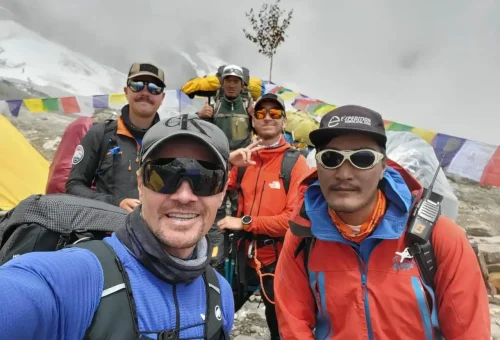
11 - 29: Climbing Period – Mount Manaslu (8,163 m / 26,781 ft)
During this phase of the expedition, your time is focused on acclimatization rotations, load carrying, route preparation, and climbing activities. You move progressively between Base Camp and the higher camps to allow your body to adapt safely to extreme altitude while building familiarity with the route.
From Manaslu Base Camp (4,700 m), you carry loads to Camp I, then return to rest. As acclimatization improves, rotations extend higher, with overnight stays at Camp I and Camp II. This process strengthens your ability to function at altitude and prepares you for the final ascent.
Between each rotation, rest days are taken at Base Camp to allow recovery, hydration, and monitoring of health. Snow conditions, weather patterns, and individual performance are continuously assessed. Fixed ropes are installed on steeper and more technical sections of the route to secure ascent and descent.
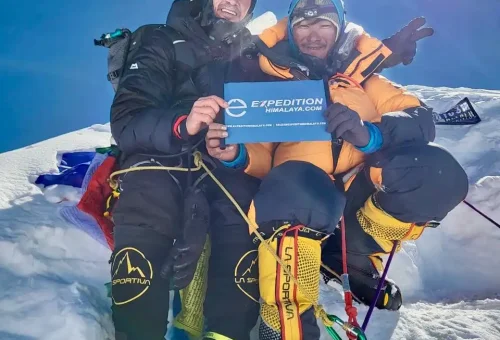
A summit attempt is planned only when weather forecasts, snow stability, and team health align. The final ascent typically begins from Camp IV during the night or early morning to take advantage of stable conditions. Throughout the climbing period, decisions are made conservatively, with safety taking priority over summit objectives.
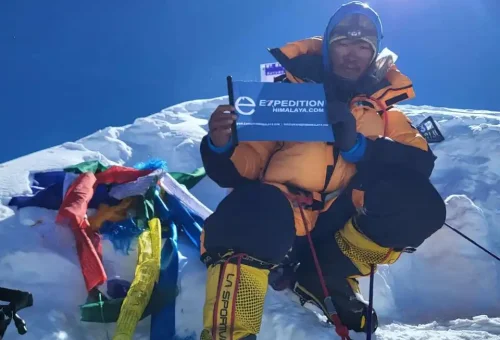
Day 30: Trek Back to Sama Gaun (3,541 m / 11,617 ft)
After completing the climb, you descend from Base Camp back to Sama Gaun. The lower altitude helps with recovery, and the familiar village provides comfort after time spent on the mountain.
Day 31: Trek to Namrung (2,670 m / 8,760 ft)
You continue descending through forested trails and traditional villages. Namrung is known for its stone houses, Buddhist culture, and views of Manaslu and nearby peaks.
Day 32: Trek to Philim (1,606 m / 5,269 ft)
The trail follows the Budhi Gandaki River, passing waterfalls, suspension bridges, and terraced farmland. The climate becomes warmer as you lose altitude. Philim is a lively village with strong local character.
Day 33: Trek to Machha Khola (883 m / 2,897 ft)
This is the final trekking day. You walk through lower valleys and villages before reaching Machha Khola, where road access begins. The trek officially ends here.
34 -35: Drive to Kathmandu
You drive back to Kathmandu by private vehicle. One full day is kept as a leisure day to rest, explore the city, or enjoy personal time after the expedition.
Day 36: International Departure
Expedition Himalaya arranges your airport transfer for international departure. As you leave Nepal, the journey concludes with time to reflect on weeks spent in remote valleys, high camps, and on the slopes of Mount Manaslu. The expedition comes to a close with lasting memories of the mountain, the people, and the experience of climbing one of the world’s highest peaks.
Includes
- SERVICE IN KATHMANDU
- Airport Pick-up and Drop-off service in a private tourist vehicle and transfers as per itinerary
- Welcome and Farewell dinner in an authentic Nepali restaurant with cultural program
- 4 nights accommodation in Kathmandu in a 5 star hotel (BB Plan) with a single
- Sightseeing tour within Kathmandu valley as per the program
- GOVERNMENT & RELATED CHARGES
- Manaslu climbing royalty fees, Restricted area permit, ACAP Permit and all cost related to permits
- Garbage deposit fees, Rope-fixing charge
- Summit certificates from respective government
- 1 Liasion officer for one expedition team
- BASE CAMP SERVICE
- Base Camp Accommodation with an individual sleeping tent with mattress.
- Full-Board Meal Plan
- EXPEDITION SERVICE
- Supplementary Oxygen 3 bottles for member and 2 bottles for climbing Sherpa, including mask and regulator
- Higher Camps-tent accommodation with a shared sleeping tent
- 1:1 climbing Sherpa for member during the climb
- EPI gas and High altitude foods during the climb having high calories
- Walkie-Talkie and Satellite Phone (Charges Per Call).
- Sherpa's remuneration and load-bearing bonus (this bonus does not include the summit bonus)
- Climbing equipment, transportation, lodging, food, and salaries for Sherpas and staff are provided.
- The expenses of Insurance for sherpa, trekking guide and porters and salary for all staffs.
Excludes
- International airfare to and from Kathmandu and Nepal Visa Fees
- Travel & medical insurance including insurance for emergency rescue & evacuation
- Lunches and dinners in Kathmandu except welcome & farewell dinner
- Personal expenses such as telephone, laundry, bottled water, bar bills, trekking/climbing gears, etc.
- Tips for Sherpa & tips for local staffs
- Summit bonus for climbing Sherpa($1500)
- Cost for the daily weather forecast
- Any extra cost arising out of natural calamities or cancellation of the program
- All other items not mentioned in the list of ‘Inclusions’
Booking
Reviews

Good!
Exellent guide for solo trekking. The flexibility of the programm was good and everything worked with Expedition Himalaya.

Frequently Asked Questions
How difficult is Manaslu compared to other 8,000-meter peaks? I have experience on high-altitude peaks, but this would be my first 8,000-meter mountain. Is Manaslu suitable?
Manaslu is considered one of the achievable 8,000-meter peaks due to its relatively straightforward standard route. However, it is still an extremely demanding climb requiring strong physical fitness, previous experience above 6,500–7,000 meters, and the ability to move safely on snow and ice at altitude.
What prior experience is required to join the expedition?
Participants should have successfully climbed at least one peak above 6,500 meters and have solid experience with crampons, fixed ropes, and glacier travel. Prior exposure to expedition-style climbing and long stays at altitude is strongly recommended.
Which route is used for the Manaslu ascent?
The expedition follows the standard Northeast Face route, which is the most commonly used and safest line under normal conditions. This route allows for structured acclimatization with established camps and fixed ropes on steeper sections.
How many camps are used on Manaslu?
The expedition uses four high camps above Base Camp. Camp I and Camp II are primarily used for acclimatization and rotations, while Camp III and Camp IV are used during the final ascent. Camp IV is the summit camp and is only occupied for a very short period due to extreme altitude.
How Long is the Climbing Period?
The itinerary includes approximately 19 days for the climbing period, allowing for acclimatization rotations, rest days, route preparation, and waiting for suitable weather windows. This timeframe provides flexibility, which is essential on an 8,000-meter expedition.
Which peaks would you recommend to prepare properly for an 8,000-meter expedition?
Before attempting Manaslu, Expedition Himalaya strongly recommends building experience through progressive high-altitude climbing, ideally including a 7,000-meter peak. Time spent above 6,500 meters in an expedition setting is one of the best ways to prepare for the physical, mental, and logistical demands of an 8,000-meter mountain.
Recommended 7,000-meter Peaks
Climbing a 7,000er provides extended exposure to altitude, multi-camp rotations, and expedition-style movement. Strong preparatory peaks include:
- Himlung Himal (7,126 m) - One of the best training peaks for Manaslu, offering multiple camps and long time spent above 6,000 m
- Baruntse (7,129 m) -Technically more demanding, suitable for climbers with strong technical skills
- Putha Hiunchuli / Dhaulagiri VII (7,246 m) - A remote expedition with true high-altitude exposure
- Tilicho Peak (7,134 m) - Physically demanding with sustained high-altitude climbing
Recommended 6,000-meter Peaks
For climbers not yet ready for a 7,000er, multiple demanding 6,000-meter peaks can also provide strong preparation when combined with solid trekking and glacier experience:
- Chulu East (6,584 m) - A classic preparatory peak with snow and glacier travel
- Thorong Peak (6,144 m) - Good introduction to expedition structure and altitude
- Island Peak (6,189 m) - Useful for technical rope and fixed-line experience
- Lobuche East (6,119 m) - Offers steep sections and exposure, good for rope work
- Mera Peak (6,470 m) - Excellent for endurance and altitude conditioning
Required Climbing Gear – Manalsu Expedition (8,163 m / 26,781 ft)
Climbing Manaslu requires full 8000 meter high altitude equipment. The mountain is technically moderate, but temperatures can drop to –35°C and wind exposure is significant above Camp II. Proper gear is critical for safety and summit success.