
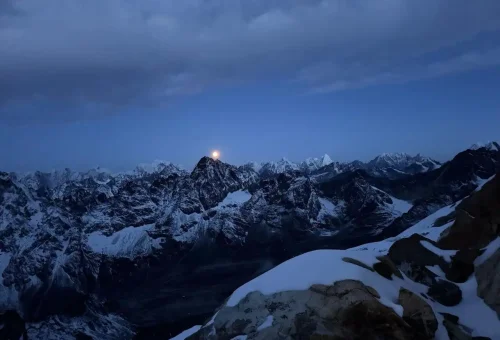
Lobuche East Peak Climbing (6,119m) – Everest Region Trekking Peak - 18 Days
18 Days
Kathmandu
Kathmandu
6119 m
Spring and Autumn
Hotel, Tea house & Camping
Domestic Flight & Road Transfers
10 Pax
Heli Flight
6000er
An 18-day climb to Lobuche East (6,119m) on the classic Everest Base Camp trail, combining Khumbu trekking with a steep, technical summit push, graded PD+ on the Alpine scale and popular with climbers preparing for Everest itself.
Introduction
Lobuche East (6,119 m / 20,075 ft) is a highly versatile Himalayan peak, well suited for beginners who wish to add their first climbing experience while trekking to Everest Base Camp, as well as for experienced climbers using the peak as an acclimatization objective for higher mountains such as Everest, Lhotse, and other high-altitude expeditions.
Located just above the main Everest Base Camp trail, Lobuche East can be seamlessly combined with the classic EBC trek. For trekkers with good fitness but limited technical background, Expedition Himalaya structures the climb as a guided introduction to mountaineering, covering snow travel, basic rope techniques, and the use of crampons and ice axe under close supervision by experienced climbing Sherpas.
At the same time, Lobuche East is widely used as a pre-acclimatization peak. Spending time above 6,000 meters before moving to higher objectives significantly improves altitude adaptation and confidence. For climbers preparing for Everest, Lhotse, or other 7,000- and 8,000-meter peaks, the ascent of Lobuche East provides valuable altitude exposure and technical rehearsal without excessive risk.
By combining trekking, culture, and climbing in the heart of the Everest region, Expedition Himalaya offers Lobuche East as both a first Himalayan summit and a strategic training peak, making it an ideal choice for climbers at different stages of their mountaineering journey.
Lobuche East - Trip Highlights
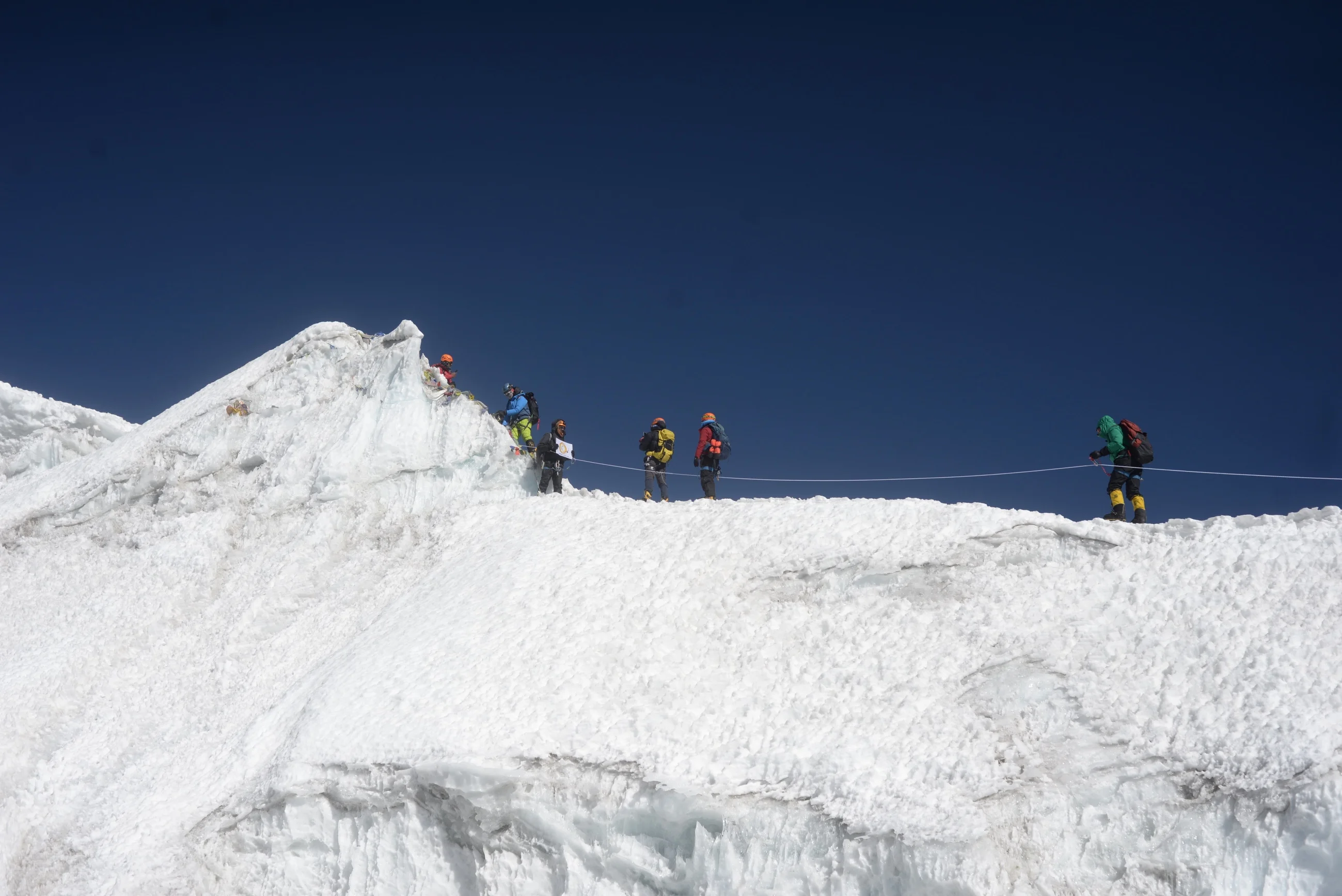
- Climb Lobuche East (6,119m), one of the most technically genuine trekking peaks in Nepal, with a steep summit headwall and an exposed final ridge
- Follow the classic Everest Base Camp trail through Namche Bazaar and Sherpa villages before branching off for the climb
- Summit views across the Khumbu icefall toward Everest, Nuptse, and Lhotse, among the closest trekking-peak views of Everest itself
- A proven acclimatization and training climb, used by many climbers as a stepping stone before Island Peak or an Everest expedition
Itinerary
Day 1: Arrival in Kathmandu (1,330 m / 4,364 ft)
You arrive in Kathmandu, the capital of Nepal. At Tribhuvan International Airport, a representative of Expedition Himalaya receives you and transfers you to your hotel. The remainder of the day is free to rest after your international journey or take a short walk nearby.
Day 2: Preparation & Briefing
This day is reserved for trek and climb preparation. A detailed briefing is provided covering the Everest Base Camp trek and the Lobuche East climb. Permits are checked, equipment is reviewed, and any missing gear can be arranged. You may also explore cultural heritages of Kathmandu or simply rest before the trek begins.
Day 3: Drive to Ramechap – Fly to Lukla & Trek to Phakding (2,610 m / 8,563 ft)
An early drive takes you to Ramechap, followed by a scenic mountain flight to Lukla. After landing, the trek begins along the Dudh Koshi River. You pass Mani walls, prayer wheels, and small Sherpa villages before reaching Phakding. This short trek helps your body begin adjusting to altitude.
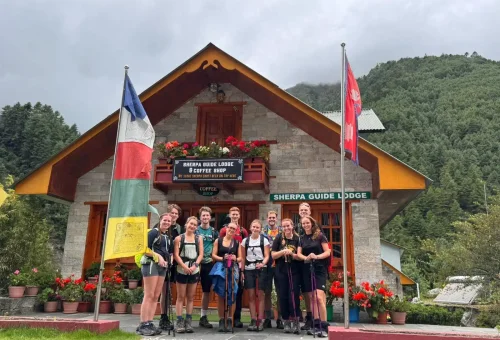
Day 4: Trek to Namche Bazaar (3,440 m / 11,286 ft)
The trail follows the river valley, crossing several suspension bridges before entering Sagarmatha National Park at Monjo. A steady uphill climb brings you to Namche Bazaar, the main trading and cultural center of the Khumbu region.
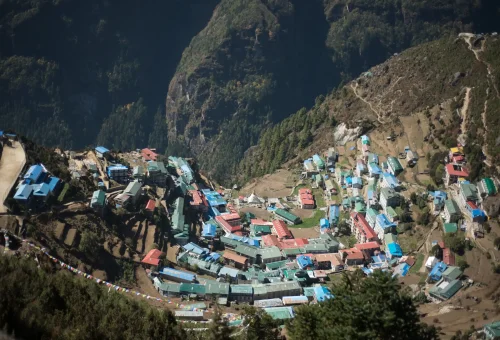
Day 5: Acclimatization Day in Namche Bazaar
A planned acclimatization hike takes you toward Syangboche and nearby viewpoints, offering views of Everest, Lhotse, Ama Dablam, Thamserku, and Kongde Ri on clear days. You return to Namche for rest and exploration.
Day 6: Trek to Tengboche (3,870 m / 12,697 ft)
The trail passes through forested paths with mountain views before a steady climb to Tengboche. The village is home to Tengboche Monastery, the spiritual center of the Everest region, with Ama Dablam rising prominently behind it.
Day 7: Trek to Dingboche (4,360 m / 14,304 ft)
You descend to the river and continue through Pangboche, one of the oldest Sherpa villages in Khumbu. The trail follows the Imja Valley to Dingboche, a high-altitude settlement surrounded by stone-walled fields.
Day 8: Acclimatization Day at Dingboche
A rest and acclimatization day includes a short hike to Nangkartshang view point, offering wide views of the Imja Valley and surrounding peaks. This gradual ascent helps your body adapt to altitude. The afternoon is free for rest, hydration, and recovery.
Day 9: Trek to Lobuche (4,930 m / 16,175 ft)
The route gradually follows the lateral moraine of the Khumbu Glacier, passing high-altitude memorials set against a dramatic alpine backdrop. As the terrain opens up, expansive views of surrounding peaks and glaciers begin to dominate the landscape.
Day 10: Trek to Gorakshep (5,160 m / 16,929 ft) and visit Everest Base Camp (5,364 m / 17,598 ft)
From Gorakshep, the route continues across glacial terrain toward Everest Base Camp, following the edge of the Khumbu Glacier beneath the towering Khumbu Icefall. Reaching Base Camp offers a close view of the icefall and the surrounding high peaks before returning along the same route.
Day 11: Hike to Kala Pathar (5,550 m / 18,209 ft) & Return to Lobuche (4,930 m / 16,175 ft)
An early morning hike to Kala Pathar provides one of the finest close-up views of Mount Everest, Nuptse, and the Khumbu Icefall, especially at sunrise. After descending to Gorakshep, the trail retraces along the glacier moraine back to Lobuche, marking the transition from trekking to the climbing phase.
Day 12: Trek to Lobuche East High Camp (5,400 m / 17,716 ft)
Leaving the main trekking trail, the route ascends gradually toward Lobuche East High Camp. The terrain becomes more alpine, with rocky sections and snow patches. At High Camp, final equipment checks and climbing briefings are carried out in preparation for the summit push.
Day 13: Summit Lobuche East (6,119 m / 20,075 ft) & Return to High Camp
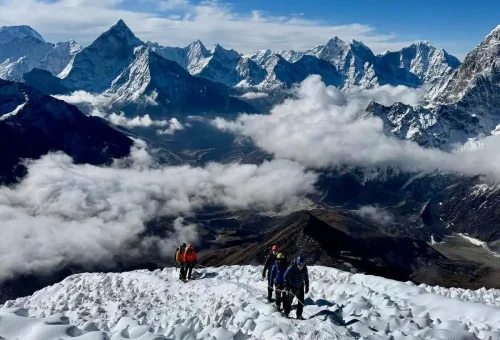
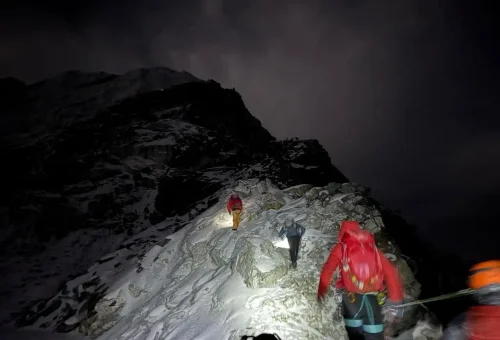
An early start leads up snow and ice slopes using fixed ropes under the guidance of climbing Sherpas. From the summit, wide panoramic views open across Everest, Lhotse, Nuptse, Pumori, and Ama Dablam. After reaching the summit, you descend carefully back to High Camp.
Day 14: Trek to Pangboche (3,930 m / 12,894 ft)
The descent continues from High Camp back to the main trail, passing through Lobuche and gradually losing altitude. The route follows the Imja Valley toward Pangboche, one of the oldest Sherpa villages in the region, surrounded by stone-walled fields and mountain views.
Day 15: Trek to Namche Bazaar (3,440 m / 11,286 ft)
You retrace your route through familiar villages and forested trails, crossing suspension bridges and descending steadily. With increasing oxygen levels and warmer temperatures, the walk becomes more relaxed as you return to Namche Bazaar.
Day 16: Trek to Lukla (2,845 m / 9,383 ft)
The final trekking day follows the Dudh Koshi River back to Lukla. Crossing suspension bridges and passing Sherpa settlements, the trail marks the completion of both the trek and the Lobuche East climb.
Day 17: Fly to Ramechap & Drive to Kathmandu
A morning flight returns you to Ramechap, followed by a drive back to Kathmandu. The remainder of the day is free to rest, celebrate the journey, or explore the city.
Day 18: International Departure
Expedition Himalaya arranges your airport transfer for international departure, concluding your journey through the Everest region and the successful ascent of Lobuche East.
Includes
- SERVICE IN KATHMANDU
- Airport Pick-up and Drop-off service in a private tourist vehicle
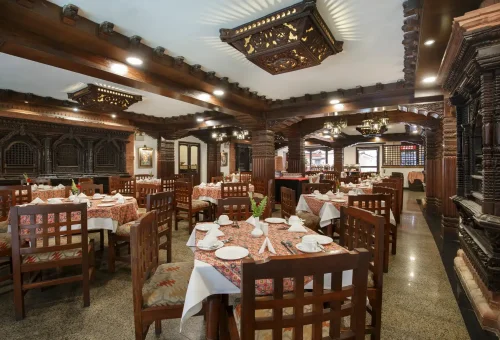
- Welcome dinner in Nepali restaurant
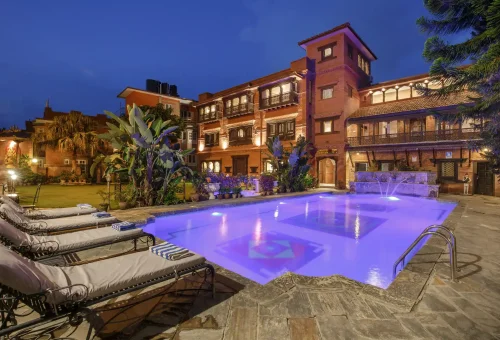
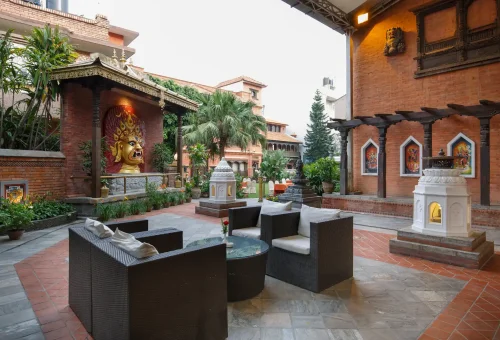
- 3 nights accommodation in Hotel Manaslu or Hotel Tibet (Bed and Breakfast Plan) with a twin room
- Domestic Flights (Kathmandu - Lukla - Kathmandu) and transfers by comfortable shuttle as per itinerary
- GOVERNMENT AND RELATED CHARGES
- Lobuche East Climbing Permit and all costs related to permit
- Sagarmatha National Park permit, and all other required permits
- Garbage deposit fees
- Summit certificates from Nepal Mountaineering Association
- SERVICES DURING TREK
- Accommodation in tea houses on a full board meal plan on sharing basis
- English speaking experienced local guide
- Medical Kit carried by the Guide/Sardar
- SERVICES DURING THE CLIMB
- One climbing Sherpa for every two members during the summit push
- High-calorie meals provided during the days at High Camp and above
- Sherpa remuneration and a load-bearing bonus (separate from the summit bonus)
- Climbing equipment, transportation, lodging, food, and salaries provided for all Sherpas and support staff
- Insurance coverage for Sherpas, trekking guides, and porters, along with salary for all staff
Excludes
- International airfare to and from Kathmandu and Nepal Visa Fees
- Travel & medical insurance including insurance for emergency rescue & evacuation
- Lunches and dinners in Kathmandu
- Personal expenses such as telephone, laundry, bottled water, bar bills, trekking/climbing gears, etc.
- Tips for Sherpa & tips for local staffs
- Cost for the daily weather forecast
- Any extra cost arising out of natural calamities or cancellation of the program
- All other items not mentioned in the list of ‘Inclusions’
Booking
Reviews

Good!
Exellent guide for solo trekking. The flexibility of the programm was good and everything worked with Expedition Himalaya.

FAQ's
How difficult is Lobuche East Peak, and do I need prior climbing experience?
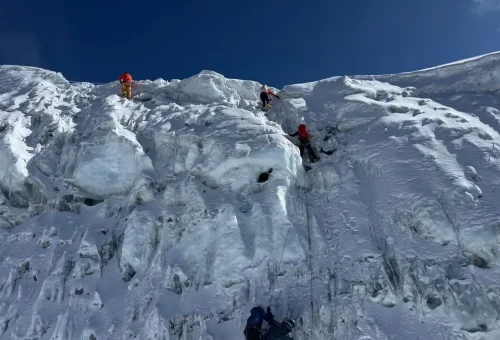
Lobuche East is graded PD+ on the Alpine scale, a step up from beginner peaks like Yala or Mera. The final section below the summit is a genuinely technical 45 to 50 degree snow and ice wall followed by a narrow, exposed ridge, both fixed with rope. Prior experience with crampons, an ice axe, and basic rope work is strongly recommended; this isn't the right first climb for someone with no mountaineering background at all.
How does Lobuche East compare to Island Peak or Mera Peak?
Lobuche East and Island Peak are the two most technical trekking peaks commonly compared to each other, both involve a steep, fixed-rope summit section, though Lobuche's final wall and ridge are often considered marginally more demanding. Mera Peak is higher (6,476m vs. 6,119m) but technically easier, essentially a very high-altitude trek with a straightforward glacier crossing rather than a genuine technical crux.
What is the best season to climb?
Spring (March to May) and autumn (September to November), when the fixed-rope section holds the most stable snow and ice conditions and weather is most predictable. Winter climbs are possible but colder and more weather-dependent.
What are Base Camp and High Camp like?
Base Camp sits at 4,950m near a small glacial lake, Tea House accommodation only. High Camp, at 5,357m, is more exposed and considerably colder, with the summit push starting well before dawn from there. High Camp has no permanent infrastructure, so everything is carried in and set up by the climbing team just before the season begins.
Why do so many Everest expedition climbers train on Lobuche East first?
Its elevation and the technical demands of the final summit section make it a realistic proxy for the skills and altitude exposure needed higher on Everest, without the cost, time, or risk of the Khumbu Icefall. Many operators, including ours, use it as a deliberate acclimatization and skills-building climb before an Everest attempt.
What can I see from the summit?
On a clear day, the summit gives close views across the Khumbu Icefall toward Everest, Nuptse, and Lhotse, among the nearest trekking-peak views of Everest itself, along with Cho Oyu and the wider Khumbu skyline.
Is altitude sickness a concern?
Yes. The approach follows the same acclimatization-heavy route as the Everest Base Camp trek, including a stop at Kala Patthar or Base Camp itself for altitude exposure before the climbing phase begins, which significantly reduces the risk compared to a faster, more direct approach.
Required Climbing Gear – Lobuche East Peak (6,119 m / 20,075 ft)
Lobuche East is one of the more technically demanding trekking peaks in Nepal: the final push from High Camp (5,357m) crosses a steep, roughly 45 to 50 degree snow and ice wall just below the summit, followed by a narrow, exposed summit ridge, both protected by fixed rope. A climbing harness, ascender (jumar), descender, and helmet are essential alongside standard crampons and an ice axe. Nights at Base Camp (4,950m) and High Camp regularly drop well below -15°C even in the recommended spring and autumn seasons, so a four-season sleeping bag and insulated, crampon-compatible mountaineering boots are non-negotiable. Given the technical nature of the summit day, gear that's already broken in and familiar to you matters more here than on gentler trekking peaks like Yala or Mera.