
Lhotse Expedition – World's 4th Highest Peak - 8516 M - 45 Days
45 Days
Kathmandu
Kathmandu
8848.86 m
Spring Season
Hotel, Tea house & Camping
Heli Flight and Road Transfers
15 pax Maximum
8000er Ultra (UIAA)
Join a professionally guided Lhotse Expedition via the Everest South Col Route, climbing the world’s fourth-highest mountain at 8,516 m / 27,940 ft. This expedition follows the same legendary approach as Mount Everest up to Camp IV, before diverging into the steep and technical Lhotse Couloir for the summit ascent.
Introduction
Lhotse, towering at 8,516 meters, stands immediately south of Mount Everest and is connected to it by the South Col. Despite sharing much of its approach with Everest, Lhotse presents a distinctly more technical summit climb, requiring sustained ice and snow climbing at extreme altitude.
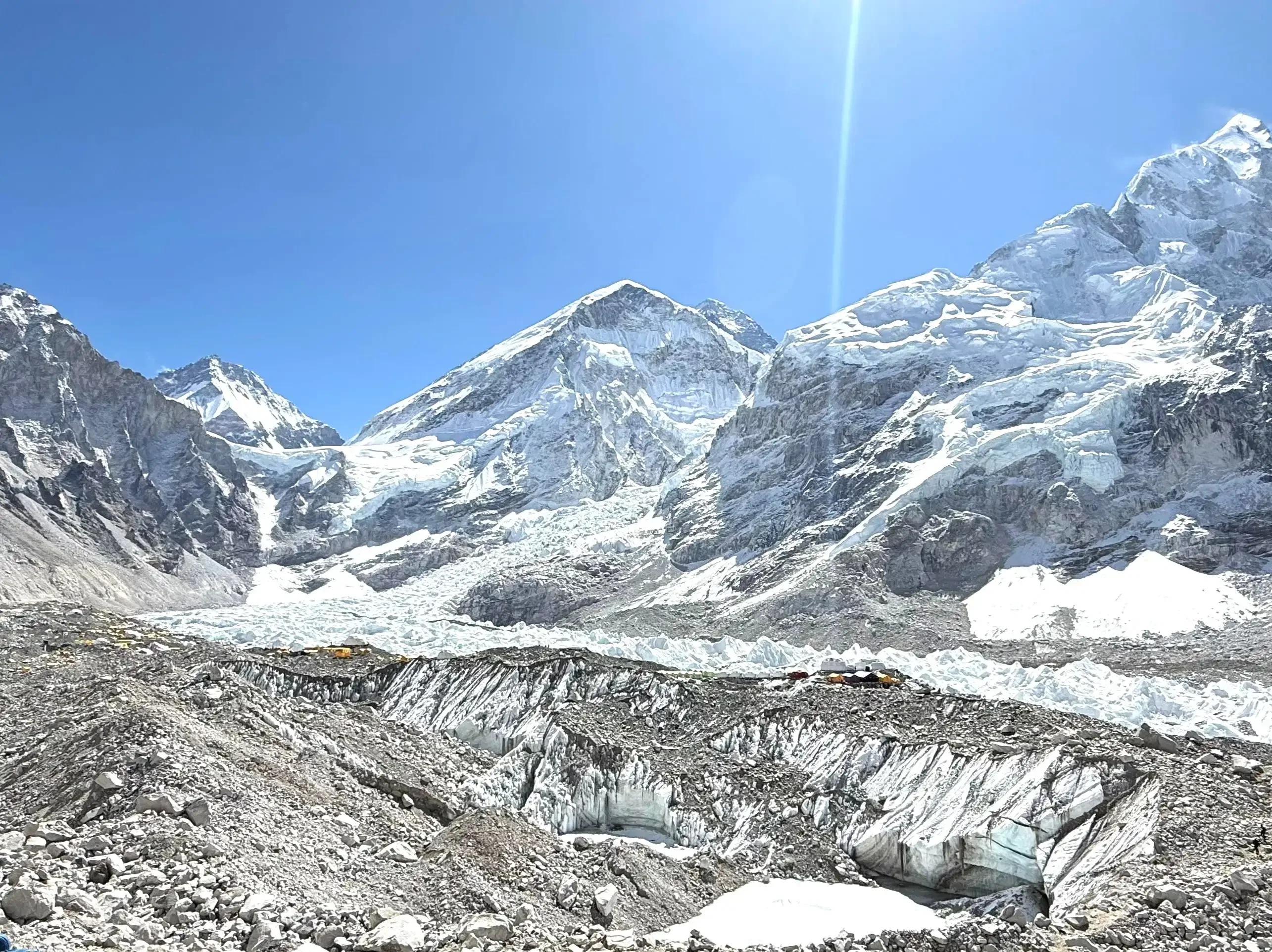
Our Lhotse Expedition follows the classic Everest South Col route through the Khumbu Valley, allowing for proven acclimatization and established logistics. The journey begins with a flight to Lukla and a gradual trek through iconic Sherpa settlements including Namche Bazaar, Tengboche, and Dingboche, before reaching Everest Base Camp beneath the Khumbu Icefall.
By following the same acclimatization strategy as Everest expeditions—multiple staged rotations through Camps I, II, and III—climbers are optimally prepared for high-altitude performance. However, unlike Everest, the final ascent of Lhotse does not follow a long ridge but instead climbs the Lhotse Couloir, a steep and sustained gully demanding strong technical ability, efficient rope work, and precise timing.
This expedition is ideal for climbers who already possess 7000–8000 meter experience and are seeking a more technical, less-crowded alternative to Everest, while still benefiting from the safety and infrastructure of the South Col route.
Lhotse South Col Route & High Camps
The Lhotse Expedition shares identical logistics and route infrastructure with Everest expeditions up to Camp IV (South Col). This allows climbers to take advantage of fixed ropes, professionally established camps, and coordinated Icefall management while pursuing a more demanding summit objective.
Khumbu Icefall: The Gateway to Everest’s Upper Camps
The ascent begins with repeated crossings of the Khumbu Icefall, one of the most technical and unstable sections of the climb. Ice towers, deep crevasses, and shifting seracs require careful movement along fixed ladders and ropes installed by the Icefall Doctors.
Crossings are timed during early morning hours to minimize objective risk caused by ice movement. For Lhotse climbers, efficient Icefall travel is essential, as multiple rotations are required for acclimatization and load carries.
Camp I (5,945 m) | Gateway to the Western Cwm
Camp I is located on a broad snowfield at the top of the Khumbu Icefall. It serves primarily as a transition camp and acclimatization point. Most climbers pass through Camp I without extended stays, continuing onward into the Western Cwm when conditions allow.
Camp II (6,400 m) | Advanced Base Camp (ABC)
Camp II, often referred to as Advanced Base Camp (ABC), serves as the main operational hub above Base Camp. Sheltered by surrounding peaks, it is equipped with larger dining and kitchen tents, communication systems, and multiple sleeping tents.
This camp plays a critical role during acclimatization rotations and acts as the staging point for establishing Camp III on the Lhotse Face and Camp IV on the South Col. Due to its relatively protected position, climbers can spend longer periods here compared to higher camps.
Camp III (7,164 m) | Lhotse Face High Camp
To reach Camp III, climbers ascend the Lhotse Face, a steep wall of hard ice and snow rising directly above the Western Cwm. Fixed ropes are essential, and progress requires strong crampon technique, endurance, and careful pacing.
Camp III is established on narrow ledges cut directly into the ice. Tents are securely anchored and typically used only for short stays, as the exposed location makes prolonged habitation impractical. Many Sherpas and strong climbers carry loads directly from Camp II to Camp IV to reduce time spent on the Lhotse Face.
Camp IV – South Col (7,900 m) | High Camp in the Death Zone
Camp IV, also known as High Camp, is located on the South Col—a high, windswept saddle between Everest and Lhotse. This marks the climbers’ first overnight stay in the Death Zone, where the body can no longer acclimatize.
Supplemental oxygen is used for both sleeping and climbing at this altitude. Camp IV is established only when a favorable summit window is confirmed, as prolonged exposure significantly increases risk. This camp serves as the final staging point before the summit attempt.
Lhotse Summit (8,516 m / 27,940 ft) | The Lhotse Couloir
From Camp IV on the South Col, the route diverges from the Everest climbing line and traverses toward the base of the Lhotse Couloir, a steep and narrow gully leading directly to the summit. The ascent involves sustained snow and ice climbing at angles of approximately 50–55 degrees, with fixed ropes used throughout. Unlike Everest’s Southeast Ridge, there is no extended ridge walking; climbers must maintain continuous technical movement at extreme altitude. With limited natural resting points and consistently steep terrain, this section is widely regarded as more technically demanding than Everest’s summit ridge, requiring strong ice-climbing skills, efficient rope management, and high physical commitment.
The summit push begins late at night or in the early morning hours from Camp IV. Climbers ascend the Lhotse Couloir under headlamp, reaching the summit ridge shortly before dawn under favorable conditions. Standing at 8,516 m / 27,940 ft, the summit of Lhotse offers dramatic views across Everest, Makalu, and the vast Tibetan Plateau. Due to the extreme altitude and exposure, time on the summit is kept brief before a careful and controlled descent back to Camp IV or, conditions permitting, onward to Camp III.
Itinerary
Day 1: International Arrival in Kathmandu (1,337 m / 4,384 ft)
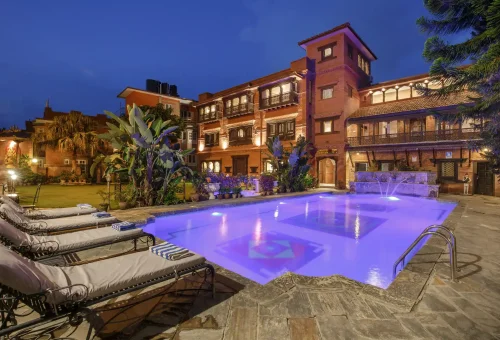
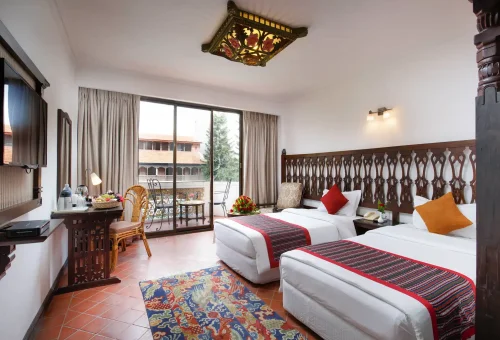
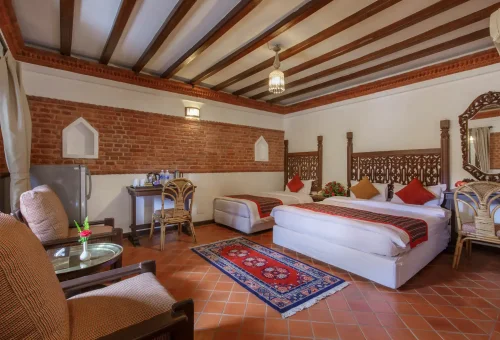
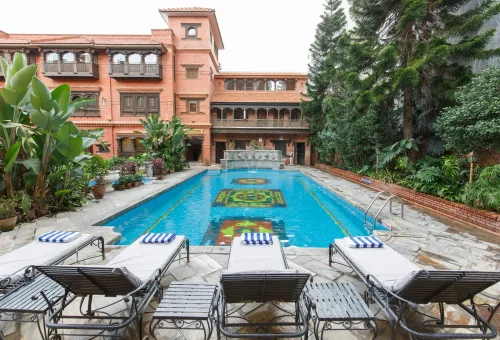
Upon arrival at Tribhuvan International Airport, you are received by the Expedition Himalaya team and transferred to your hotel. 4-Star category Hotel in Kathmandu. The rest of the day is free to rest and recover from international travel.
Day 2 - 3: Expedition Preparation & Welcome Dinner
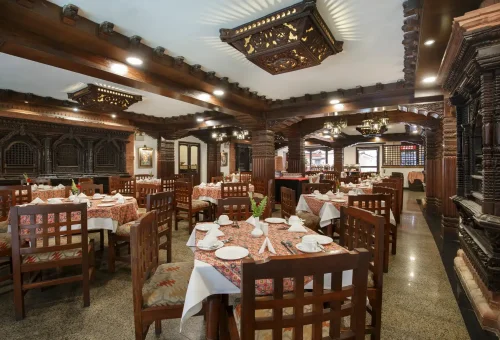
These two days are dedicated to expedition preparation. Climbing permits, documentation, and final logistics are completed. You meet the expedition leader, climbing Sherpas, and support team for detailed briefings on the route, safety procedures, acclimatization plan, and climbing strategy.
Equipment checks are carried out thoroughly. One evening includes a traditional Nepali welcome dinner with cultural performances, offering a relaxed start to the expedition.
Day 4: Flight to Lukla (2,860 m / 9,383 ft) & Trek to Phakding (2,610 m / 8,562 ft)
A scenic domestic flight takes you from Kathmandu to Lukla or (Ramechap to Lukla). After landing, the trek begins with a gentle trek along the Dudh Koshi River. You pass Sherpa villages, mani stones, and prayer wheels before reaching Phakding.
Day 5: Trek to Namche Bazaar (3,440 m / 11,286 ft)
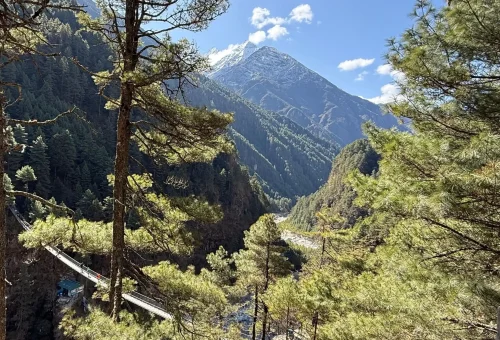
The trail continues through pine forests and across several suspension bridges. After entering Sagarmatha National Park at Monjo, a steady uphill climb brings you to Namche Bazaar, the main trading and cultural center of the Khumbu region.
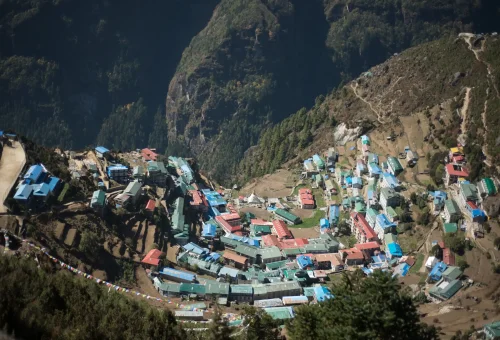
Day 6: Rest & Acclimatization in Namche Bazaar
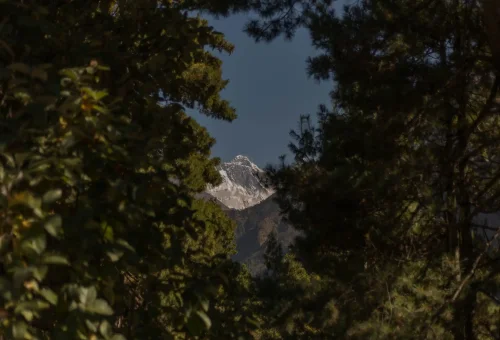
You take a rest and acclimatization day with a short hike toward Syangboche, Everest View area, or Khumjung Village. From these viewpoints, you see Everest, Lhotse, Ama Dablam, and surrounding peaks. The afternoon is free to explore Namche’s bakeries, shops, and museums.
Day 7: Trek to Tengboche (3,870 m / 12,697 ft)
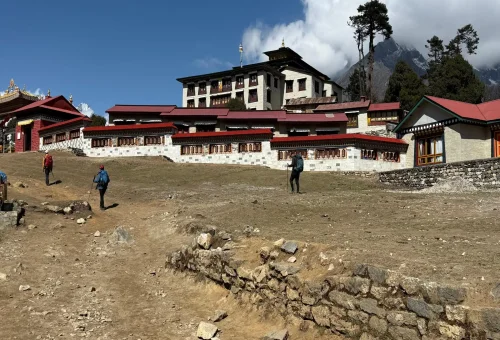
The trail follows a scenic route through rhododendron forests, crossing the Dudh Koshi River before a steady climb to Tengboche. The village is home to Tengboche Monastery, the spiritual center of the Everest region. Ama Dablam dominates the skyline behind the monastery.
Day 8: Trek to Dingboche (4,360 m / 14,305 ft)
You descend to Debuche and continue through Pangboche, one of the oldest Sherpa villages in the region. The trail offers clear views of Ama Dablam, Island Peak, and the Imja Valley. You reach Dingboche, a high-altitude settlement surrounded by stone-walled fields.
Day 9: Rest & Acclimatization in Dingboche
A planned acclimatization day includes a hike toward Nangkartshang Peak or nearby ridges. The hike supports altitude adaptation and offers excellent views of surrounding peaks. The afternoon is spent resting and hydrating.
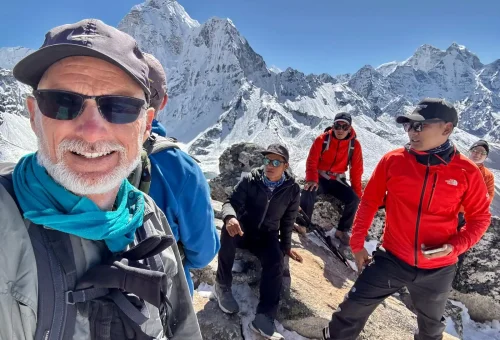
Day 10: Trek to Lobuche (4,930 m / 16,175 ft)
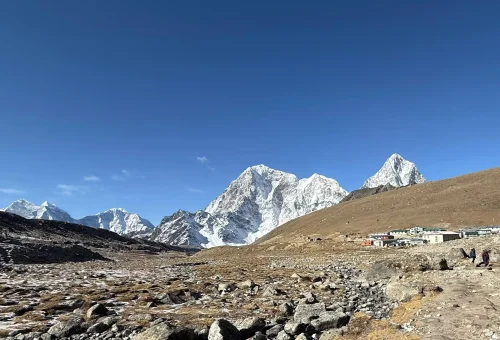
The trail climbs gradually along the Khumbu Glacier. You pass memorials honoring climbers who contributed to Everest’s mountaineering history. The landscape becomes fully alpine, with wide glacier views and towering peaks such as Nuptse and Pumori.
Day 11-13: Lobuche East Peak Climbing - Acclimatization Climb (6,119 m / 20,075 ft)
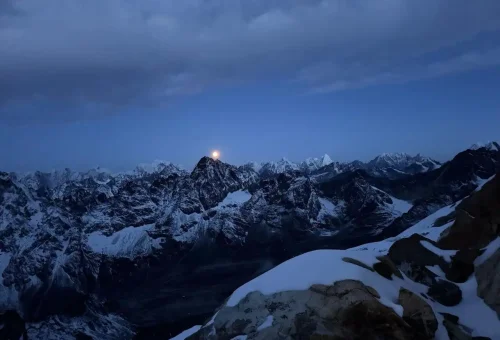
These days are for the ascent of Lobuche East, serving as a key acclimatization climb. You move to Lobuche High Camp, practice rope techniques, and make a summit attempt depending on weather and conditions. The climb offers excellent preparation for Everest, with panoramic views of Everest, Lhotse, and the surrounding peaks. After the climb, you descend back to Lobuche for recovery.
Day 14: Rest and Recovery in Lobuche (4,930 m / 16,175 ft)
A full rest day allows recovery after the Lobuche climb. You focus on hydration, nutrition, and rest in preparation for the final approach to base camp.
Day 15: Trek to Gorakshep (5,160 m / 16,929 ft)
A short yet impactful day, the trail to Gorakshep traces the lateral moraine of the Khumbu Glacier. The landscape becomes more dramatic, with ice formations and the looming presence of Everest. We stay at Gorakshep for the night, allowing us to prepare for our push to base camp the next day.
Day 16: Trek to Everest Base Camp (5,364 m / 17,598 ft)
You walk along the edge of the Khumbu Glacier to reach Everest Base Camp. Passing beneath the Khumbu Icefall, you arrive at base camp and settle into expedition tents. This marks the transition from trekking to full expedition climbing of Lhotse.
Day 17-40: Climbing Period – Lhotse via Everest South Col Route
These are the core days of the expedition. Our time on Lhotse is strategic and gradual. Rotation will be made to Camps 1, 2, and 3 with rest periods at base camp to recover and adapt. Your climbing Sherpa will accompany you every step of the way. The final summit push is scheduled when weather and your condition align. The experience of standing on the world’s highest point is something you’ll carry for life.
The climbing period is structured and gradual, focusing on two full acclimatization rotations and a final summit push.
- Rotation 1: Everest Base Camp → Camp I → Camp II → Camp III → return to Base Camp
Rotation allow your body to adapt to extreme altitude while carrying loads, familiarizing yourself with the route, and resting between efforts. Fixed ropes are used on technical sections, including the Khumbu Icefall, Lhotse Face, and upper mountain.
After adequate rest at Base Camp, the summit push begins: Base Camp → Camp I → Camp II → Camp III → Camp IV (South Col) → Summit → descent.
Summit attempts are made only when weather conditions, snow stability, and your health align. Decisions throughout this period are conservative and safety-focused.
Day 41: Rest and Pack-Up at Base Camp
You spend the day resting, packing equipment, and organizing loads. This is a time to reflect on the climb and share the experience with the team.
Day 42: Trek to Lobuche (4,930 m / 16,175 ft)
After completing the climbing phase and descending from Everest Base Camp, you begin the return journey down the Khumbu Valley. By afternoon, you reach Lobuche, where you settle into the lodge, rest, and begin to recover after weeks spent at extreme altitude.
Day 43: Heli Flight to Kathmandu (1,337 m / 4,384 ft)
A helicopter flight takes you from Lobuche to Kathmandu, with a brief stop in Lukla. You will return to your hotel and enjoy the comfort of lower altitude.
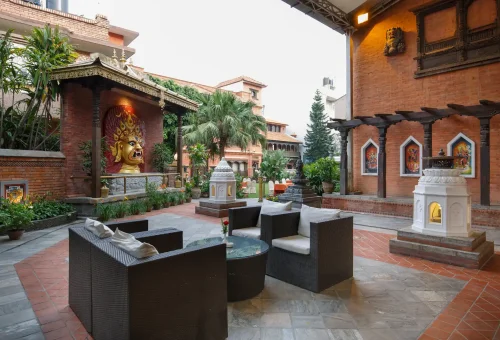
Day 44: Rest & Leisure in Kathmandu
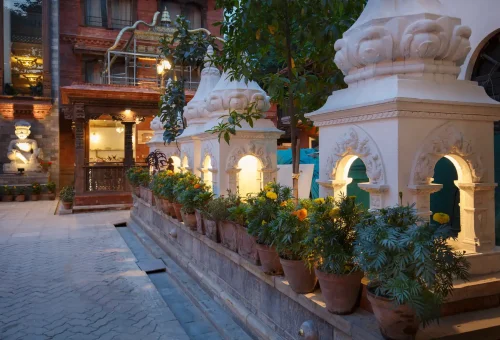
Today is reserved for recovery, sightseeing, or personal time. You may explore Kathmandu Valley, enjoy spa treatments, or relax at the hotel.
Day 45: International Departure
A traditional Nepali farewell is offered before your airport transfer. You depart Nepal carrying memories of the Himalayas, the expedition team, and the experience of standing on the world’s highest mountain.
Services Included
- SERVICE IN KATHMANDU
- Airport pick-up and drop-off in a private tourist vehicle
- Five nights’ accommodation in Kathmandu at 4-Star Category Hotel, including breakfast (twin-sharing basis)
- Kathmandu–Lukla–Kathmandu helicopter flights as per itinerary (shared basis)
- Welcome and farewell dinner at an authentic Nepali restaurant in Kathmandu
- GOVERNMENT AND RELATED CHARGES
- Sagarmatha National Park entry permit
- Khumbu Rural Municipality permit
- Everest climbing permit and government royalty
- Rope-fixing charges on the climbing route
- All applicable local and government taxes
- Liaison Officer expenses, including salary, equipment, accommodation, and meals
- SERVICE DURING THE TREK
- Accommodation in tourist-standard teahouses/lodges during the trekking phase
- All meals during the trek (breakfast, lunch, and dinner)
- Services of an experienced, English-speaking trekking guide, including all associated expenses
- Porters (one porter per member) with full salary, insurance, food, accommodation, and equipment
- Basic first-aid kit carried by the trekking guide
- BASE CAMP SERVICE
- Individual sleeping tent with mattress at Base Camp
- Fully serviced Base Camp facilities (shared within the group), including: - Kitchen tent with cook and kitchen staff - Dining tent with tables and chairs - Shower tent and toilet tent - Storage tent and gas heater
- Dedicated Base Camp first-aid facilities
- EXPEDITION SERVICE
- Supplementary oxygen: Four cylinders for each climber, Two cylinders for each Sherpa, Oxygen Masks and Regulators included
- One experienced climbing Sherpa per member during the summit phase
- High-altitude food supplies, including energy-rich meals
- Epi gas and burners for high camps
- Sherpa salaries, load-carrying bonuses (excluding summit bonus)
- Climbing equipment, transportation, accommodation, food, and wages for all expedition staff
- Comprehensive insurance coverage for Sherpa, guides, and porters (including helicopter evacuation for staff)
- Walkie-talkie communication system and satellite phone (satellite calls charged separately)
Services Not Included
- International airfare to and from Kathmandu and Nepal visa fees
- Personal travel and medical insurance, including coverage for emergency rescue and evacuation
- Lunches and dinners in Kathmandu, except for the welcome and farewell dinners
- Personal expenses such as telephone calls, laundry services, bottled water, bar bills, and personal trekking or climbing gear
- Tips for climbing Sherpa, trekking guides, and local support staff
- Summit bonus for the climbing Sherpa (USD 1,500 per Sherpa)
- Cost of daily weather forecasts
- Any additional expenses arising from natural calamities, flight delays, weather disruptions, or program cancellations
- Any other items not specifically mentioned in the “Services Included” section
Reviews

Good!
Exellent guide for solo trekking. The flexibility of the programm was good and everything worked with Expedition Himalaya.

FAQ's
What level of experience is required to climb Lhotse?
The Lhotse Expedition is suitable only for experienced high-altitude climbers. Prior experience on 7000 m peaks and strong performance on technical terrain using fixed ropes are essential. Previous 8000 m experience is strongly recommended, especially due to the sustained steep climbing in the Lhotse Couloir.
How is Lhotse different from climbing Everest?
While Lhotse shares the Everest South Col route up to Camp IV, the summit route is more technical and physically demanding. Unlike Everest’s Southeast Ridge, Lhotse’s final ascent involves sustained steep snow and ice climbing with fewer resting points, requiring continuous technical movement at extreme altitude.
What gear and equipment do I need for the Lhotse Expedition?
You must bring personal climbing gear, including:
- High-altitude boots (8000m rated)
- Down suit or high-altitude clothing system
- Harness, helmet, crampons, ice axe
- Ascenders, carabiners, and personal safety gear
- Sleeping bag rated to at least –40°C
A detailed gear checklist is provided well in advance. Expedition Himalaya supplies group equipment, fixed ropes, tents at Base Camp and high camps, and shared safety gear.
Can I rent gear in Nepal?
Some equipment, such as down jackets, sleeping bags, and basic climbing gear, can be rented in Kathmandu. However, for Lhotse, critical personal gear such as boots and down suits should be owned and tested in advance. Rental options are discussed individually.
What is the food like during the expedition?
At Base Camp, meals are freshly prepared by our kitchen team and include a mix of Western, Asian, and high-energy expedition food. Above Base Camp, meals become simpler and more practical, focusing on calories and hydration. High camps rely on dehydrated meals, soups, and energy foods suitable for altitude.
Are special meal requirements accommodated?
Yes. Vegetarian and basic dietary requirements can usually be accommodated at Base Camp. At higher camps, options are limited due to logistics, but we plan menus carefully to support energy and recovery.
How is acclimatization managed?
Acclimatization is managed through a combination of structured rotations between Base Camp and the higher camps and a pre-acclimatization ascent of Lobuche East (6,119 m). The Lobuche East climb allows the body to gain valuable time above 6,000 meters before arriving at Everest Base Camp, strengthening altitude adaptation and technical readiness.
Once at Base Camp, the itinerary includes two full acclimatization rotations on Everest prior to the summit push, with planned rest periods at lower altitude. This progressive approach supports safer adjustment to extreme altitude and improves overall performance during the summit phase.
Is supplemental oxygen used?
Yes. Supplemental oxygen is used from Camp IV (South Col) during the summit push and descent. Oxygen strategy is carefully planned to support safety and performance at extreme altitude.
How many Sherpas support each climber?
Each climber is supported by experienced high-altitude Sherpas, including personal climbing Sherpa for summit push. The Sherpa team assists with load carrying, and safety throughout the expedition.
What happens if the weather is bad?
Yes. The expedition includes buffer days to wait for safe weather windows. Summit attempts are only made when conditions allow. Safety always takes priority over summit objectives.
What medical support is available?
Health is monitored throughout the expedition. Oxygen saturation is checked regularly, and guides are trained to identify altitude-related illnesses. Evacuation plans are in place if required.
What insurance is required?
Comprehensive insurance is mandatory and must cover mountaineering up to 8,900 meters, including emergency helicopter evacuation and medical treatment.
How dangerous is the Lhotse Couloir?
The Lhotse Couloir is a steep, sustained snow-and-ice gully with objective hazards related to altitude, exposure, and fatigue rather than rockfall. Fixed ropes are used throughout, and climbers must be confident in steep ice climbing techniques at extreme altitude.
What kind of accommodation is provided in Kathmandu and during the expedition?
In Kathmandu, climbers stay in 4-star category accommodation for comfort and recovery. During the expedition, accommodation ranges from teahouses during the trek to fully serviced Base Camp tents and high-altitude expedition camps.
Why choose Expedition Himalaya for the Lhotse Expedition?
Expedition Himalaya combines proven Everest-route logistics, experienced Sherpa teams, strong acclimatization strategy, transparent operations, and a deep understanding of high-altitude expedition management—delivering a professional and safety-focused Lhotse climbing experience.