Baruntse Expedition - 7129 M with Amphu Laptsa Pass - 34 Days
34 Days
Kathmandu
Kathmandu
7129m
Spring and Autumn
Tea house & Camping
Flight
Baruntse Expedition (7,129m) offers climbers a challenging ascent between Everest and Makalu. Known for its technical ice slopes and breathtaking views, this peak requires expertise, with acclimatization at Base Camp (5,400m), icy terrain towards the summit & offers panoramic view of Everest, Lhotse, and Makalu along the way.
Introduction
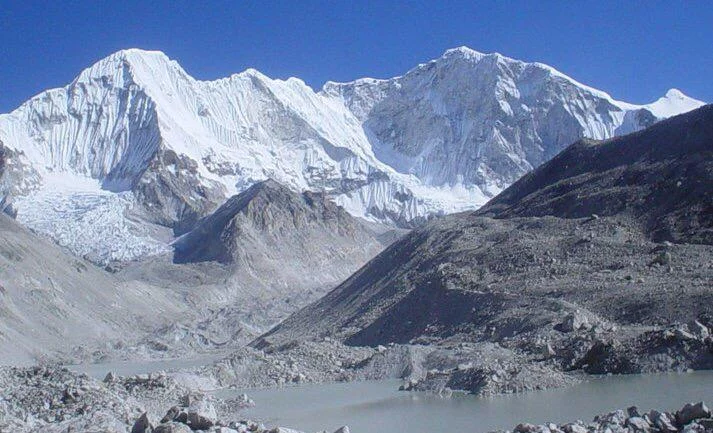
Mount Baruntse (7,129 m / 23,389 ft) lies in the eastern Himalaya between Lhotse and Makalu, in one of the most remote and dramatic mountain regions of Nepal. Surrounded by major glaciers and high peaks, the mountain offers a complete high-altitude expedition experience in a quieter part of the Khumbu.
The approach follows the Hinku and Hunku valleys, moving through remote landscapes, high passes, and alpine lakes before reaching Base Camp. This route allows for steady acclimatization and a gradual transition into expedition climbing. The standard Southeast Ridge route involves sustained snow and ice climbing, with sections of fixed rope and exposure at higher altitude. While not highly technical, it requires good fitness, prior high-altitude experience, and confidence on mixed terrain.
Baruntse also has a strong place in Himalayan climbing history. The region was first explored during the 1951 Everest reconnaissance led by Eric Shipton, which identified several unclimbed peaks in this area. The first successful ascent of Baruntse was made on 30 May 1954 by Colin Todd and Geoff Harrow as part of a British expedition led by Sir Edmund Hillary. The route they climbed via the Southeast Ridge remains the standard route used today.
Today, Baruntse is considered one of the best preparation peaks for climbers aiming for 8,000-meter expeditions. The structure of the climb, use of multiple camps, and time spent above 6,500 meters closely reflect the demands of larger Himalayan objectives.
At Expedition Himalaya, this expedition is designed with a strong focus on safety, acclimatization, and efficient logistics. Our experienced Sherpa team, structured climbing plan, and well-managed Base Camp operations ensure that climbers are properly supported throughout the journey. This is a serious high-altitude expedition for those looking to build experience and take the next step in the Himalaya.
Trip Highlights – Baruntse Expedition
- Summit Views of the World’s Highest Peaks: From the summit of Baruntse, enjoy a rare panorama that includes Everest, Lhotse, Makalu, and Kangchenjunga on a clear day.
- Remote Wilderness Approach via Hinku and Hunku Valleys: Trek through one of Nepal’s least crowded high-altitude regions, crossing Mera La and passing Seto Pokhari before reaching Base Camp.
- Ideal 7,000 m Expedition for 8,000 m Preparation: The climb includes multiple camps, fixed rope sections, and sustained climbing above 6,500 meters, closely reflecting larger Himalayan expeditions.
- Fully Managed Expedition by Expedition Himalaya: Complete support including permits, experienced Sherpa team, Base Camp setup, and a structured climbing window managed by a highly experienced team.
Itinerary
Day 1: Arrive Kathmandu (1,330 m / 4,364 ft)
Your expedition begins on arrival in Kathmandu. Our team will meet you at Tribhuvan International Airport and transfer you to your hotel in Thamel. The remainder of the day is free to rest and recover from your journey. In the evening, we gather for a welcome briefing with your expedition leader to walk through the itinerary, logistics, gear requirements, and any final questions before the expedition begins.
Day 2: Kathmandu - Rest and Expedition Preparation
A full day in Kathmandu for permit formalities, gear checks, and team briefings. You will have time to visit any remaining gear shops in Thamel and attend a detailed technical briefing with your expedition leader covering the route, high camps, and acclimatization strategy. The Kathmandu gear market is one of the best in Asia and any last-minute items are easily sourced.
Day 3: Flyto Lukla (2,800 m / 9,186 ft) and Trek to Paiya (2,760 m / 9,055 ft)
An early morning flight to Lukla on a small mountain aircraft - the gateway to the Khumbu and one of the most spectacular short flights in the world. After landing, we meet the full support team and begin the trek. Rather than heading north towards Namche as most EBC trekkers do, we turn south and descend into the quiet terrain that leads towards the Hinku Valley. The trail drops through rhododendron and pine forest to the village of Paiya.
Day 4: Trek to Pangom (2,980m / 9,777ft)
A steady day on the trail as we descend further into the Dudh Koshi valley before climbing again through terraced farmland and forest towards Pangom. The route passes through traditional Rai and Sherpa villages with a way of life largely unchanged by the trekking traffic further north.
Day 5: Trek to Ramailo Danda (3,350m / 10,991ft)
The trail climbs steadily today onto a broad ridge with expanding views back across the valley and forward towards the high peaks of the Hinku region. Ramailo Danda sits on the ridge with clear sightlines in both directions and a significant altitude gain from yesterday's camp.
Day 6: Trek to Chatra Khola (3,150m / 10,335ft)
From the ridge we descend into the Chatra Khola valley, dropping below yesterday's high point as the trail winds down through forest and across the river. A shorter day designed to allow recovery before the long climb into the Hinku valley begins.
Day 7: Trek to Kothe (3,580 m / 11,745 ft)
We enter the Hinku Valley properly today. Kothe is the main village in the lower Hinku and a familiar landmark for Mera Peak trekkers. The valley opens up dramatically here, with the first glacial peaks becoming visible at its head. Teahouse accommodation is available.
Day 8: Trek to Thangnag (4,270m / 14,009ft)
A significant altitude gain as we move deeper into the Hinku Valley. The vegetation thins and the glacier terminal moraine begins to dominate the landscape. Thangnag is a small settlement at the foot of the Hinku Glacier with clear views towards Mera Peak and the high passes above
Day 9: Acclimatization Day at Thangnag (4,270m / 14,009ft)
A full rest and acclimatization day at Thangnag. The body is adjusting to altitude above 4,000 meters and this day is important preparation for the days ahead. We recommend a short morning walk to higher ground and back to aid acclimatization before resting in the afternoon. Your expedition leader will use this day to brief the team on the terrain above Khare and the Mera La crossing.
Day 10: Trek to Khare (4,900m / 16,076ft)
We continue up the Hinku Valley to Khare, the last teahouse settlement before the high passes. The trail climbs steadily across moraine and glacial debris with Mera Peak dominating the skyline above. Khare is a busy stopping point for Mera Peak climbers and offers basic but comfortable teahouse accommodation.
Day 11: Trek to Kongma Dingma (4,770m / 15,650ft) via Mera La (5,390m / 17,684ft)
One of the most dramatic and rewarding days of the entire expedition. We climb from Khare to the Mera La pass at 5,390 meters, crossing from the Hinku Valley into the Hunku drainage. The pass itself offers a sweeping panorama of the high peaks surrounding Baruntse. From the pass we descend to Kongma Dingma in the Hunku valley below. This crossing marks a clear transition in the expedition - from the trekking approach into genuinely remote high mountain terrain
Day 12: Trek to Seto Pokhari Camp (5,077m / 16,657ft)
We move further into the Hunku valley, navigating glacial terrain towards the Seto Pokhari (White Lake), a high-altitude lake that sits in remarkable stillness between the glaciers at over 5,000 meters. Camp is established here with Baruntse now clearly visible ahead.
Day 13: Trek to Baruntse Base Camp (5,231m / 17,163ft)
The final approach to Base Camp. The route navigates the Hunku glacier and the moraines above the lake before reaching the established Base Camp site at 5,231 meters. The surrounding terrain is extraordinary: Baruntse's Southeast Ridge rises directly above, with Lhotse and the high peaks of the Khumbu visible to the north. Our Base Camp team will have tents established and the kitchen operational on arrival. Today marks the beginning of the expedition's climbing phase.
Day 14 - 28: Baruntse Climbing Period (7,129 m / 23,389 ft)
The 15-day climbing window allows the team to follow a proper acclimatisation rotation schedule before the summit push and provides sufficient buffer for weather delays.
The first phase involves two acclimatization rotations from Base Camp. The first rotation climbs to Camp 1 on the lower glacier and returns. The second rotation pushes to Camp 2 on the Southeast Ridge before descending. Each rotation is followed by a rest day at Base Camp to consolidate the altitude gains. The Sherpa team will be fixing ropes on the technical sections during this period.
Your expedition leader monitors weather forecasts in coordination with the Kathmandu operations team. These days are essential recovery before the summit push and allow for assessment of conditions on the upper ridge.
The summit push begins with a move from Base Camp to Camp 1, followed the next day by a climb to Camp 2. Summit day begins between midnight and 2am. The route above Camp 2 follows the upper Southeast Ridge, negotiating the 45-degree section above the West Col and the prominent ice cliff near 7,000 meters before the final approach to the summit at 7,129 meters. The summit panorama, taking in Everest, Lhotse, Makalu, and Kangchenjunga, is among the finest available from any peak in Nepal. After the summit we return to Camp 2 and descend to Base Camp the following day.
Day 29: Trek to Amphu Lapcha Base Camp (5,450m / 17,880ft)
The descent from Baruntse exits via a different route from the approach, adding one of the Hunku region's finest high-mountain experiences. We trek from Baruntse Base Camp towards the base of the Amphu Lapcha pass. The terrain between the Hunku glacier and the pass base is remote and spectacular. Camp is established at the foot of the pass.
Day 30: Cross Amphu Lapcha Pass - Trek to Chukung (4,730m / 15,518ft)
The Amphu Lapcha crossing at 5,845 meters is the technical highlight of the descent. The pass requires fixed rope on the upper sections and careful movement across glaciated terrain. From the far side, the trail descends steeply into the Khumbu valley and the welcome familiarity of Chukung, a well-established teahouse settlement below the Island Peak base camp area. The views across to Lhotse, Island Peak, and the Nuptse wall on the descent are exceptional.
Day 31: Trek to Namche Bazaar (3,440 m / 11,286 ft)
A long descent day from Chukung down the main Khumbu valley through Tengboche and Phunki Tenga to Namche Bazaar. The drop in altitude is significant and the body responds quickly. The rhododendron forests and the familiar infrastructure of the main Everest trail feel like a different world after the remoteness of the Hunku.
Day 32: Trek to Lukla (2,800m / 9,186ft)
The final full day of trekking, descending from Namche through Phakding and along the Dudh Koshi valley to Lukla. A team dinner in Lukla to mark the end of the expedition and acknowledge the effort of every member of the team.
Day 33: Flight to Kathmandu (1,330m / 4,364ft)
After a morning flight from Lukla, you’ll arrive in Kathmandu and enjoy a relaxing day to recover. Spend your time reflecting on your climb and exploring the city, or simply relaxing at your hotel
Day 34: International Departure
Transfer to Tribhuvan International Airport for your onward flight. Our team will see you off and assist with any final logistics.
Includes
- SERVICE IN KATHMANDU
- Airport Pick-up and Drop-off service in a private tourist vehicle.
- 3 night’s accommodation in Kathmandu in a 4 star hotel including breakfast on twin sharing basis.
- Kathmandu-Lukla and return flights as per itinerary. (Extra cost for heli flight)
- Welcome dinner at an authentic Nepali restaurant in Kathmandu.
- SERVICE IN TREK
- Accommodation during the trek in standard Teahouse/Lodges.
- All Meals (Breakfast, Lunch and Dinner) during the trek.
- Services of an experienced English-speaking trekking guide during the trek and their entire expenses.
- 1 Porter for 2 members and their entire expenses
- First Aid Kit (Carried by trek guide)
- BASE CAMP SERVICE
- Base Camp Accommodation with an individual sleeping tent with mattress.
- Base Camp service (shared with the group) includes a kitchen tent with the cook, kitchen boy, dining tent with tables and chairs, shower tent, toilet tent, storage tent, gas heater,etc.
- EPI gas and High altitude foods during the climb having high calories.
- Comprehensive medical kit for member and staffs
- EXPEDITION SERVICE
- One climbing Sherpa for one climbing member during the climb.
- Sagarmatha National Park permit, Makalu Barun National Park permit , Climbing Permit and Royalty and all costs related to permits.
- Sherpa's remuneration and load-bearing bonus (this bonus does not include the summit bonus)
- Climbing equipment, transportation, lodging, food, and salaries for Sherpas and staff are provided.
- The expenses of Insurance for Sherpa, trekking guide and porters and salary for all staffs. (includes Heli evacuation for Sherpa)
- All the expenses of Liaison officer including wages, gears and equipment.
- Walkie-Talkie and Satellite Phone (Charges Per Call).
- Rope fixing charge and Applicable local and government taxes.
- Comprehensive medical kit for member and staffs
Excludes
- International airfare to and from Kathmandu and Nepal Visa Fees.
- Travel & medical insurance including insurance for emergency rescue & evacuation.
- Lunches and dinners in Kathmandu except Welcome & Farewell dinner.
- Personal expenses such as telephone, laundry, bottled water, bar bills, trekking/climbing gears, etc.
- Tips for Sherpa & tips for local staffs.
- Summit bonus for climbing Sherpa.
- Cost for the daily weather forecast.
- Any extra cost arising out of natural calamities or cancellation of the program.
- All other items not mentioned in the list of ‘Inclusions’.
Booking
Reviews

Good!
Exellent guide for solo trekking. The flexibility of the programm was good and everything worked with Expedition Himalaya.

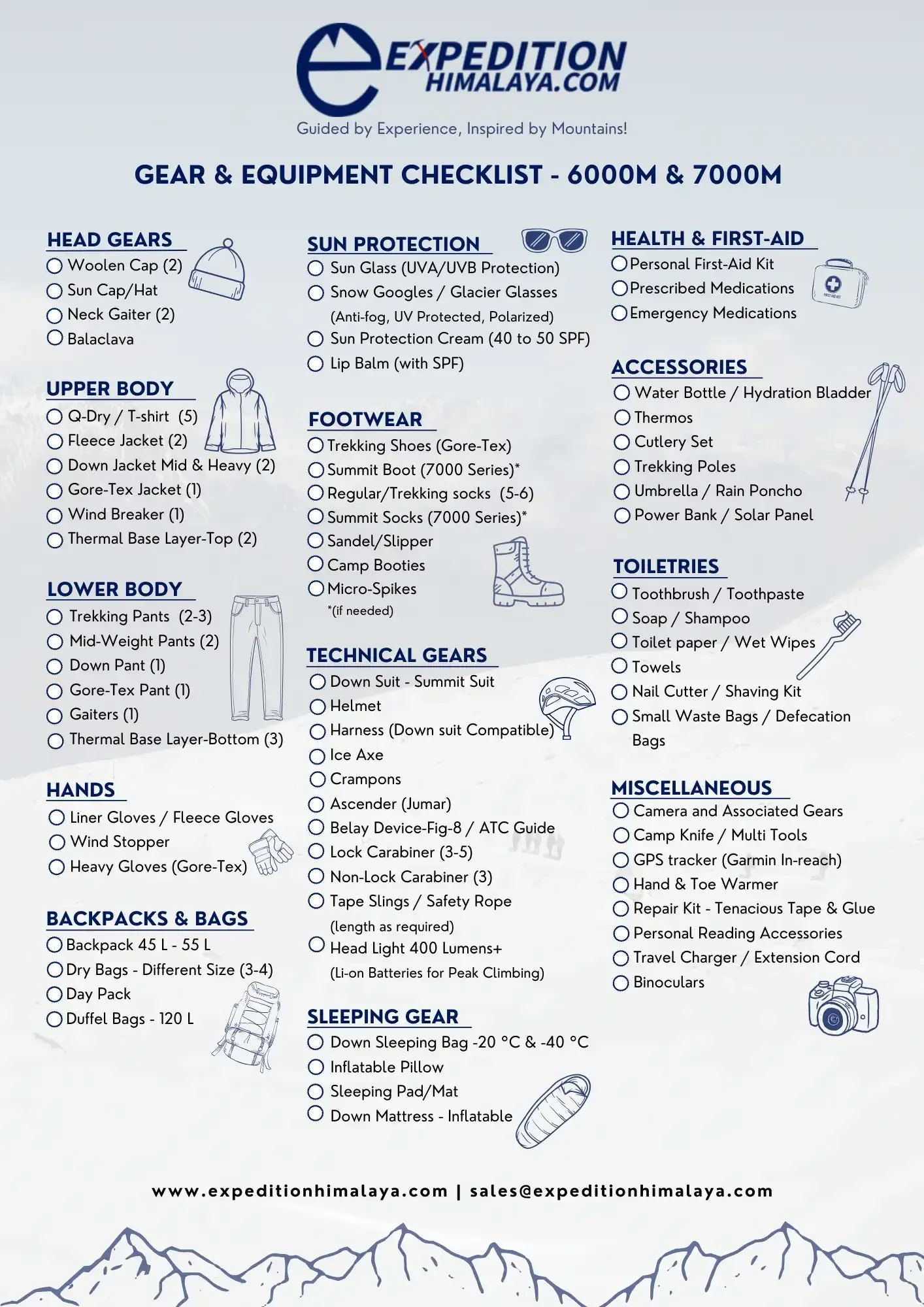
Required Climbing Gear – Baruntse Expedition (7,219 m)
Climbing Baruntse requires full 7000 meter high altitude equipment. The mountain is technically moderate, but temperatures can drop to –35°C and wind exposure is significant above Camp II. Proper gear is critical for safety and summit success.