sales@expeditionhimalaya.com
+977 985-1004278
Customize Trip
All Packages
Trekking
Everest Region
Annapurna Region
Langtang Region
Makalu Region
Manaslu Region
Wilderness & Remote Trek
Expeditions
8000ers
7000ers
6000ers
Combo
Tours
Nepal Experiences
Scenic Helicopter Tours
Tibet
Information
Booking Terms and Conditions
Expedition & Trekking Gear Guide
Permit | Garbage
Nepal Travel & Visa Guide (Updated 2026)
Tibet Tour Guide Book
A Dining Guide by Expedition Himalaya
Company
About Expedition Himalaya
Meet the Team
Blog
Testimonials
Legal Documents
Contact Us
Traveler Login
Open main menu
Close menu
All Packages
Trekking
Everest Region
Annapurna Region
Langtang Region
Makalu Region
Manaslu Region
Wilderness & Remote Trek
Expeditions
8000ers
7000ers
6000ers
Combo
Tours
Nepal Experiences
Scenic Helicopter Tours
Tibet
Information
Booking Terms and Conditions
Expedition & Trekking Gear Guide
Permit | Garbage
Nepal Travel & Visa Guide (Updated 2026)
Tibet Tour Guide Book
A Dining Guide by Expedition Himalaya
Company
About Expedition Himalaya
Meet the Team
Blog
Testimonials
Legal Documents
Contact Us
Traveler Login
sales@expeditionhimalaya.com
+977 985-1004278
Customize Trip
All Packages
Trekking
Everest Region
Annapurna Region
Langtang Region
Makalu Region
Manaslu Region
Wilderness & Remote Trek
Expeditions
8000ers
7000ers
6000ers
Combo
Tours
Nepal Experiences
Scenic Helicopter Tours
Tibet
Information
Booking Terms and Conditions
Expedition & Trekking Gear Guide
Permit | Garbage
Nepal Travel & Visa Guide (Updated 2026)
Tibet Tour Guide Book
A Dining Guide by Expedition Himalaya
Company
About Expedition Himalaya
Meet the Team
Blog
Testimonials
Legal Documents
Contact Us
Traveler Login
Open main menu
Close menu
All Packages
Trekking
Everest Region
Annapurna Region
Langtang Region
Makalu Region
Manaslu Region
Wilderness & Remote Trek
Expeditions
8000ers
7000ers
6000ers
Combo
Tours
Nepal Experiences
Scenic Helicopter Tours
Tibet
Information
Booking Terms and Conditions
Expedition & Trekking Gear Guide
Permit | Garbage
Nepal Travel & Visa Guide (Updated 2026)
Tibet Tour Guide Book
A Dining Guide by Expedition Himalaya
Company
About Expedition Himalaya
Meet the Team
Blog
Testimonials
Legal Documents
Contact Us
Traveler Login
sales@expeditionhimalaya.com
+977 985-1004278
Customize Trip
Makalu Expedition – What You Should Know Before Joining an 8,000 Meter Climb
Written by:
Niren Maharjan
Published On Jan 18, 2026
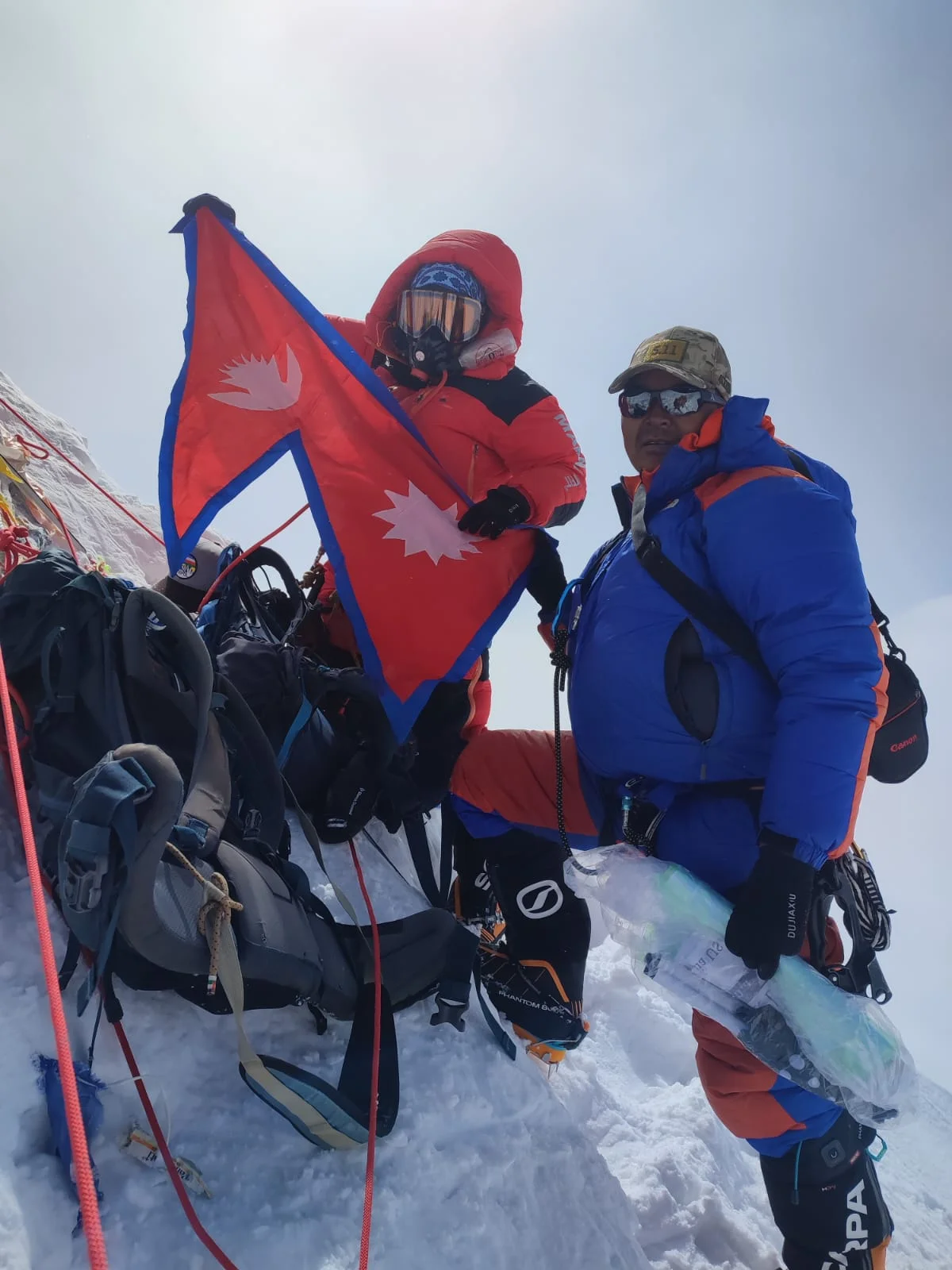
{"time":1768727756057,"blocks":[{"id":"XfauZtkxi0","type":"paragraph","data":{"text":"Climbing <strong>Mount Makalu<\/strong> (8,485 meters \/ 27,838 ft) is a serious high-altitude expedition that demands experience, patience, and strong physical and mental preparation. As the <strong>fifth-highest mountain in the world<\/strong>, Makalu is known for its steep terrain, exposed ridges, and powerful weather systems. Unlike more crowded Himalayan peaks, Makalu attracts climbers who are seeking a quieter, true expedition-style ascent rather than a commercialized climb. "}},{"id":"z8qHAwyajt","type":"header","data":{"text":"Why Makalu Is Considered a Serious Expedition Peak","level":3}},{"id":"YWVZPE_puP","type":"paragraph","data":{"text":"Makalu is widely regarded as one of the more challenging 8,000-meter mountains in Nepal. While it does not involve extreme technical rock climbing, the mountain requires strong ability on steep snow and ice slopes, confident movement on fixed ropes, and comfort at very high altitude. Summit day is long and demanding, often lasting <strong>12 to 18 hours<\/strong>, with temperatures dropping below <strong>\u201335\u00b0C<\/strong> near the summit. Strong winds and rapidly changing weather are common, making patience and conservative decision-making essential for success."}},{"id":"hb7ttOGG4k","type":"header","data":{"text":"Experience and Preparation Required for Makalu","level":3}},{"id":"XfYeIA1DRA","type":"paragraph","data":{"text":"Makalu is not recommended as a first 8,000-meter peak. Most climbers joining a Makalu expedition have previously climbed <strong>7,000-meter peaks<\/strong> or have extensive experience above <strong>6,500 meters<\/strong>. Prior knowledge of glacier travel, crampon and ice-axe use, rope ascending and descending, and high-altitude self-management is essential. Physical fitness alone is not enough\u2014mental resilience, adaptability, and the ability to function independently in harsh conditions play a major role in determining success on Makalu."}},{"id":"Zctq6HTrfw","type":"header","data":{"text":"Route, Camps, and Acclimatization","level":3}},{"id":"BeptiJMAwg","type":"paragraph","data":{"text":"The Makalu Expedition from Nepal follows the <strong>Southeast Ridge<\/strong>, the most commonly used and established route to the summit. This route is known for sustained snow and ice climbing, long distances between camps, and exposure to strong winds at higher elevations. After arrival in Kathmandu and completion of expedition formalities, the journey begins with a flight to eastern Nepal, followed by a multi-day trek through the remote Makalu\u2013Barun region. The approach trek generally takes <strong>around 9\u201310 days<\/strong>, allowing for gradual altitude gain before reaching Base Camp."}},{"id":"gwq30q14hk","type":"paragraph","data":{"text":"Makalu Base Camp is established at approximately <strong>4,870 meters<\/strong>, in a wide glacial basin below the mountain. This is where climbers spend an extended period organizing loads, resting, and beginning the acclimatization process. Life at Base Camp is deliberately unhurried, as proper acclimatization is critical on a mountain of this height and character. From here, climbers begin their rotation climbs to higher camps."}},{"id":"ip-cO4s-IA","type":"paragraph","data":{"text":"Above Base Camp, a series of high camps are established along the Southeast Ridge. <strong>Camp I<\/strong> is usually set at around <strong>6,100 meters<\/strong>, reached via glacier travel and fixed rope sections. <strong>Camp II<\/strong>, at approximately <strong>6,600 meters<\/strong>, sits on steeper terrain and is often exposed to wind. <strong>Camp III<\/strong> is placed near <strong>7,400 meters<\/strong>, where altitude begins to significantly affect performance and recovery. Depending on conditions and team strategy, a <strong>high camp (Camp IV)<\/strong> may be established between <strong>7,700 and 7,800 meters<\/strong> to shorten the summit push."}},{"id":"ysbgg9z-7s","type":"paragraph","data":{"text":"Acclimatization on Makalu is slow and methodical. Climbers typically complete <strong>two rotations above Base Camp<\/strong>, progressively sleeping higher with each rotation before descending to recover. These cycles allow the body to adapt safely to altitude while building familiarity with the route. Including rest days, load carries, and possible weather delays, the acclimatization phase alone can take <strong>three to four weeks<\/strong>."}},{"id":"i8Z35kbwne","type":"paragraph","data":{"text":"Once acclimatization is complete, teams wait patiently at Base Camp for a suitable weather window, usually in <strong>mid to late May<\/strong>. The summit push from Base Camp generally takes <strong>four to six days<\/strong>, with the final ascent from high camp often requiring <strong>12 to 18 hours<\/strong> of continuous climbing under extreme cold and thin air. After the summit attempt, climbers descend carefully through the camps and return to Base Camp before beginning the trek out."}},{"id":"YycS_w8FAq","type":"paragraph","data":{"text":"In total, a well-planned <strong>Makalu Expedition typically lasts around 50 days<\/strong>, covering the approach trek, acclimatization rotations, weather contingency, summit attempt, and safe descent. Additional buffer days may be required to manage weather delays or allow extra acclimatization if needed. For this reason, climbers are strongly advised to book <strong>flexible international air tickets<\/strong>, allowing schedule adjustments without pressure\u2014an important part of safe and responsible high-altitude expedition planning."}},{"id":"klfM8rP6Qd","type":"header","data":{"text":"Weather Conditions and Best Climbing Season","level":3}},{"id":"N8vabNTU1Z","type":"paragraph","data":{"text":"Makalu is primarily climbed during the <strong>spring season (April to May)<\/strong>, when weather windows are most stable. Even in spring, the mountain is known for strong winds and sudden weather changes. Oxygen levels above <strong>8,000 meters<\/strong> drop to about <strong>one-third of sea-level levels<\/strong>, making controlled pacing and proper acclimatization critical. Most climbers use <strong>supplemental oxygen above Camp III or Camp IV<\/strong> to increase safety margins during the summit push and descent."}},{"id":"2PcOuFJP-s","type":"header","data":{"text":"Makalu Expedition 2026 with Expedition Himalaya","level":3}},{"id":"jDCCHun0S-","type":"paragraph","data":{"text":"<strong>Expedition Himalaya<\/strong> has a <strong>fixed departure for the <\/strong><a href=\"https:\/\/expeditionhimalaya.com\/package\/mount-makalu-expedition\/\" target=\"_blank\" rel=\"nofollow\">Makalu Expedition<\/a><strong> on April 05, 2026<\/strong>, timed to align with optimal acclimatization schedules and traditional summit windows. In addition to expedition logistics, we conduct <strong>in-house guide skill enhancement training for all guides and field staff before the season begins<\/strong>, ensuring our teams are technically updated, safety-focused, and well prepared for high-altitude operations."}},{"id":"G7P8sby0-M","type":"paragraph","data":{"text":"Our approach to Makalu emphasizes structured acclimatization, experienced Sherpa leadership, conservative summit decisions, and ethical mountaineering practices. Makalu is a mountain that demands respect, and our goal is to support climbers with professional planning and responsible execution rather than rushed or risky approaches."}}],"version":"2.31.0"}
Previous
Trekking in Nepal: What You Should Know Before Trekking or Peak Climbing
Next
Surviving the Thin Air: A Guide to High Altitude Sickness in the Himalayas