sales@expeditionhimalaya.com
+977 985-1004278
Customize Trip
All Packages
Trekking
Everest Region
Annapurna Region
Langtang Region
Makalu Region
Manaslu Region
Wilderness & Remote Trek
Expeditions
8000ers
7000ers
6000ers
Combo
Tours
Nepal Experiences
Scenic Helicopter Tours
Tibet
Information
Booking Terms and Conditions
Expedition & Trekking Gear Guide
Permit | Garbage
Nepal Travel & Visa Guide (Updated 2026)
Tibet Tour Guide Book
A Dining Guide by Expedition Himalaya
Company
About Expedition Himalaya
Meet the Team
Blog
Testimonials
Legal Documents
Contact Us
Traveler Login
Open main menu
Close menu
All Packages
Trekking
Everest Region
Annapurna Region
Langtang Region
Makalu Region
Manaslu Region
Wilderness & Remote Trek
Expeditions
8000ers
7000ers
6000ers
Combo
Tours
Nepal Experiences
Scenic Helicopter Tours
Tibet
Information
Booking Terms and Conditions
Expedition & Trekking Gear Guide
Permit | Garbage
Nepal Travel & Visa Guide (Updated 2026)
Tibet Tour Guide Book
A Dining Guide by Expedition Himalaya
Company
About Expedition Himalaya
Meet the Team
Blog
Testimonials
Legal Documents
Contact Us
Traveler Login
sales@expeditionhimalaya.com
+977 985-1004278
Customize Trip
All Packages
Trekking
Everest Region
Annapurna Region
Langtang Region
Makalu Region
Manaslu Region
Wilderness & Remote Trek
Expeditions
8000ers
7000ers
6000ers
Combo
Tours
Nepal Experiences
Scenic Helicopter Tours
Tibet
Information
Booking Terms and Conditions
Expedition & Trekking Gear Guide
Permit | Garbage
Nepal Travel & Visa Guide (Updated 2026)
Tibet Tour Guide Book
A Dining Guide by Expedition Himalaya
Company
About Expedition Himalaya
Meet the Team
Blog
Testimonials
Legal Documents
Contact Us
Traveler Login
Open main menu
Close menu
All Packages
Trekking
Everest Region
Annapurna Region
Langtang Region
Makalu Region
Manaslu Region
Wilderness & Remote Trek
Expeditions
8000ers
7000ers
6000ers
Combo
Tours
Nepal Experiences
Scenic Helicopter Tours
Tibet
Information
Booking Terms and Conditions
Expedition & Trekking Gear Guide
Permit | Garbage
Nepal Travel & Visa Guide (Updated 2026)
Tibet Tour Guide Book
A Dining Guide by Expedition Himalaya
Company
About Expedition Himalaya
Meet the Team
Blog
Testimonials
Legal Documents
Contact Us
Traveler Login
sales@expeditionhimalaya.com
+977 985-1004278
Customize Trip
Surviving the Thin Air: A Guide to High Altitude Sickness in the Himalayas
Written by:
Niren Maharjan
Published On Feb 07, 2026
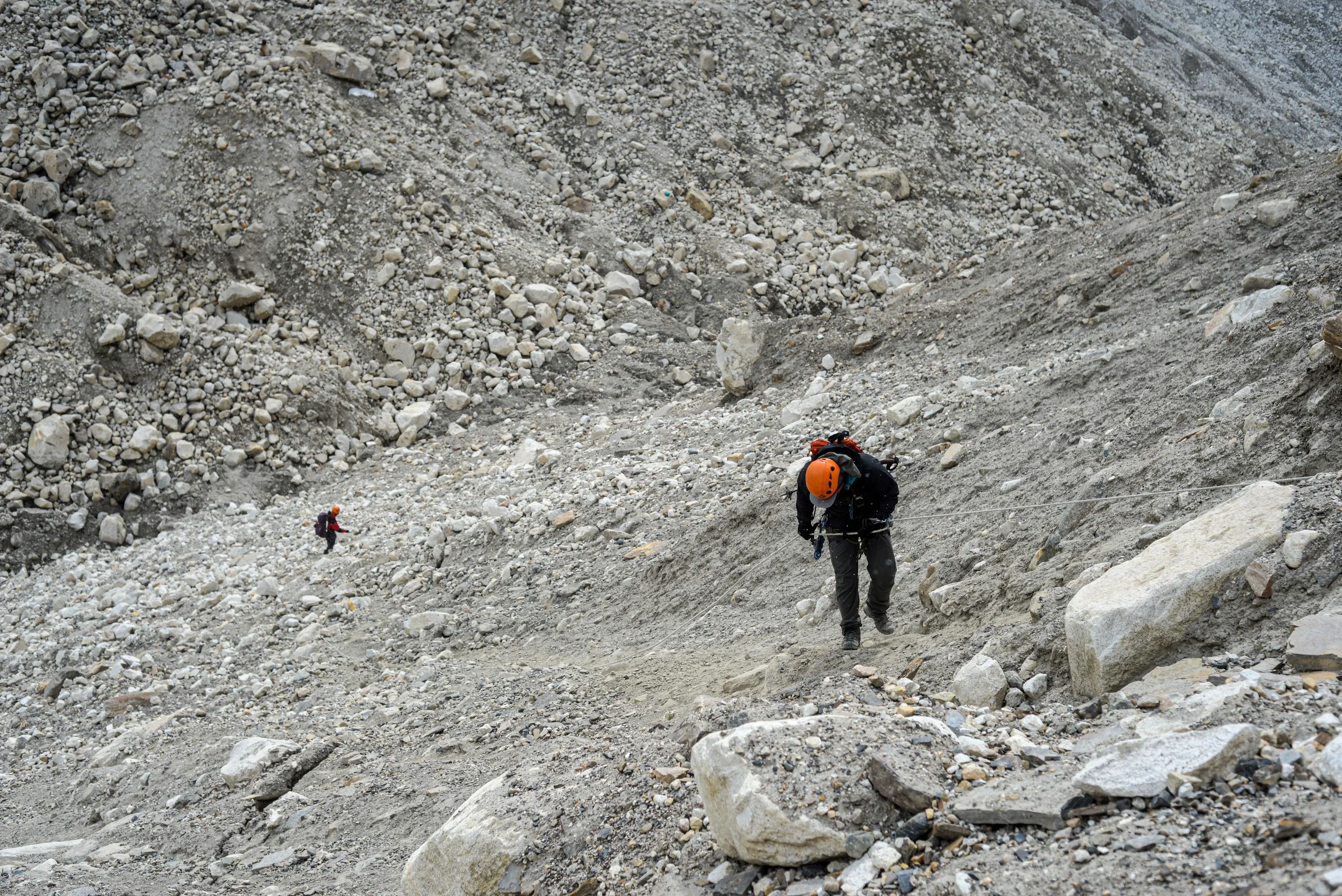
{"time":1783789423478,"blocks":[{"id":"rULPmkdOWJ","type":"paragraph","data":{"text":"Standing at the top\nof Mount Everest or crossing a high mountain pass is a dream for many. But the\nHimalayas are as tough as they are beautiful. At Expedition Himalaya, we have\nled many climbers to the world\u2019s highest peaks. We know that the biggest\nchallenge is not just the steep trail-it is the thin air."}},{"id":"ZYScbTtmlr","type":"paragraph","data":{"text":"To have a\nsuccessful trip, you must understand your body and respect the mountain.\nHere is everything you need to know about Mountain Sickness to stay safe."}},{"id":"lpP5foMwKP","type":"header","data":{"text":"Why Does Altitude Sickness Happen in the Himalayas?","level":3}},{"id":"kQ8tVhkoc0","type":"paragraph","data":{"text":"As you climb\nhigher, the atmospheric pressure drops. This doesn't mean there is \"less\noxygen\" in the air percentage-wise, but the air molecules are more spread\nout. With every breath, your lungs take in fewer oxygen molecules than they do\nat sea level."}},{"id":"quEFuEtDVr","type":"paragraph","data":{"text":"Your body is\namazing and can adapt by making more red blood cells to carry oxygen, but this\ntakes time. Mountain sickness happens when the \"ascent rate\" (how\nfast you go up) is faster than your \"acclimatization rate\" (how fast\nyour body adjusts). Even the strongest mountaineers can be grounded by altitude\nif they rush"}},{"id":"bvXKJFcyKT","type":"header","data":{"text":"The Three Types\nof Altitude Illness","level":3}},{"id":"hAuOqENe5c","type":"paragraph","data":{"text":"In the world of\ntrekking and mountaineering, we look out for three main stages of sickness.\nKnowing these can save a life."}},{"id":"gG_WN063lg","type":"paragraph","data":{"text":"<b>1. AMS (Acute\nMountain Sickness)<\/b> This is\nthe warning sign. It usually starts above 2,500 meters. It feels like a bad\nhangover. You might have a persistent headache, feel sick to your stomach, or\nfind it hard to catch your breath during a simple walk."}},{"id":"aQ7wgeDhJc","type":"paragraph","data":{"text":"<b>2. HAPE (High\nAltitude Pulmonary Edema) <\/b>This\nis a serious progression where fluid begins to leak into the lungs."}},{"id":"6E-c5mPNX8","type":"paragraph","data":{"text":"<b>Signs: <\/b>Extreme shortness of breath even while resting, a wet cough that might produce pink, frothy spit, and a blue tint to the lips or fingernails. This is a life-threatening situation."}},{"id":"hrDu9mPAjE","type":"paragraph","data":{"text":"<b>3. HACE (High\nAltitude Cerebral Edema) <\/b>This\nis a medical emergency where the brain swells with fluid."}},{"id":"bptONxHOdU","type":"paragraph","data":{"text":"<b>Signs: <\/b>The person acts \"drunk.\" They might struggle to tie their shoelaces, act confused, or fail the \"tandem gait\" test (walking heel-to-toe in a straight line). If someone is stumbling on the trail, they must go down immediately."}},{"id":"Sh4qatZYLF","type":"paragraph","data":{"text":"<b> <\/b>"}},{"id":"ByQ9r2prP1","type":"header","data":{"text":"Lessons from\nthe Trail: Learning from the Past","level":3}},{"id":"gyonglNBHq","type":"paragraph","data":{"text":"At Expedition\nHimalaya, we do not just guess about safety; we listen to what the mountains\ntell us. Data from the Himalayan Rescue Association (HRA) shows a clear pattern\nin why people get into trouble. Most cases of altitude sickness are not caused\nby bad luck, but by two main things: rushing and ego."}},{"id":"ECB3A0ikFI","type":"header","data":{"text":"The\n\"Fitness Trap\" and Over exertion","level":4}},{"id":"E50ncAL6p7","type":"paragraph","data":{"text":"A common trend in\nrecent trekking seasons is \"over exertion.\" Many trekkers think that\nbecause they are marathon runners or gym enthusiasts, they can skip the slow\npace. They try to trek too fast to prove their fitness or attempt to finish a\n12-day trek in 9 days. The HRA data is clear: the mountain does not care how\nfit you are. If you push your heart rate too high and rush your ascent, your\nbody will struggle to adapt. Speed is often the enemy of a successful summit. Pre-acclimatization is a must!"}},{"id":"gpVWbum1ao","type":"header","data":{"text":"The Danger\nZones","level":4}},{"id":"uzfy71wk1U","type":"paragraph","data":{"text":"In the Khumbu\n(Everest) region, we pay extra attention to the stretch between Dingboche\n(4,410m) and Lobuche (4,940m). This is where many rescues happen. The jump in\naltitude here is significant, and the air becomes noticeably thinner. We see\nmany trekkers ignoring rest days, small headache or feeling extra tired just\nbecause they do not want to fall behind their group or feel \"weak.\"\nIn the mountains, hiding your symptoms is the most dangerous thing you can do."}},{"id":"Cw5VBhnARz","type":"header","data":{"text":"Does Diamox Prevent Altitude Sickness? The Truth Trekkers Must Know","level":4}},{"id":"ksTuXHjEQ3","type":"paragraph","data":{"text":"There is also a\nbig misunderstanding about medicine like Diamox. Some trekkers treat it like a\n\"magic pill\" that cures altitude sickness, thinking they can just\ntake a tablet and keep climbing higher."}},{"id":"xhyaaaVO2V","type":"paragraph","data":{"text":"Let\u2019s be clear:\nDiamox can help your body adjust, but it is not a cure. If you are already\nfeeling the serious signs of AMS, taking medicine to mask the pain so you can\nkeep going up is a recipe for disaster. Medicine might dull the headache, but\nit doesn't put more oxygen in your blood. If you are truly unwell, the only real\n\"medicine\" is descending to a lower altitude."}},{"id":"-4KPx-t1EX","type":"image","data":{"url":"https:\/\/media.tripcart.com\/images\/2552\/web_1768983861_663624_1269_85_1600x1200.webp","caption":"","alt":"IMG-20251217-WA0078","width":0,"height":0,"withBorder":false,"withBackground":false,"stretched":false}},{"id":"8xobBdnt59","type":"header","data":{"text":"How We Plan\nYour Trips","level":3}},{"id":"gYo7l5mWEU","type":"paragraph","data":{"text":"At Expedition\nHimalaya, we plan our itineraries very carefully. We look at the <b>elevation\ndifferences<\/b> between every camp. We make sure you do not gain too much\nheight in a single day."}},{"id":"cdJNUq3Al6","type":"paragraph","data":{"text":"Our motto is\n<b>\"Climb high, sleep low.\"<\/b> We often walk to a higher point during the\nday and come back down to a lower altitude to sleep. This helps your body get\nused to the thin air without being under constant stress. We also build in rest\ndays at key spots like Namche Bazaar or Manang. These are not \"off\ndays\"\u2014they are the most important days for your safety."}},{"id":"xQ4Z4h9Htx","type":"header","data":{"text":"Safety and\nSupport on the Trail","level":3}},{"id":"CC0bxqvRh2","type":"paragraph","data":{"text":"Our guides are the\nbackbone of your trek. They are experienced and have spent years in the high\nmountains. Here is how we manage your health:"}},{"id":"z-FL8T9fVJ","type":"paragraph","data":{"text":"<b>Oxygen Management:<\/b> These days, oxygen cylinders are much more available on the trails. Our guides know exactly how to manage and use these cylinders if someone needs extra help breathing."}},{"id":"QkdXAt7bSo","type":"paragraph","data":{"text":"<b>Oximeter Checks: <\/b>We carry oximeters to check the oxygen levels in your blood. We do not do this every day as a routine, but our guides use them whenever they feel a guest needs a check-up or is showing signs of being tired."}},{"id":"NBlwD-t22Q","type":"paragraph","data":{"text":"<b>Communication and Rescue: <\/b>If someone becomes seriously ill, our guides communicate directly with our office. We do not make quick guesses. Depending on the situation and the weather, we make decisions about helicopter evacuations or other available options. Safety depends on clear communication between the mountain and our home base."}},{"id":"qNYDjycWD7","type":"header","data":{"text":"How to Prevent\nSickness: Tips for Trekkers","level":3}},{"id":"IousFzi8KV","type":"paragraph","data":{"text":"<b>Gradual Ascent:<\/b> In Nepal, we say \"Bistari, Bistari\" (Slowly, slowly). Pushing your heart rate too high early in the trek is a mistake."}},{"id":"RzUF3aItYT","type":"paragraph","data":{"text":"<b>Stay Hydrated:<\/b> You should aim to drink 4 to 5 liters of water every day. The mountain air is dry, and dehydration makes altitude sickness worse. Look for signs of dehydration, intake the amount of fluid as per the demand of your body."}},{"id":"G_ADoSeALS","type":"paragraph","data":{"text":"<b>Eat Well:<\/b> Your body needs fuel to fight the cold and the altitude. Even if you lose your appetite, try to eat soups and carbs."}},{"id":"qxZHfiXAu8","type":"paragraph","data":{"text":"<b>Be Honest:<\/b> If you have a headache or other symptoms, tell your guide. It is much easier to treat a small problem at 3,000 meters than a big problem at 5,000 meters."}},{"id":"CSEOASk2us","type":"paragraph","data":{"text":"The mountains will\nalways be here, but your health is something you cannot replace. We always tell\nour climbers that reaching the summit is only halfway; the most successful trip is the one where everyone returns home safely."}},{"id":"HZSiGfnzUu","type":"paragraph","data":{"text":"Your well-being is\nour top priority, so never feel shy about sharing how you feel. If you notice\neven a small headache or feel more tired than usual, talk to your guide right\naway. By walking slowly, staying hydrated, and trusting the experience of our team,\nyou can focus on what really matters: enjoying every moment of your Himalayan\nadventure."}},{"id":"93FPeB7-qq","type":"paragraph","data":{"text":"<i><u class=\"cdx-underline\"><mark class=\"cdx-marker\">This guide is written for trekkers, climbers, and high-pass travelers planning trips above 2,500 meters in Nepal and around the world.<\/mark><\/u><\/i>"}}],"version":"2.31.0"}
Previous
Makalu Expedition – What You Should Know Before Joining an 8,000 Meter Climb
Next
Nepal’s New Everest Rule: Why Climbing a 7,000m Peak is Now Mandatory